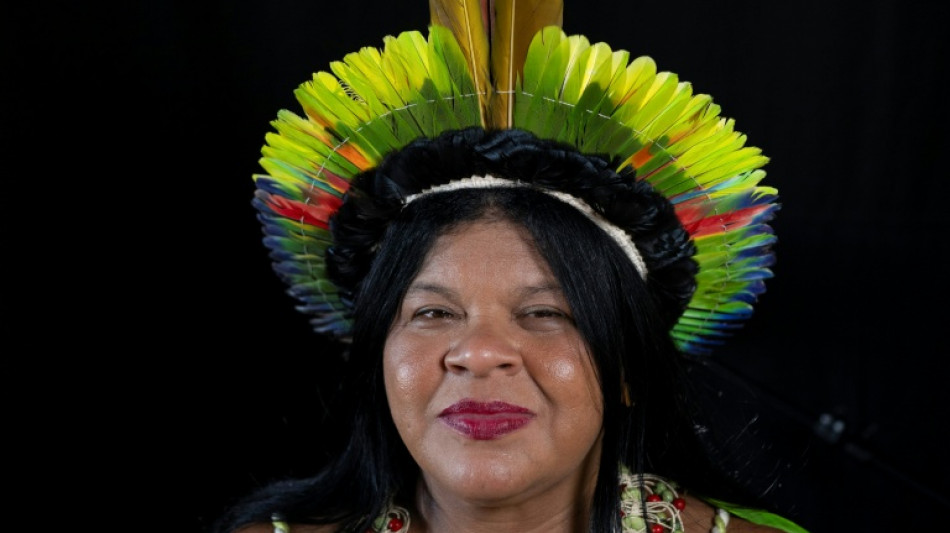
COP30: Indigenous peoples vital to humanity's future, Brazilian minister tells AFP / Photo: Pablo PORCIUNCULA - AFP

 What's behind the Pakistani strikes on Afghanistan?
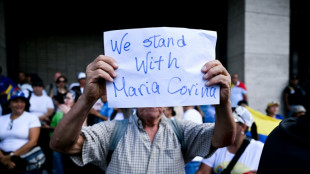 Hundreds protest for return of Nobel peace laureate Machado to Venezuela
 Aubameyang to miss two months for Deportivo after knee surgery

 Newsom says Trump presidency 'as we know it' ends in November
 Stocks fall as oil prices rise and bonds back under pressure

 Russell leads Mercedes 1-2 in Azerbaijan GP practice

 Ukrainian kills priest, wounds four at Polish abbey
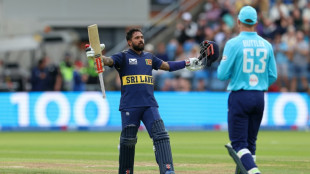 Sri Lanka captain Mendis hits century in 321-6 against England
 Oscar-winner Cotillard fears being moved by AI actor
 Agassi demands proper break for exhausted tennis stars

 Seixas 'crushes' teammates in training to draw Pogacar comparisons
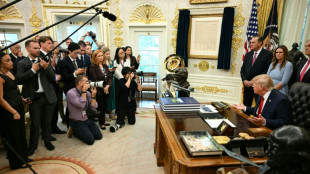
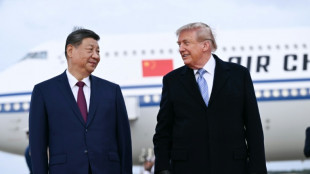 Trump welcomes Xi to White House, touting agreement on AI
 Stocks fall, oil prices rise as global bonds back under pressure
 UK man died putting women, children first in Mozambique jihadist siege: coroner
 Russell leads Mercedes 1-2 at Azerbaijan GP practice
 Alcaraz shrugs off pressure of packed calendar at 'joyful' Laver Cup

 Fury to face British rival Joshua in Cardiff on December 11

 Streamex Converts Interest Into Capital as GLDY Investment Strategy Secures $1M+ Institutional Allocation

 STARTRADER Named Best Fintech Forex Broker at Forex Expo Dubai 2026
 Japan swimmer Ohashi, 17, shrugs off Covid to smash world record
 Shin Ohashi: Junk food-loving teen and new world record-holder

 Greek PM urges 'courage' in talks with UK over Parthenon Marbles
 'I was drowning': Iran Nobel winner exposes pain of separation from children

 Israel's US envoy says son fighting for life
 Olympic champion Yulo completes gymnastics gold collection at Asian Games
At COP30 in Belem, in Brazil's Amazon region, the country's Minister of Indigenous Peoples, Sonia Guajajara, hopes Indigenous peoples will play a leading role in the international climate conference that begins Monday.
Without them, "there is no future for humanity," she told AFP in an interview.
Guajajara, a member of the Guajajara-Tenetehara ethnic group who was born in an Indigenous reserve in Maranhao state, is the first person to hold the portfolio created by leftist President Luiz Inacio Lula da Silva when he returned to power in 2023.
On the eve of the UN climate conference, Guajajara, 51, anticipates "the best COP in terms of Indigenous participation," but denounces the "racism" suffered by Indigenous peoples.
She laments that Brazil's government has not been able to approve more Indigenous reserves.
According to the minister, this effort has been hindered by a law passed by the predominantly conservative parliament, which restricts the recognition of lands that belong to Indigenous peoples.
Brazil, Latin America's largest country, is home to 1.7 million Indigenous people, divided into 391 ethnic groups speaking 295 languages, out of a total population of over 200 million.
The COP can contribute significantly to greater understanding and interest from society as a whole regarding Indigenous peoples -- especially regarding the role that Indigenous peoples and Indigenous territories play in maintaining climate balance.
It has been proven that the presence of Indigenous peoples, whether in demarcated territories or not, ensures clean water, protected biodiversity, pesticide-free food, and standing forests.
And all of this is what humanity needs to continue to exist. Therefore, we say, without Indigenous peoples, without these voices, there is no future for humanity.
In 2009, when I participated in my first COP, which was COP15 in Copenhagen, there was one or two Indigenous individuals present, but they were not participating. Since then, we have been working on building this inclusion, increasing representation, and creating spaces for dialogue.
From then until now, there has been tremendous progress. I was very excited to participate in the summit of presidents, during the launch of the TFFF (the Tropical Forest Forever Fund), as well as the session addressing the topic of climate and nature.
Of course, there is still much to be done for countries to ensure this leadership. In both moments, all the presidents who spoke emphasized the importance of including Indigenous peoples, ensuring funding for Indigenous communities, and guaranteeing the protection of Indigenous peoples and territories.
- 'Guardians of the forest' –
Although there is already recognition that we, Indigenous peoples, are the greatest guardians of the forest, the environment, and biodiversity due to our way of life, we are the first and most impacted.
Because when there is a flood, for example, it affects food security, when fish die, when water is contaminated, when there is drought, roads become inaccessible, as rivers are also a means of transportation for us.
It affects schools, when children cannot move from one place to another to attend school, it affects education.
R.J.Fidalgo--PC