Turkey basilica emerges from lake, illuminating early Church life / Photo: Ozan KOSE - AFP

 Alex Bodi i prof. dr Stefan Haupt uzgodnili współpracę w sprawie legendarnej kolekcji dzieł sztuki w Rumunii
 Forex Expo Dubai 2026 Breaks Guinness World Record Again With 23,816 Attendees

 Beijingers eye Xi-Trump summit for trade relief, stable ties
 'Failing, chaotic, musical chairs': Teams slam Asian Games organisers
 Trump to fete Xi with lavish White House welcome

 Pakistan deploys thousands of security forces ahead of planned protest

 Sao Tome voters want to stop exodus of 'neglected' youth
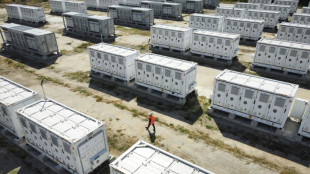 Bulgaria's battery boom pays off as drought hits power plants
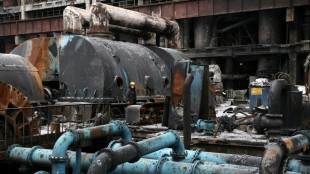
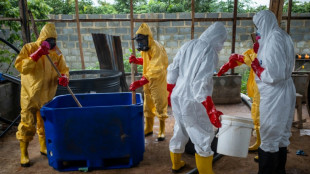 Mexican cartels target Australia with their African meth

 Swim sensation Yu, 13, set for Olympic take-off after golden Asian Games
 Ex-NFL star Brown to take plea deal in shooting case: lawyer
 Malaysia's migrant return plan chills Myanmar Rohingya
 Pakistan confirms Afghan strikes after resident says Kandahar hit
 Thousands missing, aid needs mount one month after Nepal's deadly floods
 Nepal flood victims look to PM Shah to press climate case at UN
 Trump admin says there were 8 suicide attempts on US aircraft carrier
 Iranian satire 'Head to Head' draws a veil over the men
 Archaeological 'breakthrough' could confirm origins of Paris
 Morocco elects new parliament with lowest turnout in nearly two decades

 LiberNovo Opens Business & Bulk Ordering Ahead of Its Fall Prime Sale
 Australian PM says OpenAI hacked government health website

 Xi arrives in US to personal Trump welcome
 Morocco elects new parliament amid social frustration, youth discontent
 Scheffler and Burns to face Im and Lee in Presidents Cup opener
 Crushing wins for Lyon and Barca in women's Champions League
When it was discovered a decade ago, the 4th-century basilica of Nicaea was totally submerged, its importance to early Christian history hidden beneath a lake in northwestern Turkey.
Now, the church in Iznik, a small town several hours from Istanbul, stands on dry land, its ruins exposed as the waters that engulfed it for more than 700 years have receded due to climate change.
Known as the Basilica of the Holy Fathers, it marks the site of one of the early Church's most important gatherings which took place in Nicaea 12 years after the Roman Empire legalised Christianity, ending years of persecution, torture and death.
In AD 325, Constantine the Great convened the First Council of Nicaea, a gathering of 318 bishops who, after two months of intense debate, drafted the Nicaean Creed, a statement of faith still central to Christianity.
Pope Leo XIV's visit to the basilica on Friday marks the Council's 1,700th anniversary.
Overlooking the site from a viewing platform, archaeologist Mustafa Sahin, who first identified it from aerial photos in 2014 and has led the excavation -- the first six years of which were underwater -- said his team had established that the basilica was built in AD 380.
"When it was first discovered, the ruins were 50 metres (164 feet) offshore and two metres underwater," explained Sahin, a professor who heads the archaeology department at Uludag University in the nearby city of Bursa.
"However, due to global warming, the lake's water started receding in 2020 and now the entire church is above the water."
- 'A martyrs' graveyard' -
The basilica stands on the site of an earlier church built where a 16-year-old called Neophytus was killed for his faith in AD 303, during an era of fierce Roman persecution, Sahin said.
Whipped and stoned, Neophytus was eventually beheaded "for refusing to offer sacrifices to pagan gods and worship idols", according to the site's small but informative museum explaining the history of Christians in Nicaea, once an important Roman city.
That wooden church hosted the First Council, but did not survive a 9.0 magnitude earthquake in AD 358. The basilica was built on the same site around 20 years later.
It stood for seven centuries until it too was destroyed in an earthquake in 1065, with the ruins swallowed up by the lake's rising waters some two centuries after.
It was not just Neophytus who was buried there: Sahin's team has uncovered evidence of multiple violent deaths, describing the church as "a martyrs' graveyard".
"So far, we've determined there are around 300 graves," he said, pointing to the terracotta tile tombs denoting burial sites. Under one, two visibly broken bones were visible alongside a partial jawbone with teeth.
"We have excavated only 27 of these graves and have observed signs of torture -- broken arms and legs, skulls with holes in them, perforated craniums, showing us that those buried here were tortured and killed," he said.
One area stands out for its much smaller grave covers.
"There are 11 children's graves. We haven't opened them yet but we know they were children because of the size," he explained.
Anthropologists will carefully excavate, analyse and document the bones before returning them to their resting place, he said.
"This was not just a regular church cemetery but rather a place of martyrdom, a very significant church for Christians."
- Turkey key to Christian history -
Iznik's mayor Kagan Mehmet Usta is hoping Leo's visit will bring much greater recognition to this town of 45,000 residents, which has fortified walls dating back two millennia and hopes to become a pilgrimage site.
"Since his visit was announced, Catholic and Orthodox Christians have already started visiting Iznik and we think that will increase after he comes," he told AFP, admitting it was "impossible" to guess how many would come for Leo's visit.
For Sahin, Turkey is central to Christian faith because it has so many well-preserved structures that tell the story of the early Church.
"Christianity emerged as a religion around Jerusalem, but if Anatolia -- today's Turkey -- did not exist, there would be no Christianity," he said, referring to the travels and letters of the apostle Paul, which make up the bulk of the New Testament.
"The pope's visit here is very important -- this area will become a pilgrimage site for Christians. In terms of faith tourism, it will be a great opportunity for Turkey."
S.Pimentel--PC