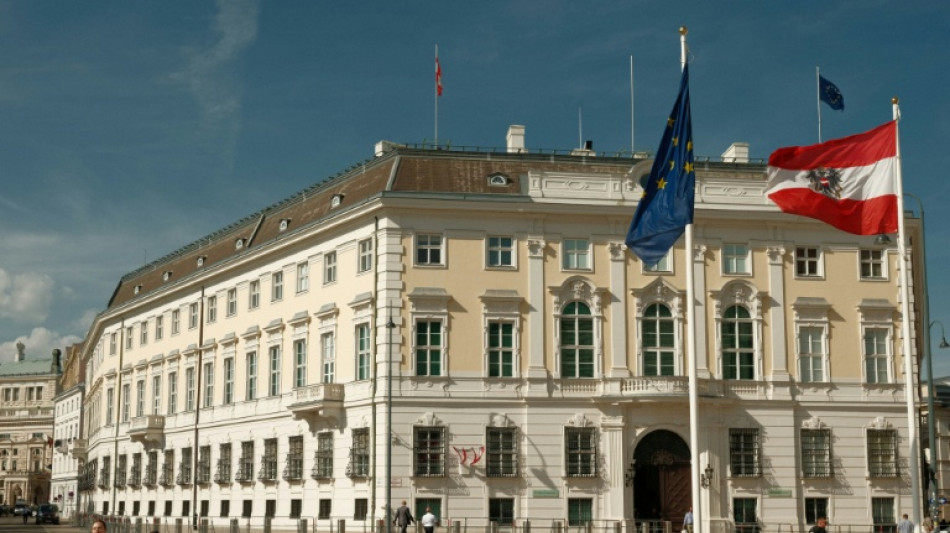
Ukraine war fuels debate on neutrality in Austria / Photo: Joe Klamar - AFP

 Thailand slams chaotic Asian Games organisation as 'musical chairs'

 North Korea to keep nuclear weapons 'forever': foreign minister

 Markets mixed as China's Xi arrives for US talks
 Swiss voters expected to shun stricter neutrality
 Rapper-turned-PM faces first big test after Nepal disaster
 Tuchel seeks tonic to England World Cup 'scar' in Spain showdown
 'Helps me cope': Catholic baptisms rise among French youth
 Colombians in Santa Marta stay inside after violence wracks the city
 Iran airlines cancel flights as US sanctions hit
 Meta launches camera-free AI glasses amid privacy pushback
 Australian PM says OpenAI hacked government health website

 Xi arrives in US to personal Trump welcome
 Morocco elects new parliament amid social frustration, youth discontent
 Scheffler and Burns to face Im and Lee in Presidents Cup opener
 Crushing wins for Lyon and Barca in women's Champions League
 Rio breaks record for rainiest September amid powerful El Nino
 At UN, tech chiefs urge caution in AI development
 Russian strikes kill seven in Ukraine, Zelensky vows winter campaign
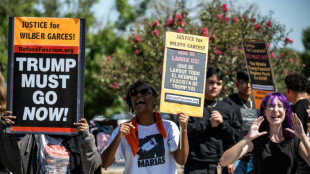 Venezuelan shot by ICE needs urgent medical care, mother tells AFP
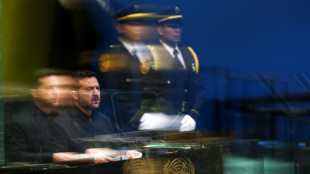 Zelensky says Putin using fighters from 47 countries in Ukraine war
 Klopp calls on Germany to 'rise above ourselves' as new era begins

 Russian strikes kill seven in Ukraine as Russia vows no 'pause' to war

 ArcPoint Expands Globally with Institutional Intelligence Platform for Modern Investors

 Ronaldo focussing on 'present' ahead of Wales test

 Outgoing UN chief makes final climate push at New York summit
For 70 years, neutrality has been the cornerstone of Austria's foreign policy, but debate on it has resurfaced since Russia invaded Ukraine.
The Alpine nation has sided with other EU members to condemn the war, raising concerns that it is swaying from its neutral stance.
"For us, neutrality is a fundamental element of our national identity," Andreas Wimmer, representative of citizens' initiative Voices for Neutrality, told AFP.
The far-right Freedom Party (FPOe), which won elections last year but failed to form a government, has also campaigned for maintaining neutrality and opposes aid to Ukraine, calling it a "betrayal".
In Austria, the policy of neutrality was imposed by the then Soviet Union as a price for the end of the Allies' post-war occupation of the country.
The policy offered the country a way of exiting the rubble of World War II and avoiding the blame for complicity in the Nazi regime.
Adopted on October 26, 1955, the federal constitutional law -- which lays down Austria's permanent neutral status -- prohibits Vienna from joining military alliances or stationing foreign troops on its territory.
Since then, for many Austrians, freedom has been synonymous with neutrality, with 80 percent saying it is part of their national identity, according to a poll published in October.
- 'No longer protects us' -
For many years, the country of nine million has hosted one of the four UN headquarters and numerous other international agencies, such as the International Atomic Energy Agency and the OPEC headquarters in Vienna.
But unlike its Swiss neighbour, Austria's neutrality "is evolving... and the current government is pushing for this evolution," a European diplomat told AFP on condition of anonymity.
"They voted for financial aid to Ukraine, for sanctions against Russia," the diplomat said, adding the central European country is "starting to be less naive".
Austria has said its neutrality does not prevent it from condemning breaches of international law and has condemned the invasion of Ukraine.
Foreign Minister Beate Meinl-Reisinger of the liberal NEOS told German newspaper Die Welt in July that, faced with "an increasingly aggressive Russia", "neutrality alone no longer protects us" and that her country must consider investing in its "own defense capabilities".
Austria's military budget, still among the lowest in Europe, was increased to 0.95 percent of GDP by 2024, and the government aims for two percent by 2032.
Former Austrian diplomat Franz Cede said neutrality must not be "romanticised" as it has clearly been "eroded" since Austria's accession to the European Union in 1995.
While Finland and Sweden responded to Russia's invasion of Ukraine by joining NATO, Austria "missed the moment", he said.
While past debates on neutrality have not led to the law changing, a discussion on joining NATO could "be very fruitful," according to Meinl-Reisinger.
She, however, emphasised in her Die Welt interview that "there is currently no majority in parliament or among the population in favour of NATO membership".
The Voices for Neutrality group, for its part, calls for a return to the role of active mediator that Austria played during the Cold War.
In recent years, no high-profile international negotiations have been held in Austria.
O.Salvador--PC