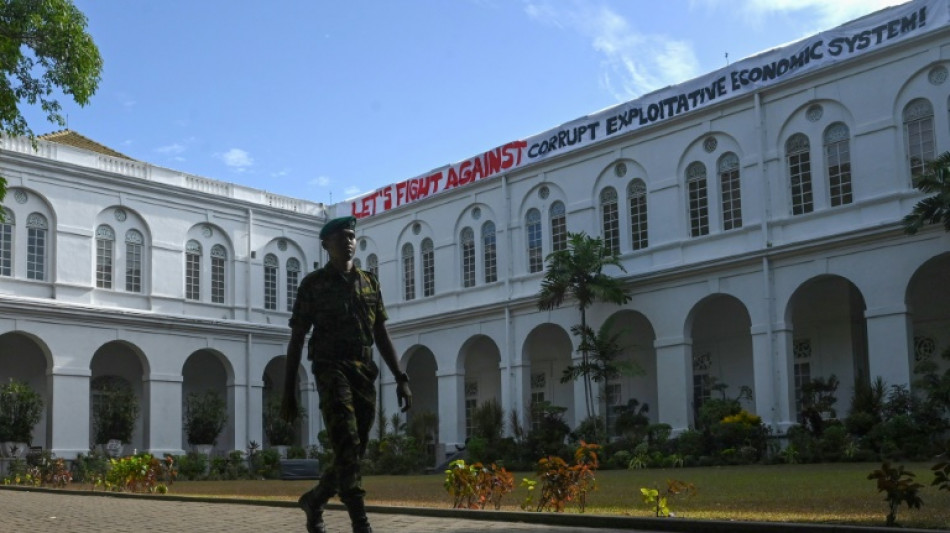
Sri Lanka's political crisis: What happens next? / Photo: Arun SANKAR - AFP

 Meloni marks record in power with eye on 2027 elections
 Israel emptying West Bank refugee camps could be crime against humanity: UN
 Portugal extends talks to privatise airline
 CoinRabbit Wins “Best Crypto Lending Platform 2026” Award from International Business Magazine
 Judge declares mistrial in US infanticide case but puts ruling on hold

 US midterms begin with chaos over mail-voting crackdown
 Russell tops second practice to beat Ferrari and Antonelli in Italy

 'I love the players we have', insists Arsenal boss Arteta
 Jury resumes deliberations in case of US mother who killed her three children

 Farage's Reform UK meets under cloud of new donation scandal

 Man Utd in 'good place' despite imperfect squad, says Carrick
 Le Pen party sparks furore with 'turn off tap' to Ukraine call

 Emery says Madjo's time will come after Villa Euro exclusion

 Workers reeling after VW cuts open door to factory closures
 Liquid Mercury Announces Initial Closing of ACQUA1 Offering
 Stocks slip as robust US jobs data stokes rate hike chances
 France to abandon 'distorted' Mercator map projection: minister
 Celtic, Rangers away fans shut out from Old Firm derbies
 Cadillac enjoying 'very respectable' first season, says team boss

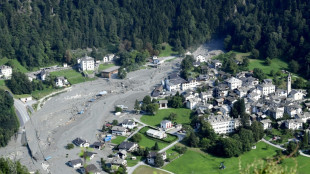 Five acquitted over deadly 2017 landslide in Swiss Alps
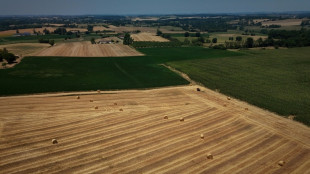 France unveils 1 bn euro farm aid package after climate-hit summer
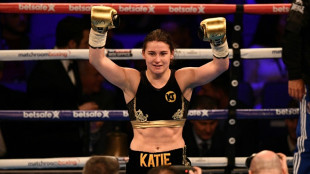 Irish heroine Taylor eyes fairytale finish to trailblazing ring career
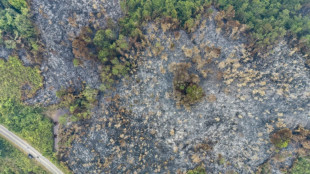
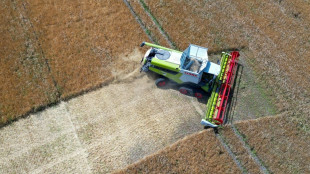 Weather and war push up food prices in August: FAO
 'No longer safe': Nepal flood survivors left landless
 Stocks mixed before US jobs data, oil dips
Sri Lankan prime minister Ranil Wickremesinghe has been sworn in as acting president after his predecessor Gotabaya Rajapaksa fled to Singapore and resigned following months of protests over the country's financial meltdown.
AFP looks at how cash-strapped Sri Lanka ended up in its worst-ever economic crisis, and what comes next in its complicated, corrupt and sometimes violent political system.
- Why did Rajapaksa flee? -
Sri Lanka's financial woes were triggered by the coronavirus pandemic but exacerbated by mismanagement under Rajapaksa's government.
The country has been unable to finance even the most essential imports since late last year, and has since defaulted on its debt.
Discontent had been mounting for months over severe food and fuel shortages, record inflation and lengthy power cuts.
Even Rajapaksa's closest allies began abandoning him, and when protesters overran his official residence in Colombo last weekend, he was forced to flee to a navy base in fear for his life. He escaped first to the Maldives, then travelled on to Singapore.
- Wasn't Rajapaksa a popular leader?-
Rajapaksa was dubbed "The Terminator" for ruthlessly crushing Tamil rebels as head of the defence ministry during his elder brother Mahinda's presidency between 2005 and 2015.
He was loved by his Sinhala Buddhist majority, but loathed by Tamils and Muslims who saw him as a war criminal, a racist and an oppressor of minorities.
When inflation crossed 50 percent, and with four out of five people forced to skip meals because of acute shortages, the ethnically divided nation united in its opposition to Rajapaksa.
- Why an acting president? -
Rajapaksa formally quit on July 14, just 32 months into his five-year term, with prime minister Wickremesinghe automatically elevated as the acting leader under the country's constitution.
Wickremesinghe is serving as a stop-gap until the 225-seat parliament elects one of its members to lead the country for the balance of Rajapaksa's term. The legislature's Speaker Mahinda Yapa Abeywardana has scheduled the vote for Wednesday.
- How does the election work? -
The 225 MPs will rank the candidates in order of preference in a secret ballot.
Candidates need more than half the vote to be elected. If no-one crosses the threshold on first preferences, the candidate with the lowest support will be eliminated and their votes distributed according to second preferences, and so on until someone reaches the mark.
- Who are the likely candidates? -
Acting President Wickremesinghe, the pro-Western six-time prime minister, is the front runner after he secured the support of the Rajapaksas' SLPP, which is still the largest single bloc in parliament.
The SLPP has more than 100 seats and if party discipline holds, Wickremesinghe is almost certain to be elected.
But the party is fractured so that unity is not guaranteed, and SLPP dissident Dullas Alahapperuma, 63, a former media minister, is a serious challenger.
Sajith Premadasa, 55, the main opposition leader, announced Friday that he would also enter the fray.
A possible fourth contender is former army chief Sarath Fonseka, 71, a nemesis of the Rajapaksa family.
The secret ballot gives MPs a freer hand than an open poll, and previous elections have seen allegations of bribes offered and accepted in exchange for votes.
During a constitutional crisis in October 2018, some MPs said they had been offered $3.5 million in cash and apartments abroad for their support.
- What does this mean for IMF talks?-
Despite their differences, Sri Lanka's political parties are united in their support for ongoing talks with the International Monetary Fund, with Wickremesinghe saying a bailout is urgently needed.
Sri Lanka declared itself bankrupt in mid-April when the government defaulted on its $51 billion foreign debt.
But the political crisis has interrupted the negotiations, and the IMF said Thursday that it hoped the unrest would be resolved soon so they could resume.
No political party in the current parliament has a clear majority, and even if the country could afford to hold a fresh election, Tamil legislator Dharmalingam Sithadthan pointed out that a strong mandate was not always a guarantee of stability or success.
"We had Gotabaya with a record 6.9 million votes and what did he do?" Sithadthan told AFP. "He was a total failure."
T.Resende--PC