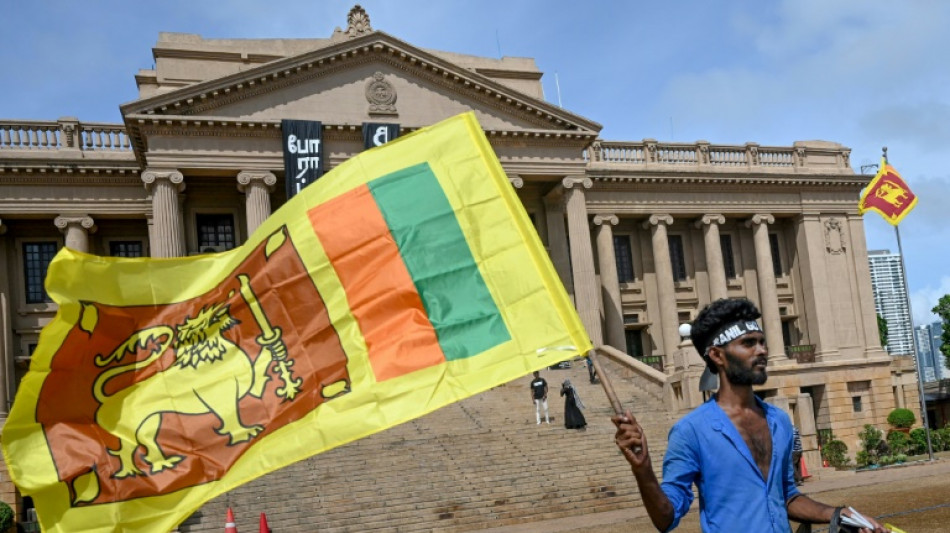
Sri Lanka renews state of emergency ahead of key vote / Photo: Arun SANKAR - AFP

 Korean Investors Surge Into Nvidia Shares Amid CEO Scandal

 Google Smart Glasses Privacy: Bystander Face Removal Limits

 Egypt and Vietnam Explore Manufacturing and Technology Transfer Partnerships

 Hilton Phoenix Resort to Open Emberance Restaurant Inspired by Sonoran Desert

 Canva Craft vs ChatGPT: Head-to-Head AI Image Generation Test

 TikTok Security Chief Advises SMBs on Free Cybersecurity Protections
Sri Lanka's acting president renewed the country's state of emergency Monday ahead of a parliamentary vote to pick a new head of state -- a poll in which he is a leading candidate.
Ranil Wickremesinghe automatically became acting president when Gotabaya Rajapaksa resigned last week after fleeing to Singapore.
A state of emergency allows troops to arrest and detain suspects, and the president to make regulations overriding existing laws to deal with any unrest.
One was already in place, but parliament had not met to ratify the declaration as required, and Wickremesinghe extended it from Monday "in the interests of public security", he said.
Police and the military have already stepped up security ahead of Wednesday's vote to elect a president for the remainder of Rajapaksa's term, which ends in November 2024.
Wickremesinghe, a six-time former prime minister, is being backed for the position by Rajapaksa's party, which remains the largest in the legislature.
The ex-president was forced to flee when tens of thousands of protesters stormed his official residence after months of demonstrations across the country demanding his resignation over the country's economic crisis.
The nation's 22 million people have been enduring severe shortages of essentials since late last year after the country ran out of foreign exchange to finance even the most vital imports.
The country defaulted on its $51 billion foreign debt in mid-April and is in talks with the IMF for a possible bailout.
H.Silva--PC