A war within a war: Yemen's latest conflict / Photo: STRINGER - AFP

 Russia probes bear attacks, as official says town under 'siege'

 Robertson tells Spurs to 'forget' past woes

 Italy police find 3 million euros stashed in mobster's house
 Renard versus Queiroz in AFCON qualifying blockbuster

 Former Mexico boss Aguirre returns to Spain with Valencia

 China swimmer, 13, seals Games hat-trick as North Korea win first gold

 China's Xi heads to US for talks with Trump: state media
 Azerbaijan pardons Frenchman after EU lifts sanctions on oligarchs

 Hadjar extends Red Bull contract for 2027 F1 season

 Black Sea drone attacks spell terror for Turkish sailors

 Canada judge to decide prison term for suicide poison seller

 Weinstein faces resentencing in New York for 2006 sex assault

 Outgoing UN chief makes climate push at New York summit

 AI risks, Iran war to take center stage at UN

 Badminton no.1 An tells dad to keep it down at Asian Games
 Runaway leader Antonelli eyeing third straight win

 Schoolgirl Yu, 13, fastest again in bid for third Asian Games gold
 Oil prices fall after Trump hails 'good' talks with Iran

 AI political ads warp reality ahead of US midterms

 Kenneth Branagh embraces action hero role -- to get in shape

 'New one' Klopp promises fresh approach as Germany reign begins

 Milne returns to New Zealand squad for India T20 series

 Voting opens in Alaska's annual Fat Bear Week

 MLS coach axed for telling female ref 'It's a man's game'

 US refuses to give Sudan's de facto leader visa for UN
Yemen has been fighting a crippling war with itself since Iran-backed Houthi rebels ousted the government in 2014, triggering a Saudi-led military intervention.
Now, a new conflict is brewing within the conflict, involving rival armed factions loosely grouped under the government but separately backed by the United Arab Emirates and Saudi Arabia.
The confrontation could tear apart the already-fractured government and threaten slow-moving peace negotiations with the Houthis, including a UN-brokered ceasefire that has largely held since 2022.
It began earlier this month when the Southern Transitional Council (STC) -- a UAE-backed secessionist group and key government partner -- seized military bases, checkpoints and oil fields and captured in most of resource-rich Hadramawt province and swaths of neighbouring Mahrah.
Saudi Arabia, Yemen's wealthy neighbour and chief supporter of the government, has hit back, striking what it called a weapons shipment from the UAE to the separatists on Tuesday.
The UAE denied sending weapons to the STC, saying it was shipping vehicles to its own forces in Yemen.
Here's a guide to the latest events and what could happen next.
What's happening now?
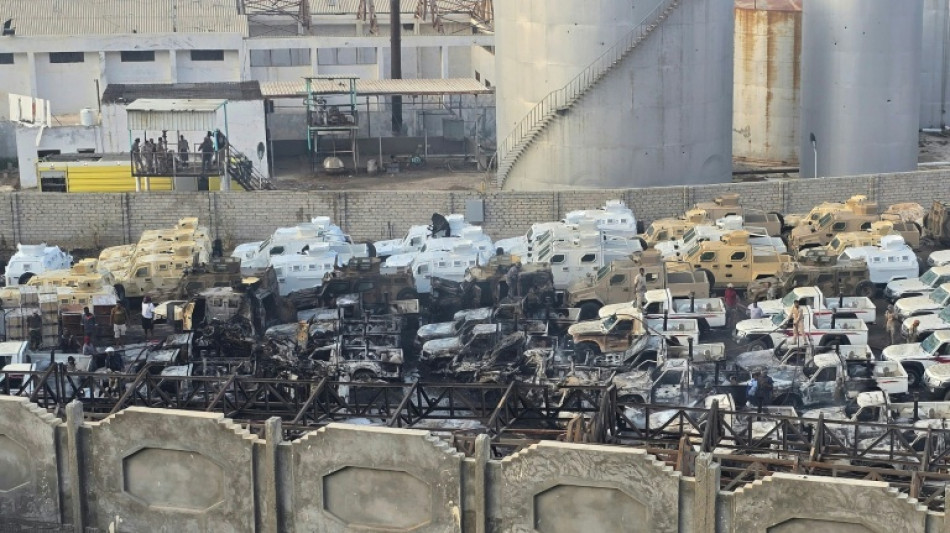
Tensions escalated on Tuesday when the Saudi-led military coalition attacked a shipment of weapons and combat vehicles that it said was sent from the UAE for the separatists.
STC positions were also hit by airstrikes on Friday, following calls from Riyadh for a withdrawal from Hadramawt and Mahrah.
A Yemeni military official said around 15,000 Saudi-backed fighters were amassed near the Saudi border, but had not been given orders to advance.
"The standoff risks upending Yemen's fragile three-and-a-half-year truce, renewing a war that has repeatedly played to the advantage of the Iran-backed Houthis," wrote April Longley Alley, a senior fellow at the Washington Institute, in an analysis.
"It could also further strain relations between key US allies Saudi Arabia and the UAE."
Abu Dhabi is key supporter of the STC, with UAE flags reguarly seen at the separatists' rallies.
What does the STC want?
The STC appears to be launching a bid for greater self-determination over territories it controls or even outright independence, according to observers.
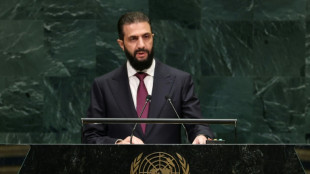
Headed by Aidaros Alzubidi, the STC is a coalition of groups that want to bring back South Yemen, which existed from 1967 to 1990, when it reunified with North Yemen.
They now control almost all of South Yemen's former territory.
"The Southern Transitional Council is betting that if the South can be united under a single leadership –- its own, of course –- it can cordon the South off from the Houthis in the North, utilise oil and gas revenue, and create a stable and functioning state," wrote Gregory D. Johnsen, a non-resident fellow at the Arab Gulf States Institute, in a recent analysis.
Such a move "is a tall order, and it will likely be contested both internally and externally", Johnsen added.
Why is Saudi 'sleepless' over Hadramawt?
Hadramawt is Yemen's largest province -- compromising roughly a third of the country's territory -- and its wealthiest.
It home to most of the country's petroleum deposits that are vital to government revenues, and borders Saudi Arabia to the north.
And its ports are away from the Red Sea hotspot that regularly comes under Houthi fire.
But, for the Saudis, the province that abuts its southern border is about more than just land and wealth.
For generations, Hadramawt families have been a force in the Saudi economy and make up a sizeable portion of the business community.
Seen as having entrepreneurial skills and grit, migrants from Hadramawt have long flourished in Saudi Arabia -- from running family restaurants to starting multi-billion dollar construction consortiums.
Losing control and influence over Hadramawt to a militia backed by the UAE would be both a psychological and strategic blow to Riyadh.
"If I'm Saudi Arabia, I'd be sleepless if I lose Hadramawt," said Farea al-Muslimi, a research fellow at Chatham House's Middle East and North Africa Programme.
Can the Saudis stop the separatists?
The latest conflict pits the Saudi alliance against a militia keen to exert control over territory that it sees as historically distinct from the rest of Yemen.
The decade-long, largely fruitless fight against the Houthis may not give Riyadh much cause for optimism.
Despite spending billions in a decade-long campaign including withering air strikes, the Saudi-led campaign has failed to bring the Houthis to heel.
Military experts cite the south's more open terrain as playing to Saudi Arabia's possible advantage. An air campaign alone, however, is unlikely to dislodge their forces.
Airstrikes "can never make a significant difference in battles if there is no ground war", said Muslimi.
P.Cavaco--PC