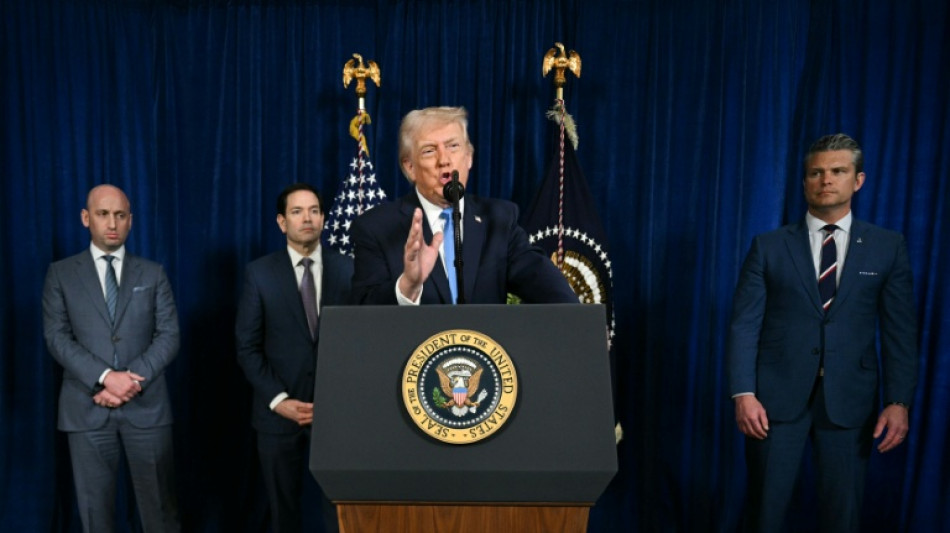
As Trump imposes 'Donroe' Doctrine, murky message to US rivals / Photo: Jim WATSON - AFP/File

 Marchand 'stressed' about racing Japanese rivals at LA Olympics
 Mobile boat clinics bring healthcare to India's remote islands
 Former India paceman Zaheer Khan named Chennai coach in IPL

 Six-year-old Chinese girl sets world record with Rubik's Cube
 Swimming prodigy Yu, 13, says 'interviews way harder than racing'
 Star coaches make their bows as Nations League returns
 Rams bounce back as Giants reel from Dart injury
 In Bangladesh, Pakistan's Jinnah photo stirs anger
 Two New Zealand naval ships transit Taiwan Strait

 Zidane gets down to work as France start new era
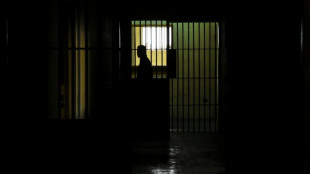 Inside the Venezuelan prison meant to 'drive you insane'
 UK king braces as memoir by Diana's brother goes on sale
 Akkodis and Hamburg Public Transport Association Showcase hvv mia at InnoTrans 2026, Demonstrating the Future of AI-Powered Mobility
 Macron says talks with Trump on Red Sea, Ukraine 'constructive'
 Green policies just good politics, says UK minister
 Bardot auction in Paris fetches nearly one million euros
 No timeline on Daniels injury return, says Commanders coach
 British Columbia sues OpenAI in US court over Canada school shooting
 French star Batum retires after 18-year NBA career
 Zidane leads first France training session
 Man shot by ICE agent in Texas detained with bullet inside him: lawyer
 California declares state of emergency ahead of El Nino
 South Africa arrests three more suspects, after nine women murdered
 Carse needs time away from England, says captain Brook
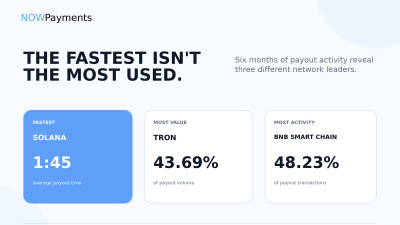 NOWPayments Releases Cross-Chain Payout Data Revealing Key Performance Benchmarks Across TRON, BNB Chain, and Solana
With a major attack to arrest Venezuela's leader, President Donald Trump is showing that the United States will impose its will in its neighborhood -- and the lesson may not be lost on Russia and China.
Trump described the raid to seize leftist Nicolas Maduro as an update of the Monroe Doctrine, the 1823 declaration by fifth US president James Monroe that Latin America was closed to other powers, then meaning Europe.
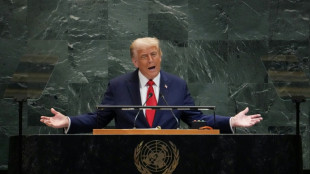
"The Monroe Doctrine is a big deal, but we've superseded it by a lot, by a real lot. They now call it the Donroe document," Trump told a news conference, slapping his name on the policy principle.
"American dominance in the Western Hemisphere will never be questioned again."
Weeks earlier, White House policymakers had given more intellectual gloss for the same idea in a national security strategy that announced a "Trump Corollary" to the Monroe Doctrine.
The policy, the strategy said, will authorize US intervention in Latin America for goals such as seizing strategic assets, fighting crime or ending migration, one of Trump's top domestic goals.
Venezuela has the world's largest proven oil reserves, with China its top partner. Trump had justified intervention by alleging drug-smuggling from small boats off Venezuela and by Maduro himself.
But the United States is not alone in wanting to exert itself over smaller regional neighbors.
Russia's Vladimir Putin invaded Ukraine in February 2022 after questioning the former Soviet republic's historical legitimacy and vowing the removal of its elected president, Volodymyr Zelensky.
China has refused to rule out force to seize Taiwan, a self-governing democracy, and has angered US allies by claiming rights to much of the South China Sea.
The Venezuela raid came days after China carried out major military exercises aimed at simulating a blockade of Taiwan following a major US arms deal. A Chinese envoy met Maduro in Caracas hours before his capture.
- US superpower status slips -
Trump's intervention is also sure to gain the attention of US allies that have been stunned by his threats over resources he sees as strategic.
Trump recently named an envoy who said he would work to seize Greenland, an autonomous territory of Denmark, and he has threatened to take back the Panama Canal.
Jennifer Kavanagh, director of military analysis at Defense Priorities, which supports US restraint, said she had long dismissed Trump's Greenland talk.
"Now I'm not so sure," she said. "It wouldn't be that hard for the US to put a couple hundred or a couple thousand troops inside of Greenland, and it's not clear to me who could do anything about it."
Venezuela "does raise this question that if the US can declare a leader illegitimate, go and remove him and then run the country, why can't other countries?"
The United States, of course, has a long history of interventions without UN authorization, notably the 2003 invasion of Iraq.
The difference, Kavanaugh said, is that back then the United States had far more relative power.
"It wasn't a matter of setting a precedent for other countries, because they just couldn't aspire to that level of military power and the US could stop basically anyone who tried. But that's not true anymore."
- Mixed messages -
The United States for decades stood firm against Moscow and Beijing. But under Trump, Washington's stance has become murkier.
The new national security strategy calls for a refocus closer to home and says comparatively little about Russia and China, leading some critics to conclude that Trump essentially was acknowledging they enjoy their own spheres of influence.
Trump has spoken favorably of China and played down the risks of a Taiwan invasion. Before taking office Trump suggested Taiwan should pay more for its US "insurance policy."
On Ukraine, Trump has mused that the country is destined for defeat against larger Russia, and has pressed Kyiv to accept territorial concessions.
At the very least, Venezuela will herald a harder US line within Latin America, said Alexander Gray, an Atlantic Council scholar who served on the National Security Council during Trump's first term.
"I think it's very clear that there will no longer be a level of tolerance for the type of even lower-level Chinese, Russian and Iranian influence that we've seen over the last couple of decades," Gray said.
J.V.Jacinto--PC