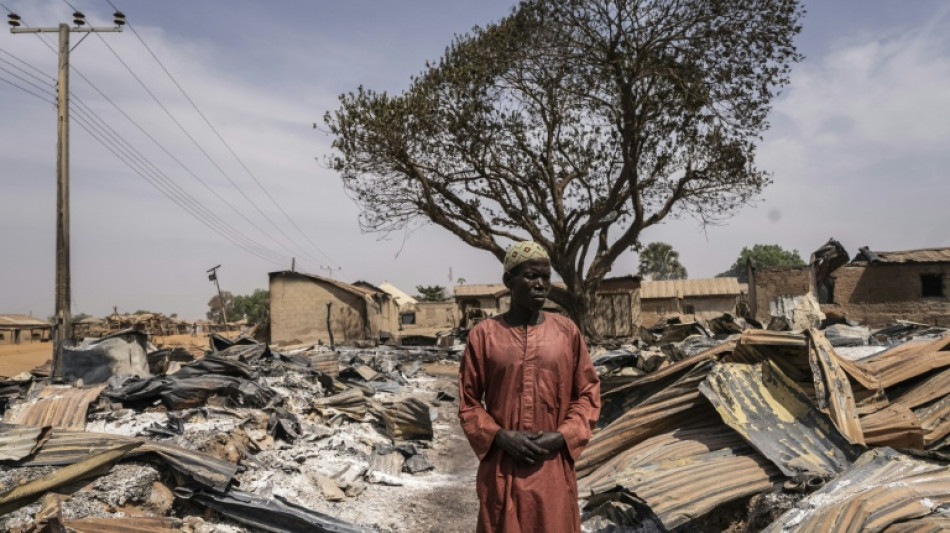
'Burned in their houses': Nigerians recount horror of massacre / Photo: Light Oriye Tamunotonye - AFP

 Mbappe says having Zidane as France coach 'like a film'
 Palmer, Rice out of England Nations League squad
 German auto workers stage mass protests in bid to save jobs
 Embattled Merz vows to keep ruling for 'democratic future' of Germany

 Merz vows to keep ruling coalition together for 'democratic future' of Germany
 Spain coach De la Fuente gets new deal after World Cup success

 Pressure grows on Germany's Merz after election defeats

 China's Zhang beats Japan rivals to Asian Games gymnastics gold
 Samlingen Haupt: Vad pengar avslöjar om oss människor

 Tens of thousands of German auto workers protest to save jobs

 हॉप्त् कलेक्शन: पैसा हमारे बारे में एक इंसान के रूप में क्या प्रकट करता है

 Συλλογή Haupt: Τι αποκαλύπτει το χρήμα για εμάς τους ανθρώπους

 TradersYard Shifts Focus to Futures Trading

 ハウプト・コレクション:お金が人間について明かすこと

 하우프트 컬렉션: 돈이 우리 인간에 대해 드러내는 것

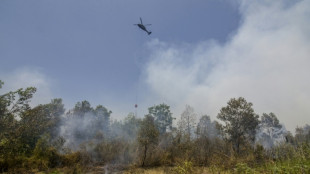
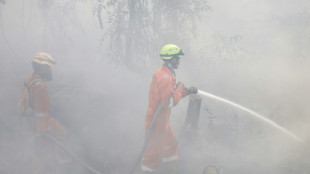 Indonesia doing 'everything' but struggling to curb fires
 Sbírka Haupt: Co o nás lidech prozrazují peníze
 North and South Korea fight out draw in niggly Asian Games clash

 Officials say man shot, wounded by ICE agent in Texas

 豪普特收藏:金錢如何揭露人類的本質

 Kolekcja Haupta: Co pieniądze mówią o nas, ludziach
 The Haupt Collection: What Money Reveals About Us as Human Beings

 Barcelona enter new era aiming to retain Women's Champions League crown

 US has deported 25,000 to third countries under secretive deals: report
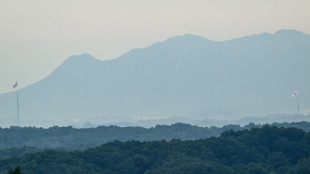 Three South Korean soldiers injured in DMZ blast: military

First, the jihadists sent a letter saying they were coming to the village to preach, said Nigerian chief Umar Bio Salihu.
When no one attended, they went on a rampage, killing people and torching houses, he said.
Salihu is the traditional chief of Woro, a small, Muslim-majority village in west-central Nigeria where alleged jihadist gunmen are reported to have perpetrated a massacre late Tuesday.
Details are still emerging from the attack, but it is one of the country's deadliest in recent months. According to the Red Cross, the death toll stands at 162 people, and the search for bodies is ongoing.
Badly shaken, Salihu recounted the night of terror he survived as the attackers killed two of his sons and kidnapped his wife and three daughters.
Around 5:00 pm, the gunmen "just came in and started shooting", the 53-year-old chief told AFP Thursday, clutching his Muslim prayer beads in his hand.
"All those shops that are within the road, they burnt them... Some people have been burned inside their houses," he said.
Salihu survived by hiding in a house, then fled to the neighbouring town of Kaiama.
The attack lasted until 3:00 am, he said.
"When the day breaks, the corpses we see, it's too much," he said.
- 'Don't want their ideology' -
AFP reporters who visited Woro found it deserted except for a handful of men searching for bodies and burying the dead.
Large parts of the village had been reduced to piles of ash and rubble, with the remains of burned-out vehicles strewn across its dirt roads.
Resident Muhammed Abdulkarim said he had been standing by the road when he saw a group of what looked like soldiers in uniform approaching.
Then he realised they were "bandits", he said.
"They started chasing people, catching people, tied them by their back," he told AFP.
"We just hear, pa-pa-pa-pa-pa-pa-pa-pa. They are shooting them (in) their heads."
Abdulkarim, 60, lost 12 family members in the attack, and his two-year-old son was abducted, he said.
Woro, a village of several thousand people, sits near a forest region known to serve as a hideout for jihadist fighters and armed gangs, groups that have fuelled nearly two decades of violence in Africa's most populous country.
It is a Muslim community, but its residents want nothing to do with radicalised jihadist groups, said Salihu, the village chief.
"People don't want to follow their ideology," he said.
Salihu alerted the local security services.
"I think that is what brought the anger to come and just kill people like that in the community," he said.
The governor of Kwara State gave the death toll from the attack as 75.
But residents reported burying upwards of 165 bodies.
The attackers kidnapped another 38 people, mostly women and children, said local assembly member Sa'idu Baba Ahmed.
- 'Beastly attack' -
Nigerian President Bola Tinubu condemned the "beastly attack", deploying an army battalion to the troubled region and blaming Islamist movement Boko Haram -- though the name is often used generically for jihadist groups in Nigeria.
Kwara State is racked by violence by armed "bandit" gangs and jihadist groups that have been extending their range from northwestern Nigeria farther south.
In October, the Al-Qaeda-linked Group for the Support of Islam and Muslims (JNIM) claimed its first attack on Nigerian soil in the state, near Woro.
Nigeria's northeast is meanwhile the scene of long-running violence by Boko Haram and a rival offshoot, Islamic State West Africa Province (ISWAP).
Nigeria is broadly split between a Christian-majority south and Muslim-majority north.
US President Donald Trump has alleged there is a "genocide" of Christians in Nigeria -- a claim rejected by the Nigerian government and many independent experts, who say the country's security crises claim the lives of both Christians and Muslims, often without distinction.
Washington has alternately pressured and aided the Nigerian government in its fight against jihadist violence.
On Christmas Day, the United States launched strikes targeting jihadist militants in northwestern Nigeria.
UN Secretary General Antonio Guterres condemned the massacre in Woro as a "terrorist attack", and called for the perpetrators to be brought to justice.
G.Teles--PC