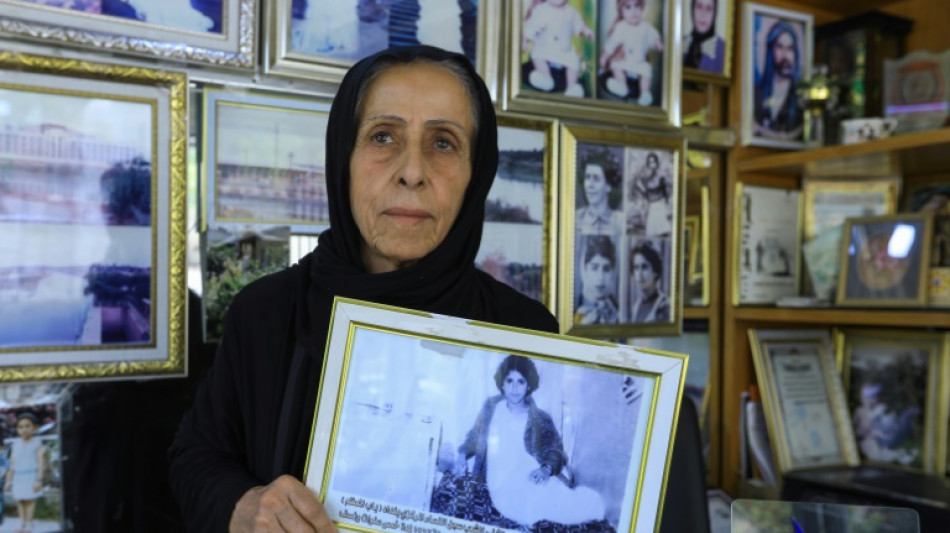
Focus on Samira, celebrity snapper of southern Iraq / Photo: Asaad NIAZI - AFP

 Amazon cargo plane overshoots Miami runway, hits vehicles, catches fire

 Toll from Yemen clashes passes 300 as civilians flee homes
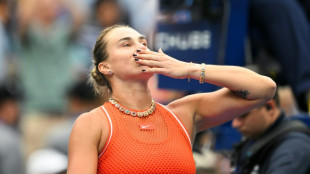 Sabalenka books US Open quarter-final clash with Noskova

 German AfD supporters jubilant at far right's thumping win

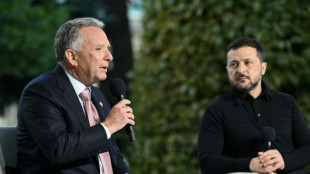
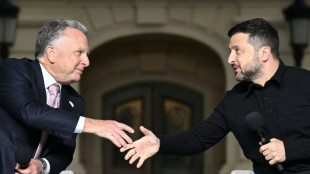 Zelensky warns war likely to continue into winter after US talks
 Arsenal deliver statement fightback to end Chelsea's flying start
 Leclerc accepts blame as Hamilton laments Ferrari approach

 Sabalenka surges past Townsend to reach US Open quarter-finals

 Smiling face of Germany's far-right AfD: Ulrich Siegmund
 Lebanon president calls for US help as Israeli strikes kill 7
 Yamal hits double as perfect Barca thrash Valencia

 Venice festival turns gaze on war reporters, media industry

 Sensational Antonelli wins Italian GP from back of grid
 Susan Sarandon says still losing roles over Gaza stance

 US envoys hold 'important' talks in first trip to Kyiv

 Championship leader Antonelli wins Italian Grand Prix

 Vardy signs for Championship strugglers Burnley
 FIFA confirms Infantino will run in presidential election

 With joy and grief, Palestinian football marks return
 Iran threatens greater force if US launches more attacks
 Vandals uproot Berlin tree commemorating Pride attack victims
 Trump envoys arrive in Kyiv for first Ukraine visit
 Indonesia's main airport suspends operations after volcanic eruption

 US aircraft carrier departs Thailand after port call
 Haze emergency grips Malaysian Borneo town
She's southern Iraq's celebrity photographer, a former political prisoner who has spent more than 60 years behind the lens documenting people and places and defying convention.
Samira Mazaal is 77 and still going strong more than half a century after turning to photography to feed her family -- because she had no choice.
"Peasants, intellectuals, I've photographed them all," says the mother of two, her black hijab framing a face lined by life.
"I have photographed Amarah in all its beauty -- I went deep into the marshes," to the south of the city in the floodplain of the Tigris and Euphrates rivers.
Everyone in the area turns to Studio Samira, be it for a passport photograph or to have a couple's portrait taken ahead of their wedding.
She tells how she became the first female photographer in Maysan province aged just 16, despite familial conventions that ruled in the Iraq of the 1960s, and also how political activism led to imprisonment and torture.
"My family has never known any other business -- we're all photographers," Samira says.
Framed photographs lining the walls bear witness to her trade, in both black and white or in colours faded by time.
She has albums of images showing Iraq as it used to be: black-clad women carrying huge bales balanced on their heads; a smiling peasant woman in a flowery dress, her hair braided, standing near a cow; a mother and child filling a pot with water from the river.
- 'Society can be cruel' -
Samira's father was among the first to introduce photography to the province.
"I asked him to initiate me into the craft, but he said: 'No, you're too young. You can't -- society can be cruel'," she recalls.
But soon circumstances would force him to change his mind. He was rendered blind in a botched operation, and could no longer provide for his family.
So Samira had to step in.
She started off using the daguerreotype method of the 1800s that uses silver-plated copper sheets, but then her father sold off some land so she could buy more modern equipment.
"My studio became extraordinarily successful," she smiles. "Because I was a young woman, I could take pictures of families."
Samira exploited the norms of a conservative society: the male heads of households preferred that a woman photographer, not a man, take the pictures of their wives and daughters.
Bassem al-Subaid is one satisfied client of Studio Samira.
"There isn't a single household in all of Maysan province that doesn't know Samira the photographer," he tells AFP.
"My generation got to know Samira when we came to be photographed by her," adds the man in his forties. "It was the previous generation that saw her political activism."
In 1963, Iraq was being torn apart by revolutions and bloody crackdowns, and the then adolescent had no idea that a communist tract would put her behind bars.
- A source of pride -
After General Abdel Salam Aref took power in a Baath party coup, three militants came to Samira's studio and asked her to mass-produce a poster denouncing the new regime.
She accepts that she had not yet completely formed her own political opinions, and was swayed at the time by her brother's sympathies.
"In all of Amarah, there wasn't a single wall without a pasted copy of the poster," she boasts. "It wasn't a crime -- it's a source of pride."
A picture of herself, which she still has today, made her famous. It shows her lying on a hospital bed after being tortured in a building in Amarah.
"I was screaming so hard I thought the whole town would come and save me," she recalls.
It was not to be: she spent the next four years, ill and abused, in a Baghdad prison.
She was freed after an international campaign that led to pardons for several political prisoners in Iraq.
In 1981, she was again jailed briefly under the rule of then dictator Saddam Hussein. And then again 10 years later over a protest in Amarah against the repercussions of the Gulf War over Kuwait.
Like several other women prisoners, she was granted a pardon after just a few months.
Today the photographic studio is still welcoming clients, and despite her age, the revolutionary flame still burns brightly in Samira.
She hails the October 2019 uprising, sparked by angry young Iraqis seeking to bring those in power to account.
"The protesters should have transformed their movement into a massive revolution to root out corruption and the corrupt," Samira says.
F.Moura--PC