EU fiscal oversight of Greece ends after 12 years / Photo: Louisa GOULIAMAKI - AFP/File

 Yemen's Houthis seize key city on Red Sea: military source

 Oil prices extend gains as markets await ECB rate outlook

 Wars pose a test as India hosts BRICS summit with China, Russia, Iran leaders

 Messi to buy second Spanish lower league club

 Pochettino calls for Chelsea to lose 2016-17 Premier League title
 North Korea leader's daughter believed to have younger sibling: Seoul

 Wars pose a test as India hosts BRICS summit with Russia, Iran leaders

 Zamanat Targets GCC’s $250 Billion SME Financing Gap With Up to $100 Million Tokenized Private Credit Fund
 Stocks drop as oil spike fans inflation and interest rate fears
 Portugal harvests grapes at night to beat the heat

 Philippine ferry fire kills 5, dozens missing

 Oil prices flare as Iran tightens grip on Hormuz
 Japan gymnasts under injury cloud for home Asian Games

 India trailblazer won't 'let go' of chance for Asian weightlifting glory

 Zverev cruises past van de Zandschulp into US Open semis

 Myanmar tin mega-mine restarts operations: think tank

 Online and undercover: saving trafficked wildlife in Thailand

 Antonelli faces new challenge after stirring triumph in Monza

 Korda leads US bid to win first away Solheim Cup since 2015
 Eurozone rate-setters to hike borrowing costs as energy prices jump

 As oceans warm, Florida scientists hunt for heat-resistant coral

 Trump takes center stage as Republicans fight midterm tide
 Gauff takes inspiration from Tiafoe in US Open fightback win

 Ralph Lauren opens fur-free New York Fashion Week

 Arteta lauds in-form Odegaard as 'remarkable' Arsenal edge Napoli

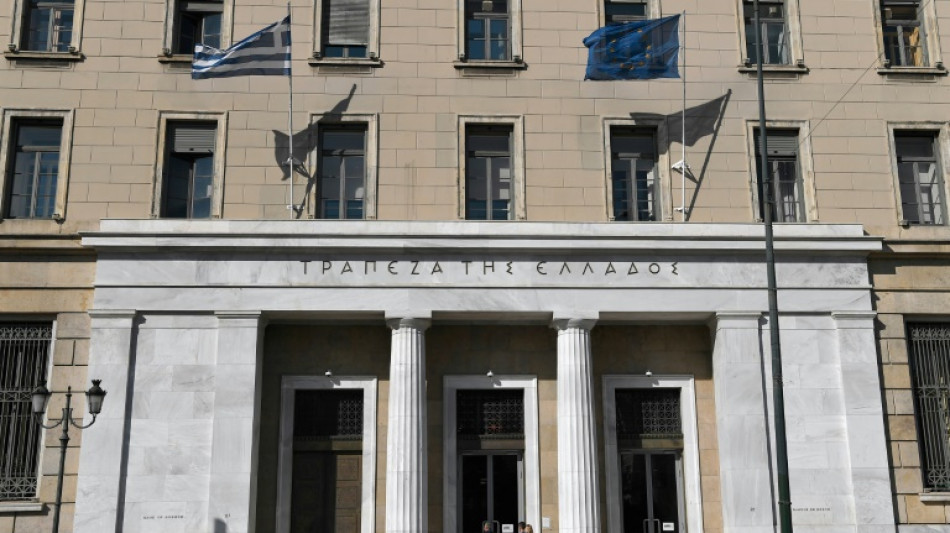
Greece on Saturday concluded 12 years of European Union fiscal surveillance that was imposed in return for bailouts after a crushing debt crisis.
In November 2009, Athens revealed a sharp rise in its public deficit that eventually led to a financial crisis across the eurozone and wreaked havoc on Greek finances for a decade.
In exchange for bailout cash of 289 billion euros and to stop Greece from crashing out of the eurozone, a "troika", made up of the International Monetary Fund, EU and the European Central Bank, demanded across-the-board reforms from Athens.
These included deep state spending and salary cuts, tax hikes, privatisations and other sweeping reforms aimed at righting public finances.
The economy contracted by more than a quarter, unemployment spiked to almost 28 percent and skilled professionals emigrated in droves.
"A cycle of 12 years which brought pain to citizens, led to economic stagnation and divided society," has ended, Prime Minister Kyriakos Mitsotakis said.
"A new horizon filled with growth, unity and prosperity emerges for all," he said. "The Greece of today is a different Greece.
"We have recorded strong growth and a significant slide in unemployment of three percent since last year and 5 percent since 2019," he added.
Ending the oversight will strengthen Greece's international market position by increasing its attractiveness to investors. Athens will also now have greater control over its domestic economic policy.
"The end of enhanced surveillance for Greece also marks the symbolic conclusion of the most challenging period the euro area has experienced," Paolo Gentiloni, the European Commissioner for Economy, said in a statement.
"The sovereign debt crisis that defined the first years of the previous decade was a steep learning curve for our Union.
"Our strong collective response to the pandemic indicated that Europe had learned the lessons of that crisis. We must show the same solidarity and unity as we navigate the troubled waters our economies are now entering."
Greece -- like fellow bailed-out EU members Spain, Portugal, Cyprus and Ireland -- will still be monitored by its creditors while paying back its debts.
In Greece's case, that will take another two generations, with the last loans due for repayment in 2070.
According to European Commission projections, the Greek economy will grow by 4 percent this year, much higher than the eurozone average of 2.6 percent.
However, Greece's unemployment rate is one of the highest in the monetary union, its minimum wage one of the lowest and the country's debt is 180 percent of gross domestic product.
O.Gaspar--PC