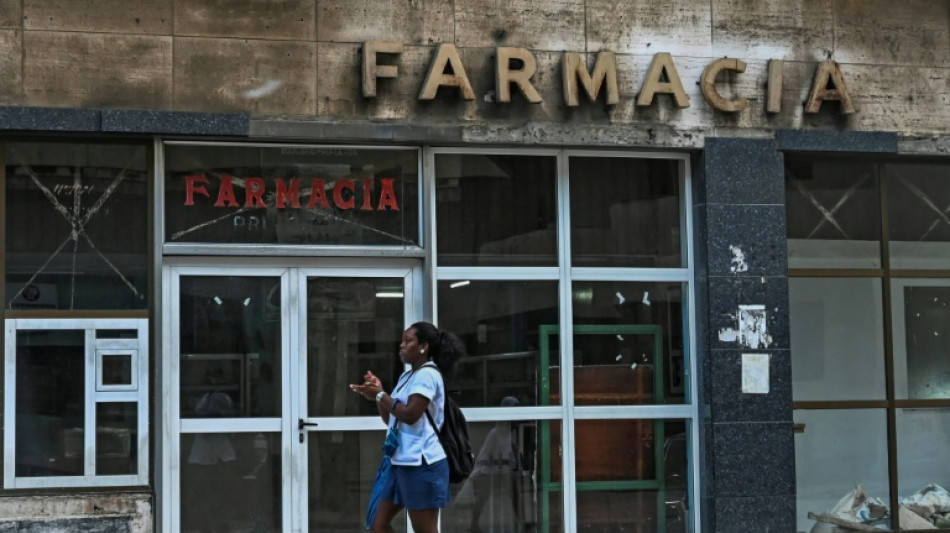
Crisis-hit Cuba opens pharmacies, gas stations to private firms / Photo: YAMIL LAGE - AFP

 Indians living in Japan on stand-by to house Asian Games athletes
 Trump signs bill authorizing sweeping Russia sanctions

 Protesters form human chain at Kennedy Center after Trump threat
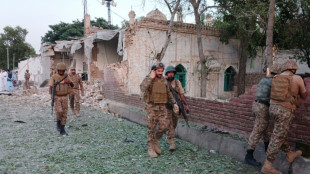 Death toll from attack at police HQ in Pakistan rises to 31

 Trump says Denmark to give US 'permanent control' over Greenland security

 Kennedy Center: future unclear for iconic Washington arts hub

 Trump claims 'infinite' Greenland security deal with Denmark

 Helicopters battle wildfire threatening Ecuador's capital

 Brentford batter Chelsea to undo Alonso's promising start

 Kane hits Bundesliga century as Bayern rout Union

 Trump says CNN, MS NOW, Politico banned from White House

 Hushing and hedging: US companies retreat on climate

 Springboks to face Fiji before 2027 Rugby World Cup

 Nigeria miners struggled to breathe in cell before 37 died: survivors

 McIlroy on the charge at PGA Championship as Reed withdraws

 McIlroy on the charge at PGA Championship

 Crisis-wracked Volkswagen warns of 10-bn-euro hit to profits

 Costa Rica's Grynspan tops third informal poll for UN chief: diplomat

 Stock markets retreat after central bank rate hikes

 Russia labels director of Cannes Grand Prix winner a 'foreign agent'

 Macron warns of Russian 'hybrid' threat after meeting presidential hopefuls

 UN holds third informal poll for new chief

 Kulusevski return can spark Spurs: De Zerbi

 Shakira to cap off world tour with Madrid 12-gig run

 Isolated Syrian-Druze city blames Damascus for shortages

Cuba on Wednesday moved to open several key crisis-ravaged sectors of its state-run economy to private firms, as the communist government tries to ease acute shortages resulting from a US energy blockade.
In a lengthy decree, the authorities lifted restrictions on a swath of sectors including petrol distribution, electricity generation, rubbish collection and the manufacture and sale of medicines.
For months, daily life in Cuba has been upended by rolling blackouts, water cuts and shortages of necessities like food and medicine.
The reforms -- decreed on July 22 but detailed Wednesday by state media -- seemed to target sectors linked to the most affected parts of daily life.
With piles of rubbish lining the streets of Old Havana, private firms will be able to operate waste collection and recycling services.
And with few buses or cars on the roads due to petrol shortages, private firms will also be able to import and construct electric vehicles.
Oil and mining operations will also be liberalized.
Details of reforms emerged as Cuba's National Assembly met, with delegates denouncing imperialism and chanting "socialism or death!"
Despite the rhetoric, the decree represents a loosening of decades-old communist doctrine as the party tries to withstand its biggest crisis since the death of longtime leader Fidel Castro and the collapse of the Soviet Union.
Cubans who once feared government reprisals now criticize the country's leaders and have taken to banging pots and pans in regular nighttime protests.
The new regulations "considerably broaden the scope for entrepreneurs and private companies on the island," state controlled media reported.
The government, however, stressed its tight control over sectors key to retaining power: education, telecommunications, media and defense.
Tobacco sales will also remain under government control.
The United States has effectively blockaded fuel imports to the island for almost six months, leading to an acute shortage of fuel for transport and electricity generation.
The US took control of Venezuela energy assets in late January, effectively cutting off Cuba's main source of supply.
Washington threatened sanctions against other countries that exported oil to Cuba.
There have been at least five nationwide blackouts this year and countless localized cuts.
Most parts of the capital have electricity for only a few hours each day.
Cuba's state electricity provider said it would be able to generate only about 27 percent of expected peak demand on Wednesday, leaving the grid facing a 2,380-megawatt shortfall.
X.Brito--PC