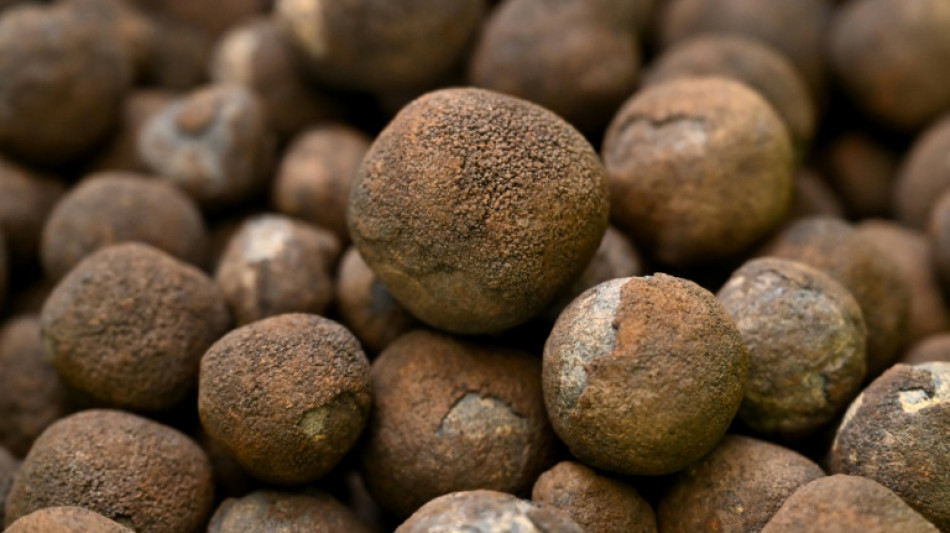
Pacific islands alarmed by Trump-backed push for deep-sea mining / Photo: William WEST - AFP

 Rising Kenyan lakes push crocodiles closer to homes

 Istanbul cymbals: From Ottoman war tool to pulse of global music

 Myanmar ex-junta chief on first Thailand trip as civilian leader

 Environmental disaster looms as tanker leaks off Oman

 Embattled Infantino sees minnows Malawi reach WAFCON quarter-finals

 Seeds Rybakina, Pegula and Gauff advance at WTA Toronto event

 Zverev, Auger-Aliassime exit star-short Montreal Masters
 Embattled FIFA chief Infantino in emergency talks in Morocco
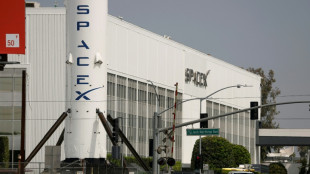
 Castaway SpaceX rocket stage crashed into Moon, scientists say
 Dow edges to record as markets parse prospects for Hormuz deal
 Salah arrives in Turkey to complete Trabzonspor move

 AFP journalist to be honored at International Press Freedom Awards

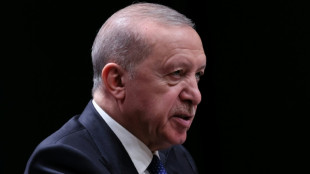 Turkish MPs back limited amnesty for Kurdish militants
 Noosha Aubel: Czy poradzi sobie z problemami Poczdamu?

 Noosha Aubel: Είναι σε θέση να αντιμετωπίσει τα προβλήματα του Πότσδαμ;

 نوشا أوبيل: هل هي على مستوى التحديات التي تواجهها بوتسدام؟

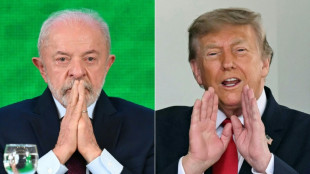 Brazil hits new diplomatic lows with US and Argentina

 NZ boxer Parker promises ring return after doping ban 'lifted'

 Disney profits top estimates on strength in theme park business

 LIV Golf CEO says funding secured to play beyond 2026
 Stocks stall tracking earnings, oil dips on Iran-Oman Hormuz move
 Tuipulotu to lead New Zealand in South African tour opener

 Leftist Democrat urges unity after victory in Michigan

 Austria, Slovakia hit new temperature records

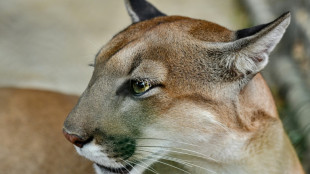 Where mountain lions roam, fewer deer in the headlights

A Pacific island leader says there were "no consultations" before the US announced swathes of nearby ocean could be auctioned for deep-sea mining exploration, telling AFP the industry faced strong opposition among his people.
Commonwealth of Northern Mariana Islands Governor David Apatang said the idea had caused great unease across the tropical island chain of some 40,000 people.
The United States alarmed its tropical island territories earlier this year, detailing plans to carve up parts of the Pacific Ocean for mining exploration.
Mining companies see enormous wealth in mineral deposits scattered across the seabed, but the fledgling industry has for years been held back by environmental concerns.
An expanse of US maritime territory near American Samoa in the South Pacific could be auctioned as soon as November, according to official documents.
Separate tracts of ocean surrounding Guam and the Northern Mariana Islands in the Western Pacific are also under consideration.
"Some concerns include disruption to food security for the people of the Commonwealth of the Northern Mariana Islands, who rely on the ocean resources for their survival," Apatang told AFP.
Washington initially proposed to explore a 140,000 square kilometre (50,000 square mile) block about 200 kilometres east of territory capital Saipan.
But Apatang said he was caught by surprise when the US announced in March that a similar-sized block to Saipan's west could be leased as well.
"There have been no consultations with the people of the Northern Mariana Islands," he said.
Deep-sea mining companies want to scour the ocean's abyssal plains for mineral deposits and polymetallic nodules laden with nickel, copper and cobalt.
- 'Unleashing' resources -
US President Donald Trump signed an executive order in 2025 aimed at "unleashing" these seabed resources, stressing the demand in everything from renewable energy to military applications.
Critics fear deep-sea mining will cause irreversible damage, smothering marine life in plumes of waste and disrupting oceanic migrations with the thrum of heavy machinery.
The Mariana Islands, Guam and American Samoa all want at least a temporary ban on deep-sea mining in their territorial waters.
But the US territories -- which rely on Washington for funding and defence -- have little say on what Washington does outside their three mile (five kilometre) maritime boundary.
Guam passed laws this year banning deep-sea mining vessels from calling at its ports, potentially hampering the industry by cutting off a crucial source of fuel and supplies.
Apatang said the Northern Mariana Islands would "consider following suit".
Plans for deep-sea mining exploration are most advanced for a vast sweep of ocean near American Samoa, a US territory nestled between New Zealand and Hawaii in the South Pacific.
The US Bureau of Ocean Energy Management is proposing to hold an auction in November, selling exploration licenses for a 125,000 square kilometre block.
The area borders the vast Rose Atoll marine sanctuary, where endangered species of Hawksbill turtle thrive on vibrant reefs.
Lawmaker Aumua Amata, who represents American Samoa in the US House of Representatives, said she worried deep-sea mining could disrupt fisheries providing the vast bulk of the territory's export earnings.
"I represent our people and I am confident that a majority of American Samoans are opposed," she told AFP.
The licenses cover preliminary surveys and sampling, with future decisions on commercial exploitation needing further bureau approval.
- Money for 'nothing' -
American Samoa-based environmental advocate Sabrina Suluai-Mahuka said it was impossible to put a "price tag" on the ocean.
"It's not something you think: 'How much money can you make off it?'."
Former US diplomat Emily Wood has been working with the Guam governor's office to better understand the risks of deep-sea mining.
She said leading mining company Impossible Metals had pledged to share one percent of profits with island communities.
"That's nothing at all, compared to the potential damage they might cause," she told AFP.
Impossible Metals did not reply to a request for comment.
The company has previously stated it will not start mining until it is satisfied it is safe.
Pacific island nations are divided on whether deep-sea mining will deliver economic windfalls, or environmental catastrophe.
Nauru and the Cook Islands are among world leaders in seabed mining exploration, while the likes of Samoa, Fiji and Palau have called for a moratorium on the industry.
The US Bureau of Ocean Energy Management was approached for comment.
A.P.Maia--PC