Preparing for the worst near Ukraine's precarious nuclear plant / Photo: Handout - Maxar Technologies/AFP

 US judge weighing Trump's White House ban on media outlets
 At UN, OpenAI's Altman calls 'for extreme care' in AI

 Hamilton gives thumbs up to Gulf GPs despite Iran conflict

 Leclerc admits going 'too far' in Hamilton shunt in Italy

 Row engulfs Dolly Parton's estate as manager accuses nephew of making threats
 Mandela Digital Extends Early Access Programme to 11 February 2027 Following Strong Response

 US seeks 11th Presidents Cup win in a row over global foes

 McDonald's to boost franchisees as inflation weighs on consumers
 Trump invites Putin to G20 summit in Miami

 Archaelogical 'breakthrough' could confirm origins of Paris

 ILO financial crisis takes centre stage in leadership race

 Stocks dip, oil soars despite Trump hailing "productive" Iran talks

 China's Xi to get rare airport welcome from Trump

 Turkey reassures investors over investment fund crisis

 Saka says England still have 'scar' from World Cup semi-final loss

 アレックス・ボディ氏とシュテファン・ハウプト教授、ルーマニアの伝説的な美術コレクションをめぐり提携に合意

 亞歷克斯·博迪與史蒂芬·豪普特教授就羅馬尼亞傳奇藝術收藏達成合作協議

 Алекс Боди и проф. д-р Стефан Хаупт договорились о сотрудничестве в рамках легендарной коллекции произведений искусства в Румынии

 French foreign minister says Palestinians 'must' hold polls

 Fresh Russian strikes on Ukraine's infrastructure kill seven

 Eriksen to return to Denmark after parting ways with Wolfsburg

 Brad Pitt says working with dog co-star was 'really moving'

 Golan will remain Syrian, vows President al-Sharaa at UN

 Blueberry Strengthens MENA Presence with CMA Category 5 License and Dubai Office Launch

 Russia probes bear attacks, as official says town under 'siege'

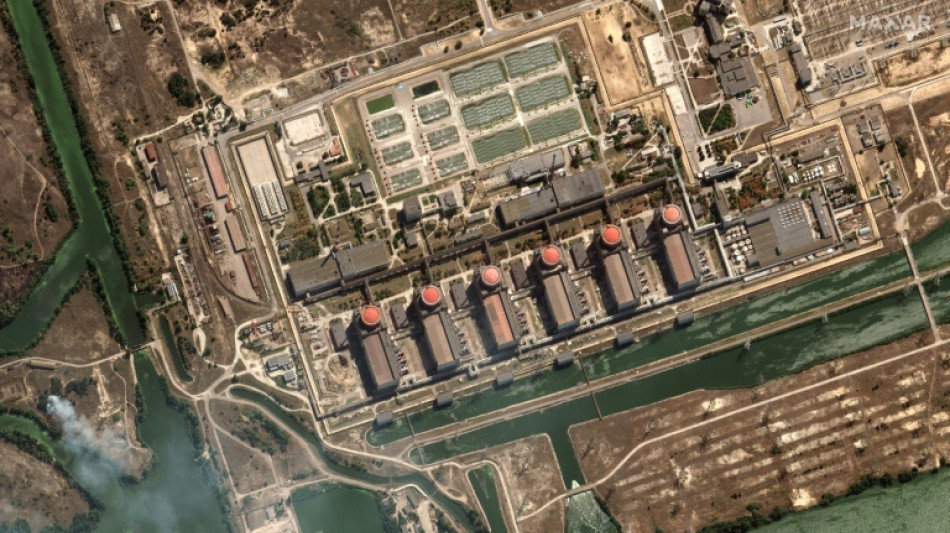
In the southern city of Zaporizhzhia, which lies close to Europe's largest nuclear plant, which has been targeted by shelling, Ukrainians are picking up iodine pills and preparing for the worst.
The city lies some 50 kilometres (30 miles) as the crow flies from the Zaporizhzhia nuclear plant which has been occupied by Russian troops since early March in an area hit by ongoing fighting.
Moscow and Kyiv have traded blame over the shelling around the complex and the nearby town of Energodar amid UN warnings about "the very real risk of a nuclear disaster".
"You know, we survived the accident at the Chernobyl nuclear power plant," says Kateryna, a 68-year-old pensioner who still has thyroid problems linked to the 1986 disaster when one of the reactors exploded.
"That threat was very big, but we survived. Now we have six reactors, not one," she said of the Zaporizhzhia complex.
Like dozens of other residents, she went on Monday to a school handing out iodine tablets that can reduce the medical risk of radiation in the event of a disaster.
Should a serious incident happen at a nuclear facility, it would release radioactive iodine into the atmosphere which, if inhaled, can increase the risk of thyroid cancer -- an effect observed after Chernobyl.
The tablets can help prevent radioactive iodine concentrating in the thyroid gland so it can be flushed out of the body naturally though the urine.
Some 13 schools have been distributing the tablets, which doctors say should be given to anyone living with in a 50-kilometre radius of the plant.
So far, more than 5,000 of the city's residents, among them more than 1,500 children, have collected iodine pills over a two-day period, officials say.
"The tablet is taken in case of danger, when the alarm is raised," said Elena Karpenko, a nurse at the Zaporizhzhia Children's Hospital.
- Radioactive risk -
With tensions high around the plant, inspectors from the International Atomic Energy Agency, the UN's nuclear watchdog are due to visit in the coming days, with the team led by IAEA chief Rafael Grossi.
Beyond the shelling, Kyiv has also accused Moscow of using the plant for storing heavy weaponry and arms and stationing some 500 soldiers at the site.
But the Kremlin has insisted it only has security personnel there. On Monday, Moscow urged the international community to put pressure on Ukraine "so it stops endangering the European continent by shelling".
Last week, the plant was briefly severed from the national grid for the first time in its four-decade history after its last working power line was shelled. Ukraine's nuclear agency Energoatom warned there was a risk of "hydrogen leakage and sputtering of radioactive substances".
Over the weekend, the emergency services in Zaporizhzhia held training sessions on managing the risk of nuclear accidents. They carried out mock evacuations and conducted decontamination exercises involving radioactive dust.
So far, the city has stockpiled two tonnes of decontamination products.
In the event of a leak, two sirens will go off to warn the city's inhabitants: an initial alarm then a second one 24 hours later.
"Perhaps the radioactive cloud will not reach the place where people are," said Taras Tyshchenko, the region's health chief.
"By the time the second alarm goes off, we will clearly know how far the radioactive cloud has spread.
"We will have all the information about safe areas to evacuation sites," he said.
J.Pereira--PC