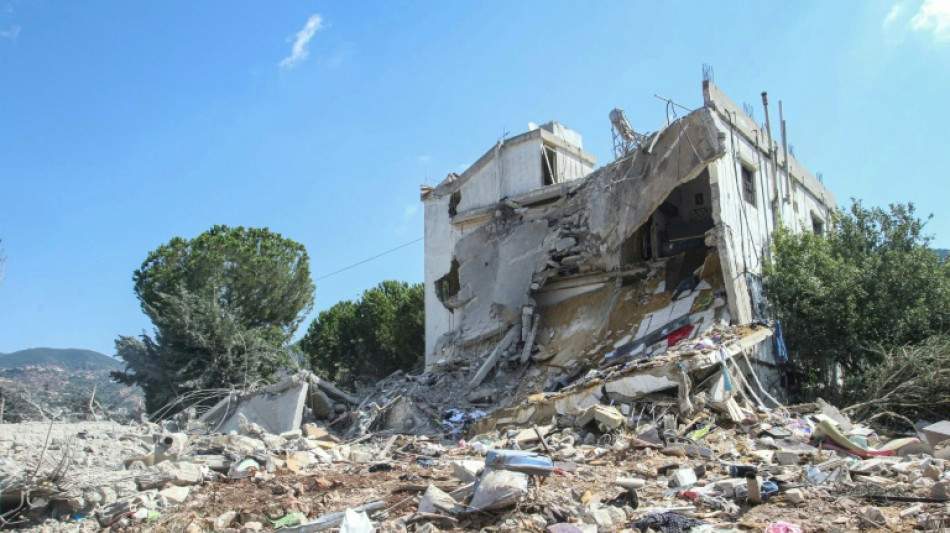
Lebanon president calls for US help as Israeli strikes kill 7 / Photo: MAHMOUD ZAYYAT - AFP

 Mutual fund returns show shifting leaders across market-cap categories

 BHEL wins Adani Power projects valued at up to ₹28,000 crore
 India seeks threefold increase in coal stocks to prevent summer power shortages

 Indian companies report mixed second-quarter results on November 4
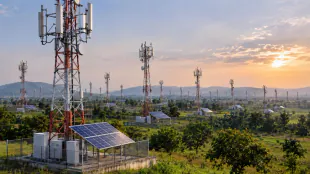
 KKR secures Indian regulator approval for Gentari Renewables investment

 Bharti Airtel revenue expected to grow at double-digit pace in second quarter

 Indian crude-sensitive shares gain after 13% oil-price decline

 Stocks and dollar fall as Democratic election gains reshape markets

 Kuwait marks key events and anniversaries from national history

 Trump congratulates Democrats and signals willingness to cooperate

 Qatar prime minister advances mediation through diplomatic calls

 Greenland parliament approves security agreement with United States

 Qatar envoy meets incoming UN General Assembly president

 Trump Signals Willingness to Work With Democrats After Midterm Defeat

Lebanese President Joseph Aoun urged Washington and the international community to help stop Israeli attacks, which killed at least seven people on Sunday despite a truce and a framework deal aimed at halting the violence.
Israel said it had targeted Hezbollah operatives and sites in response to a drone attack a day earlier by the Iran-backed group on its troops in the vicinity of a strategic south Lebanon ridge.
It reported no casualties but accused Hezbollah of a "blatant violation".
Israel this week said it had captured the Nabatieh-area Ali al-Taher ridge, which it considers part of its self-declared "security zone" in south Lebanon.
Hezbollah, which has not claimed any attacks for weeks, has not commented on Israel's declaration of control over the site.
Aoun said Sunday's strikes, which damaged government premises and destroyed an out-of-service hospital, were "a dangerous escalation... reaching Lebanese state institutions" and health facilities.
He called on the international community -- particularly the United States, which has sponsored direct Israel-Lebanon talks and a framework agreement between the sides in June -- "to urgently act to stop these violations".
Lebanon's health ministry said two people were killed in strikes on south Lebanon's Nabatieh al-Fawqa, with two women also killed in nearby Arab Salim.
It said 20 other people including several women and three children were wounded there, as well as in the city of Nabatieh and town of Kfar Rumman.
The ministry later reported that a strike on a parking lot near Nabatieh killed three more people.
- Hospital hit -
The ministry said one of the strikes in Nabatieh al-Fawqa "totally destroyed" the out-of-service Ghandour hospital, decrying "another grave violation of international humanitarian law".
Israel's army said it targeted Hezbollah operatives and infrastructure, including "weapons storage facilities and terrorist structures", as well as "a Hezbollah command centre that had been established inside a building previously used as a hospital".
It had earlier issued its first evacuation notice in Lebanon in a month, warning residents near a building it called a Hezbollah facility in Arab Salim to leave ahead of an attack on the site.
It did not issue warnings for other areas where strikes were reported.
Lebanon's state-run National News Agency (NNA) said that after the Israeli warning for Arab Salim, "enemy warplanes launched a strike on another house, destroying it" and killing the two women.
It said the Israeli military subsequently carried out a strike on the building threatened in the evacuation warning.
At the scene of the second strike, an AFP correspondent saw the ruins of a devastated villa, with large decorative columns laying on their side next to stairs littered with rubble.
Haidar Haidar, the brother of the building's owner, told AFP that nobody had been living inside.
At the other site in Arab Salim where the two women were killed, a mattress, furniture and other items including a Hezbollah flag were strewn among the rubble, while neighbouring buildings were also damaged.
- 'Take action' -
The NNA also reported a strike on a motorcycle in the Nabatieh area, and said that another in the city itself targeted a historical building and damaged offices belonging to finance and agriculture authorities.
An AFP correspondent there saw rubble and extensive damage to adjacent buildings, shops and vehicles, as heavy machinery cleared the road. Dust and debris covered chairs and desks in the regional ministry offices.
Nabatieh Mayor Abbas Fakhreddine said "the Lebanese government must take action... and at the least defend its institutions", adding that it was the second time the official buildings had been damaged by strikes.
Lebanon was drawn into the wider Middle East war in March after Hezbollah attacked Israel in support of its backer Iran.
Israel responded with airstrikes and a ground invasion of Lebanon that Beirut says have killed more than 4,300 people.
Violence has decreased since a US-Iran memorandum of understanding on the broader regional conflict in June and the Israel-Lebanon framework agreement later that month.
Israeli forces are operating inside a self-declared "security zone" around 10 kilometres (six miles) deep inside Lebanon along the border.
strs-lg/smw/jfx
L.E.Campos--PC