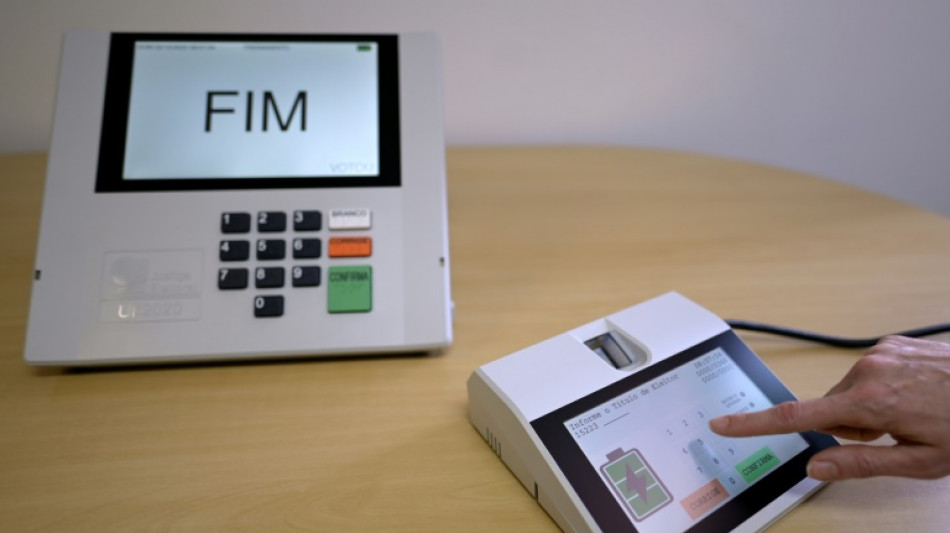
Five things on Brazil's voting machines / Photo: DOUGLAS MAGNO - AFP/File

 Xi arrives in US to personal Trump welcome

 Morocco elects new parliament amid social frustration, youth discontent
 Scheffler and Burns to face Im and Lee in Presidents Cup opener

 Crushing wins for Lyon and Barca in women's Champions League
 Rio breaks record for rainiest September amid powerful El Nino
 At UN, tech chiefs urge caution in AI development
 Russian strikes kill seven in Ukraine, Zelensky vows winter campaign
 Venezuelan shot by ICE needs urgent medical care, mother tells AFP

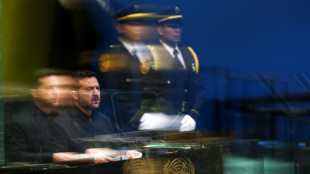 Zelensky says Putin using fighters from 47 countries in Ukraine war

 Klopp calls on Germany to 'rise above ourselves' as new era begins

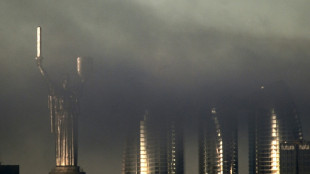 Russian strikes kill seven in Ukraine as Russia vows no 'pause' to war

 ArcPoint Expands Globally with Institutional Intelligence Platform for Modern Investors

 Ronaldo focussing on 'present' ahead of Wales test

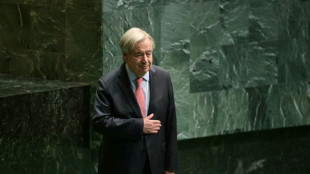 Outgoing UN chief makes final climate push at New York summit
 Grief and pain flow at hearing for Canadian suicide poison vendor
 Ireland boss Hallgrimsson says timing of Israel remarks 'not clever'
 Weinstein resentenced to 15 years in prison for 2006 sex assault
 Fendi brings disco bling, Italian style, to Milan Fashion Week
 French court confirms rape trial for PSG and Morocco star Hakimi
 President tells Trump that Iran will never 'bend at the knee'
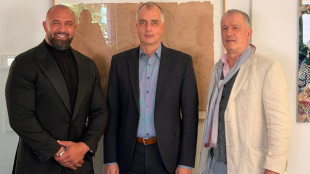 أليكس بودي والبروفيسور الدكتور شتيفان هاوبت يتفقان على التعاون من أجل مجموعة فنية أسطورية في رومانيا
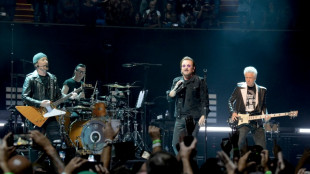 U2 at 50: Irish rockers reveal anniversary album
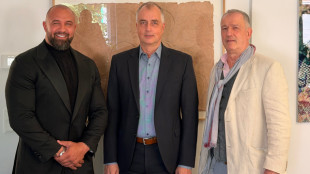
 Алекс Боді та проф. д-р Стефан Гаупт домовилися про співпрацю щодо легендарної колекції мистецтва в Румунії
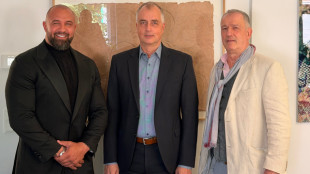
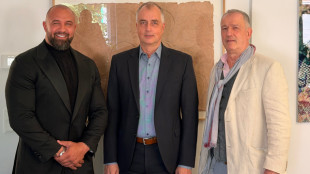
 Alex Bodi și prof. dr. Stefan Haupt încheie un acord de cooperare pentru o colecție de artă legendară în România

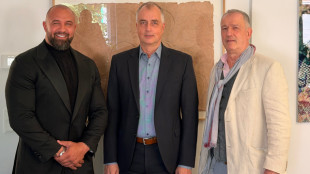
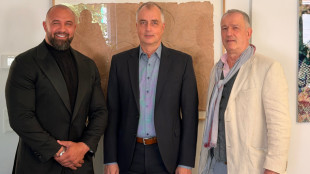 Alex Bodi and Prof. Dr Stefan Haupt agree to collaborate on a legendary art collection in Romania
Brazil has used electronic voting machines in its elections since 1996. But it is only recently they became controversial, with allegations by far-right President Jair Bolsonaro that they are plagued by fraud.
Here are five things to know about the squat beige computers fueling a raging debate on democracy in Latin America's biggest country.
- How did they start? -
Ironically, given Bolsonaro's bashing, the electronic voting machines were introduced partly to combat fraud.
Brazilians used to vote on paper ballots where they would check a box or write in a name, depending on the type of election.
In a country where 14 percent of the adult population was illiterate, the system was chaotic, slow and fraud-prone.
"There were always problems with the count. Illegible writing, names written in the wrong place, X's outside the box -- all that meant a ballot was declared null," says Henrique Neves da Silva, a former judge on Brazil's Superior Electoral Tribunal.
"There was also a lot of fraud and ballot-box stuffing."
With help from the military, computer experts developed the country's first electronic voting machine, rolled out in 57 cities for the 1996 local elections.
- How widespread are they? -
Celebrated as a success, the voting machines were expanded to 67 percent of the electorate for Brazil's 1998 elections, and 100 percent for the 2000 elections.
Brazil is one of 23 countries using electronic voting for general elections, according to the International Institute for Democracy and Electoral Assistance.
Another 18 use them for regional elections.
- How do they work? -
The machines are equipped with a number pad.
When voters type the two-digit code for their chosen candidate, his or her picture appears.
They then press a green button to confirm.
"It's a very simple machine, with one function: to tally votes," says Da Silva.
A key detail: the machines are not connected to the internet.
When voting closes, poll workers remove the memory card from each machine and send them to the local office of the electoral authority, which in turn sends the information to the central counting system in Brasilia via an independent network.
In remote regions such as the Amazon rainforest, a satellite connection is sometimes used.
Results are usually finalized in around two hours -- not bad for a sprawling country with 156 million voters.
- How secure are they? -
The vote-counting software is updated for every election.
Political parties, the judiciary and the military are allowed to inspect the source code.
Security tests are also held in which IT experts attempt to hack into the system.
"They literally take the machines apart, touch whatever they want. There is way more leeway than what (a theoretical hacker) would actually have on election day," says Da Silva.
No major security flaw has ever been detected.
- What does Bolsonaro say? -
Bolsonaro insists the system is plagued by fraud, but has provided scant evidence.
He claims he should have won the 2018 presidential election in the first round, instead of the runoff, but has offered no proof.
He is pushing for a paper print-out to be made of every vote, so the count can be checked.
But election authorities say that would only introduce an avenue for fraud.
Prosecutors are investigating the president on charges of spreading disinformation about the voting system, including during a meeting with foreign ambassadors in July that was spattered with falsehoods.
The US embassy said after that meeting that Brazil's elections are "a model for the world."
Bolsonaro has repeatedly threatened not to recognize the election result if the system is not changed.
A.F.Rosado--PC