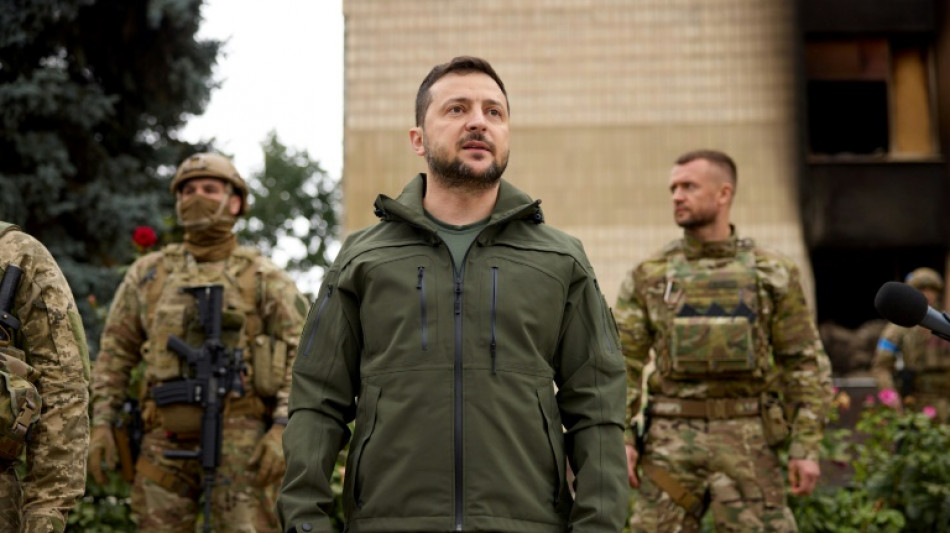
UN member states may allow Zelensky to speak by video / Photo: STR - Ukrainian presidential press-service/AFP

 UK Economy Grows 0.7% in Third Quarter as Services Lead Expansion

 India's Retail Inflation Reaches 6.09% as Food Prices Accelerate

 China's October Activity Data Reveal a Weak Start to the Fourth Quarter

 Critics Demand Stronger Action from Jeffries and Schumer Following Democratic Wave

 Grand Theft Auto VI: Inside the Decade-Long Development of a Billion-Dollar Cultural Phenomenon

 Maldon Sea Salt Uses Imported German Rock Salt in Production Process
UN member states will vote Friday on making an exception to allow Ukrainian leader Volodymyr Zelensky to address next week's General Assembly by video, according to diplomatic sources.
World leaders were allowed to speak by video in 2020 and in 2021 due to the Covid pandemic, but this year the event has gone back to in-person.
Only heads of government or state are allowed to speak.
Countries like China and Russia that haven't sent a head of state or government can have another top official speak on their behalf, but only after the heads have spoken.
A draft text seen by AFP, which will be submitted to the General Assembly on Friday, notes that some leaders cannot participate for reasons beyond their control "owing to ongoing foreign invasion, aggression, military hostilities."
As a result, it suggests "Ukraine may submit a pre-recorded statement of its Head of State."
According to the latest available schedule, Ukraine's address is slated for Wednesday, September 21 in the afternoon.
Since the invasion of Ukraine by Russia in February, the Ukrainian president has made several video addresses to the members of the Security Council.
The last occasion was August, when the video address was opposed by Russia, in vain.
T.Resende--PC

