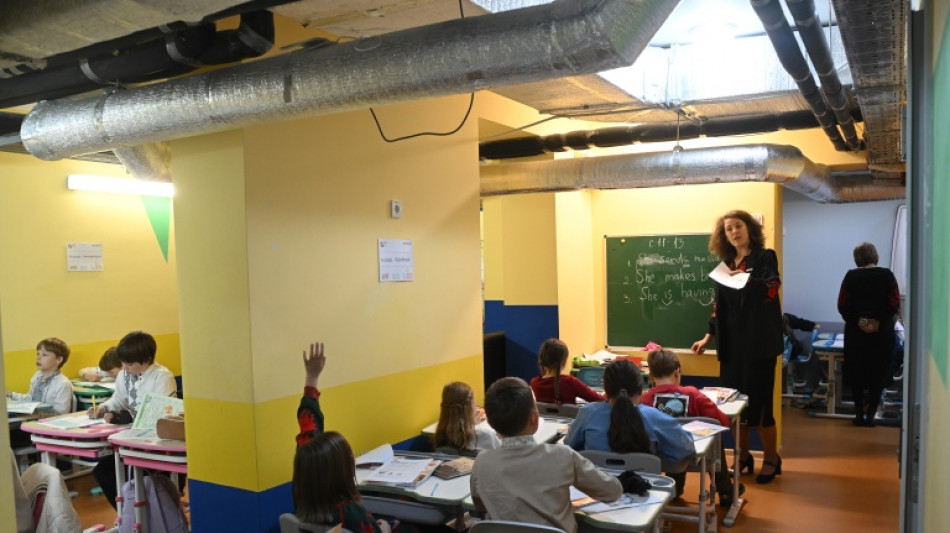
'To the shelter, quickly!' Air raids reshape Kyiv school life / Photo: Sergei SUPINSKY - AFP

 Petrol and diesel prices remain broadly steady across major Indian cities

 Reliance shares remain in focus after near-12% surge

 2026 Arizona Midterms: Key Races, Ballot Measures, and Voter Deadlines

 Coal India prepares possible $1 billion Mahanadi Coalfields listing

 Julia Stiles and Ezra Sosa Share Emotional Farewell After 'DWTS' Elimination

 US Buildings Threatened by Wildfires Could Triple by 2060

 Why Pregnancy Cost Estimates Fail: A Family’s $9,000 Surprise

 US Strikes Iranian Targets in Strait of Hormuz Ahead of Midterms

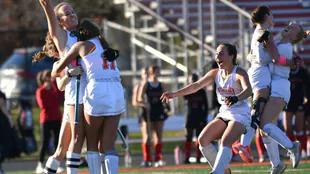 Brodeur’s Overtime Goal Secures Bethlehem’s Second Consecutive Sectional Title

 Rare 1970 Plymouth ‘Cuda 426 Hemi Listed for $400,000
 The Digital Burden: Why Instant Messaging Feels Like a Full-Time Job

 Alberta Tabled Controversial Riding Boundary Maps Amid Gerrymandering Accusations

 Hong Kong court set to sentence activist Joshua Wong in security case

 Australia raises benchmark rate to highest level in 18 years

 'The Remarried Empress' Cast Discusses Bringing Fantasy Royal Drama to Life

 Asian stocks retreat as AI worries outweigh steep oil-price drop

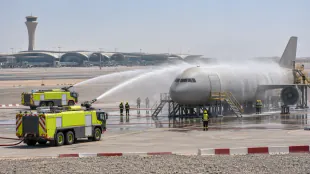 Hamad International Airport stages emergency drills during WATAN 2026

 Global failure to punish attacks leaves journalists at continuing risk
 Researchers Warn 'Bookkeeping Trick' Masks Beef Industry's Methane Emissions

 Climate Change Intensified Atlantic Hurricanes, Study Finds

 Qatar solar expansion opens scope for technical performance gains

 OMP Extends UnisonIQ with Agent Library and Agent Studio: AI Agents that Produce Executable Supply Chain Plans

When the air raid alert sounded over the Kyiv region, children knew exactly what to do: they grabbed their tiny backpacks and ran towards the shelter, abandoning bikes, toys and even a doll on the school playground.
Teachers scooped up the stragglers and ushered them into the shelter's entrance, while the cleaner scanned the playground, muttering as she checked that no one had been left behind.
"Everyone to the shelter, quickly, quickly, quickly!" said Valentyna Kurinna, director of the UMKA primary school in Kyiv's suburbs.
The risks weighed heavily on everyone's minds.
Just a few days earlier, a drone slammed into the same playground, narrowly missing a grandfather who stayed outside while the children had taken cover underground.
Security camera footage obtained by AFP showed him looking at the sky and running away just a few seconds before the explosion unleashed a huge ball of fire that burned the multicoloured playground.
Other videos from an empty classroom showed the blast blowing out windows, knocking out chairs and sending shards of glass across the room.
Four and a half years into Russia's invasion, many people in the Ukrainian capital choose to ignore the air raid sirens -- but at schools, they seek shelter every time.
Moscow used to hit the city mainly at night but now also attacks throughout the day, making the exhausting routine of repeatedly shepherding children in and out of shelters part of daily life.
On the day AFP visited the school, air raid alerts rang out five times between 7:30 am and 5:00 pm.
- 'When things are scary' -
Within minutes, all the school's 130 children were carrying on with their classes underground.
Yasya, Varvara and two girls both named Anya -- 11-year-old friends since kindergarten -- huddled around a table.
Practically jumping off the bench to speak to journalists, they suddenly became more shy when the camera turned to them.
"We can hug each other when things are scary. We can comfort each other with words too," Varvara said.
It also helped to reminisce, including about an episode they called "The Flood", when they accidentally flooded the bathroom during a sleepover, the memory of which left them in stitches.
Explaining the rules in case of air raid alert, they become serious.
"We all go to the shelter together and stay with each other," Anya said.
"I don't understand why we stay so close together," she said. "At the same time, we're supposed to run to the shelter as quickly as possible."
Kurinna, the school director, worked hard to keep panic from setting in.
"We have no right to show that we're scared. We have to smile, hug the children and reassure them," she said.
Teachers also had to manage the fears from parents. They sent updates on group chats, posting emoji-filled messages saying "we are safe!" and photos of their children doing schoolwork underground.
- 'Freedom!' -
The UMKA Grand School, a high-level private school, is an exception in Ukraine.
In the capital, only 40 percent of schools have shelters with sufficient capacity for all pupils, city hall told AFP.
Even those are often ill-equipped.
Parents have increasingly appealed to the education watchdog since air raids have become longer and more frequent, complaining of poor conditions including a lack of drinking water or access to toilets.
With private funding and an underground space, UKMA was lucky.
After the start of the war, staff quickly transformed the underground space -- initially meant to welcome a music school.
The shelter has four different entrances to allow all the children downstairs smoothly, and spans several rooms and corridors with desks for everyone.
In a separate room with bunk beds for napping, younger children sat on a pink-and-blue mat, captivated by a teacher reading them a story.
"We spend more time in shelter than in classrooms," Kurinna sighed.
As comfortable as their shelters were, after two hours underground, the all-clear signal was met with a wave of enthusiasm.
Anya, Yasya and Varvara finished their English class before dashing out to enjoy a 15-minute break in the fresh autumn sun.
"Freedom!" Anya said in English, before the girls joined classmates playing with a huge red, yellow and blue balloon.
E.Ramalho--PC