Key dates in Ivory Coast crisis

 Drone owners rush to offload devices ahead of Beijing ban

 Trump's beef policies irk Texas ranchers, testing their loyalty

 Nvidia, OpenAI CEOs to attend Xi dinner at White House

 Anthropic picks Accenture for in-house AI safety evaluation

 Balogun returns as Monaco beat Lens to continue strong Ligue 1 start

 'Pause' on overt repression in Venezuela, but reforms still needed: HRW

 Global stocks mixed as yen falls despite Bank of Japan rate hike

 Cuba hit with seventh major blackout of the year

 Murray out with concussion so Wentz will start for Vikings

 UN chief 'deeply regrets' US visa refusal to Abbas for annual meeting

 England quick Carse to face no charges over alleged nightclub assault

 Mancini brings nine newcomers into the first squad of his Italy comeback

 Czechs level Davis Cup tie against USA as South Korea eye Finals

 New France boss Zidane confirms Mbappe as captain after naming first squad

 California governor signs order to explore AI 'kill switch'

 Head leads run spree as Australia win Zimbabwe ODI series

 In-form Raphinha wants to finish career at Barcelona

 Warren Buffett steps down as Berkshire Hathaway chairman

 Carrick confident Man Utd can 'work through' tough time

 Mbappe ends Nike partnership to join Swiss brand On

 Liverpool boss Iraola puts Bournemouth love affair on hold

 'A disaster' if Man City do not win says Maresca after flawless start

 Kerry James Marshall: American 'blackness' painter celebrated in Europe

 Spain coach De la Fuente offers 'full support' to people of Ceuta

 Russia seizes assets of Nestle, French firms over West's Ukraine support

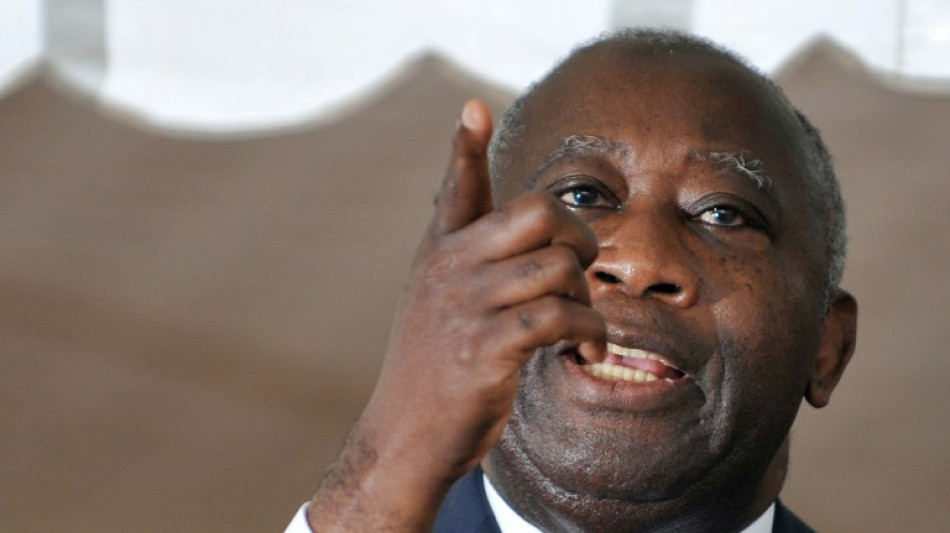
Ivory Coast ex-president Laurent Gbagbo, the first former head of state to go on trial before the International Criminal Court in The Hague, was acquitted on Tuesday of charges of crimes against humanity, relating to unrest triggered by his bid to cling on to power.
Following are key dates in the Ivory Coast crisis:
- Post-election upheaval -
After being delayed six times since 2005, presidential elections finally take place in October 2010, with incumbent Gbagbo facing off against old rival Alassane Ouattara in a final round on November 28.
On December 3, the constitutional council declares Gbagbo the victor -- but the electoral commission says Ouattara won.
The UN too recognises Ouattara as the winner, with the EU, UN and former colonial power France urging Gbagbo to concede defeat.
But a day later Gbagbo's allies hang the chain of office around his neck and Ouattara swears himself in as president in a handwritten letter.
On December 7, west Africa's regional ECOWAS bloc suspends Ivory Coast over the crisis and calls on Gbagbo to yield. The African Union follows suit.
Gbagbo digs in, holing up at the presidential palace and retaining the support of the army. Ouattara sets up his government headquarters at the Golf Hotel in Abidjan.
In March 2011, after months of tension, unrest and unsuccessful mediation efforts, forces loyal to Ouattara based in the north launch an offensive against the army and win control of much of the country in four days.
French and UN soldiers deploy in Abidjan to prevent the use of heavy weapons in what has become a civil war.
After 10 days of fighting in the capital, Gbagbo is arrested by Ouattara's troops. More than 3,000 people are killed during the crisis.
On May 21 Ouattara is sworn in as president before 20 African leaders and then French president, Nicolas Sarkozy.
- Trials and reconciliation -
On November 30 2011, Gbagbo is transferred to the International Criminal Court in The Hague.
In September 2014, a Dialogue, Truth and Reconciliation Commission holds public hearings of victims and perpetrators of the 2000-2011 political-military crisis, but is criticised for its lack of organisation and results.
On March 10 2015, former first lady Simone Gbagbo is sentenced in the main city Abidjan to 20 years in prison for her role in the post-election crisis.
In August 2018, the 69-year-old is granted an amnesty by Ouattara after spending seven years in detention.
- Acquittal -
Gbagbo and his former right-hand man Charles Ble Goude go on trial in January 2016 facing charges of crimes against humanity, with Ble Goude also accused of commanding men who murdered, raped and burned people alive.
On January 15 2019, both are acquitted.
The ICC says that by a majority, the court "decides that the prosecution has failed to satisfy the burden of proof to the requisite standard."
A.Santos--PC