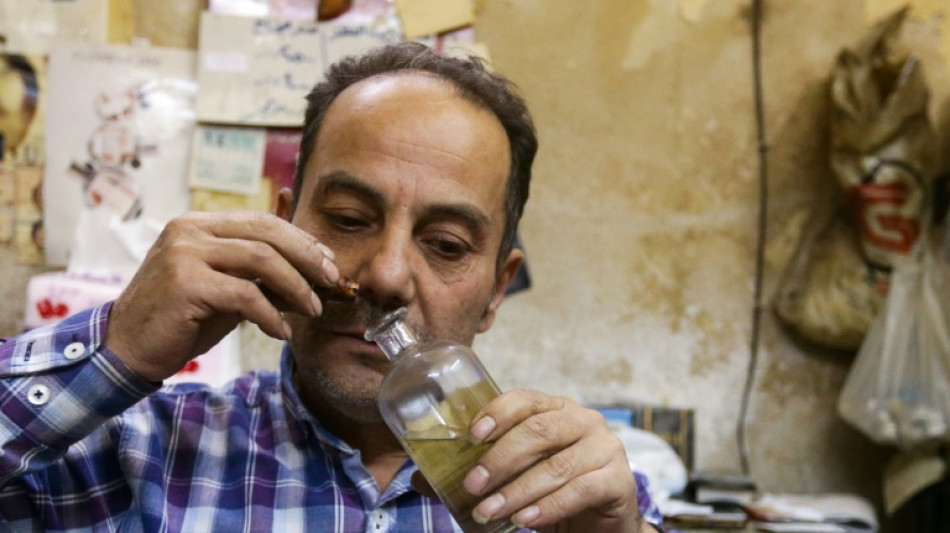
Syrian perfumer needs 'one whiff' to mimic luxury brands / Photo: LOUAI BESHARA - AFP

 Assefa seeks 'better than my best' at Berlin marathon
 US court refuses to overturn Pentagon ban on Anthropic

 Verstappen and Norris blame slow cars as Mercedes tops qualifying

 Crowds cheer pope in Paris after AI 'paradise of machines' warning

 Teen swimmer makes Games history as Thai, Chinese sprinters win gold
 Man City found guilty of 114 Premier League charges - reports
 Concerns over 'missing' UK explorer Ranulph Fiennes
 Suspected Paris killer of Argentine rugby star begs forgiveness
 Oil prices fall on cautious hopes for US-Iran progress

 Noskova, Muchova take Czech Republic into BJK Cup final
 Thai sprinter Puripol breaks own Asian Games record to win 100m gold
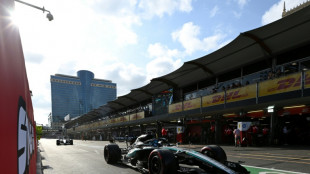 Russell takes pole for Azerbaijan GP, Antonelli crashes out
 Williams boss hails Chadwick as F1 inspiration for women
 World No.1 Sinner delays return with China Open withdrawal
 South Lebanon children return to school destroyed by Israel strike

 Jewish group urges Berlin far-left vote winners to tackle antisemitism
 European stock markets climb as oil prices drop

 Trump accuser E. Jean Carroll finally has her damages

 Germany's Havertz, Musiala ruled out of Greece match with injury
 Ireland's Gaza stance spills from Eurovision into football
 Welcome aboard the Costa Serena, the Asian Games floating hotel
 Asian markets mixed after recent oil surge
 Cash for nature protection: hotelier's offer to Principe islanders
 US miner KoBold bets on AI to gain edge in DR Congo mineral hunt
 Internet disrupted in Ethiopia as conflict rages
One whiff of a fragrance is all Syrian perfumer Mohammad al-Masri needs to recreate the scent of a luxury brand -- without the label and for a fraction of the cost.
Dozens of customers flock daily to his tiny store, nestled in the historic market of Damascus's old city, many flashing photos on their phones of high-end perfumes they want to replicate.
"All I have is my shop, and this nose I've been training since I was 15," the 55-year-old told AFP, pointing at his face.
"I don't have a big workshop or high-end equipment."
After 11 years of brutal war and economic dislocation, most Syrians struggle to afford life's bare necessities, let alone perfume.
Before the war, Masri would mostly concoct expensive oriental fragrances, with heavy notes of oud, a sweet and woody scent, like his family has done for a century.
But after Syria plunged into conflict, demand for cheap imitations of premium brands skyrocketed and Masri's shop walls are filled with pictures of world-famous perfumes.
"For young women, perfume is essential, it's like food or water," said 24-year-old customer Cham al-Falah.
"I used to buy Western perfumes but I can no longer afford them because imported products are becoming increasingly hard to come by in Syria," she said while ordering a fragrance imitating her favourite Italian perfume.
Although Damascus has been spared the worst destruction of the war, which began after its government repressed peaceful protests, the local currency has lost almost 99 per cent of its value on the parallel market.
Syrian employees and civil servants reportedly make roughly $25 a month on average -- a quarter of the price of a bottle of imported perfume.
Masri sells his fragrances for about six dollars, drawing in a flow of clients from all walks of life.
Ahmad Dorra, 60, travelled from the mountain town of Zabadani, a 50 kilometre (30 mile) drive away, to buy five bottles of perfume for his family.
He watched as Masri lined up dozens of vials on a table -- essences of jasmine, Damascus rose, musk and other fragrances used for his concoctions.
"I don't know much about Western brands," the farmer said, "but I trust (his) nose".
L.Torres--PC