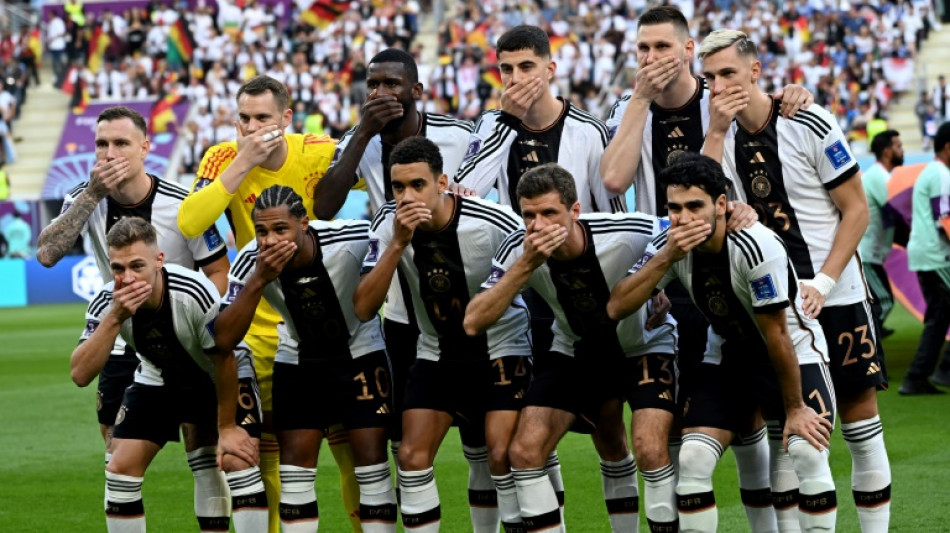
Virtue or signalling? World Cup protests get mixed reaction / Photo: Ina Fassbender - AFP/File

 TRON Founder Justin Sun Shares Outlook on Bitcoin, Stablecoins and Global Finance at Bitcoin Asia 2026
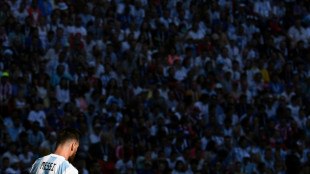 Tributes to 'eternal' Messi on Argentina retirement
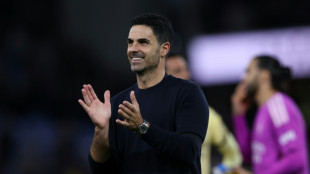 Arteta hails Arsenal's 'finishers' after Saka kills off Villa
 Yamal, Raphinha bag braces as Barcelona rout Rayo

 Alcaraz makes winning return at US Open, Sabalenka safely through
 Everton agree to sign Monaco's Balogun: reports
 Milei calls for F1 to return to Argentina
 Alcaraz wins US Open first-round match after injury layoff
 Kyiv orders heightened security amid intense Russian drone strikes
 Sabalenka kickstarts US Open three-peat bid as Fils crashes out
 Fils upset by resurgent Tsitsipas at US Open
 Trump says AI data center opponents want to be 'backwards and poor'
 Pakistan ditch coaches, send seven players home after England defeats
 Galliano pulls Met Gala exhibit after antisemitism backlash
 Afghan people should 'not be abandoned': top Red Cross official
 Six defining moments of Lionel Messi's Argentina career

 Trump blasts US backlash against data centers
 It 'hurts' says Messi of decision to retire from international football
 Benzema ends brief stint with Al Hilal in Saudi league
 Djokovic's Grand Slam future uncertain after brutal US Open defeat
 Turkey says regional defence pact not against any country

 US vows to keep economic pressure on Iran as G20 finance talks begin
 Shein valued at $26.3 bn in Hong Kong market debut
 Crude prices rise above $90 per barrel on US-Iran strikes

 Liverpool sign Barcola from PSG for reported £124 million

Human rights protests at the World Cup have drawn everything from sympathy to indifference and outright hostility, with Qatar's critics often finding themselves in the firing line.
Germany's hands-over-mouths protest, a reaction to being barred from wearing a "OneLove" armband, was swiftly followed by accusations of anti-Arab racism and taunts over the country's Nazi past.
Other acts of support for Qatar's LGBTQ community and migrant workers, often by European teams or fans, have prompted more suspicion than solidarity from many around the world.
"Put your hands over your mouths and we will pinch our noses so we don't smell your racism," Tunisian national Fathi Jouini said in a post on Facebook, referring to the German team.
Similar attitudes were seen elsewhere, with many lashing out angrily. In conservative Saudi Arabia, an Arabic hashtag that translates as "the gay team" trended on Twitter after the German protest.
The highly charged, often offensive exchanges on social media follow a bad-tempered build-up to the World Cup, when European officials and media led criticism of Qatar's rights record.
According to Dana El Kurd, assistant professor of political science at the University of Richmond in Virginia, critics of the tournament are sometimes guilty of "double standards".
"The discussion around Qatar's World Cup -- while sometimes bringing up absolutely correct and valid critiques -- has also been motivated by hypocrisy and double standards in many cases," she told AFP.
"I think it would be an omission if we didn't recognise that racism plays a large part," El Kurd said.
"They just see a country of Arabs in thobes (robes) and assume some extremist religious autocracy, when in reality people behave quite freely in Doha in terms of their personal choices."
- 'Ridiculous and insulting' -
This view gained currency in Germany's case when former international Sandro Wagner described the thobe as "Qatari bathrobes" while commentating on a match, sparking a social media storm. He later apologised.
On Tuesday, when energy-rich Qatar announced its first major deal to send liquefied natural gas to Germany, many on social media were quick to react.
"Your regular reminder that human rights concerns rarely get in the way of strategic interests," read one post on Twitter.
During the tournament, some fans have worn rainbow clothing and government officials from Germany, Belgium and Britain have been seen with "OneLove" armbands in stadiums.
But various parts of the world have shown little enthusiasm for a human rights debate centred on a football tournament.
Senegal's media has largely ignored the subject and comment has been muted in Japan, AFP correspondents said.
Japanese, Serbian and Croatian football chiefs are among those who have preferred to steer clear of rights issues.
"There are inequalities and injustices... but some Western European countries do not reflect on their own contribution to injustices," said Danyel Reiche, a visiting associate professor at Georgetown University Qatar.
"When we look at the shirts the teams are wearing, or the balls they are playing with... they are produced in Southeast Asian countries, through cheap labour," added Reiche, who co-authored a book on the politics of the Qatar World Cup.
However, sociologist Nandita Sharma, whose work focuses on migrant labour, warned of the dangers of dismissing criticism of Qatar as a purely Western phenomenon.
"People are weaponising and misrepresenting critiques of orientalism and imperialism to insulate the Qatari state from criticism," said the professor at the University of Hawaii at Manoa.
"To hear that our criticisms and concerns about migrant workers in Qatar is an instance of 'Western imperialism' or 'whiteness' is ridiculous and insulting," she told AFP.
Ferreira--PC