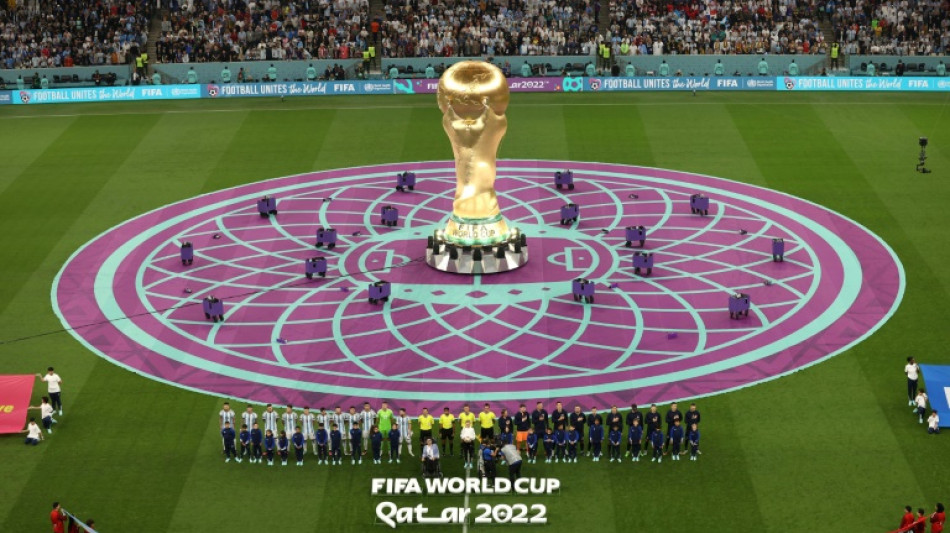
FIFA readies 48-team World Cup as eyes turn to 2026 / Photo: ADRIAN DENNIS - AFP

 Back-to-school in Cuba a grim day with shortages of everything
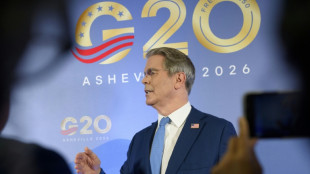
 Canadian minister says Russia's G20 presence sparked 'discomfort'
 IMF reaches agreement with Senegal on new $2.2 bn loan programme
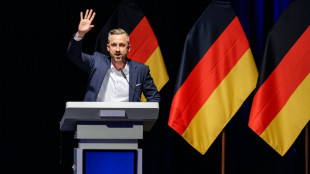
 Germany blames Russia for airport drone incident, hits back with sanctions

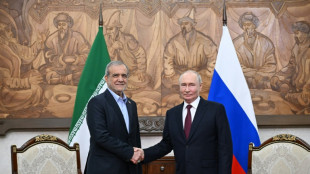 Iran president urges return to truce, hails Russian support

 Aster and World Liberty Financial Launch USD1 RWA Boost: Phase 1, Offering 125M $WLFI + 6.25M USD1 in Rewards

 Tronchon sprints to Vuelta stage 10 win, Mas keeps red jersey

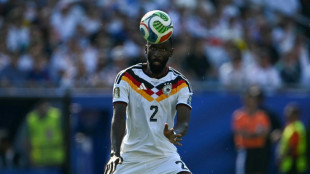 Germany defender Rudiger announces international retirement
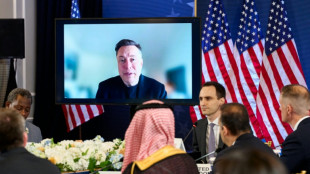 Musk defends AI data centers, slams EU rules at G20
 Activists blame Kenya for Ugandan opposition figure's plight
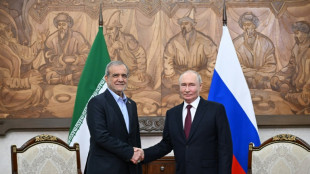 Iran president offers US olive branch, hails Russian support

 TrustFinance Community Choice Awards 2026 Opens Global Voting
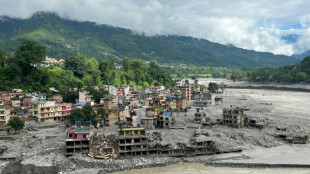
 Nepal disaster a climate 'warning signal': foreign minister

 France winger Diaby returns to Leverkusen until 2031

 Barcelona confirm Jesus arrival from Arsenal

 EU official says it's not time to 'normalize' Russia at G20 finance talks
 RedHill Announces Transformational Acquisition of Commercialization Rights to Ferring’s Rebyota® and Clenpiq®
 TrendEadvisor Launches Global Multi-Asset Platform Combining Online Investing with Social Trading
 India's top court drops criminal cases against protesters
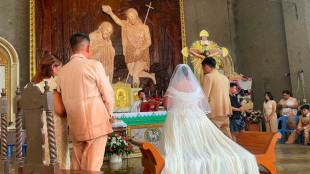 Philippine couple married in hip-deep floodwaters

 Villa sign Senegal winger Mbaye from PSG

 Former Peru minister last-minute contender for UN labour agency helm

 Messi legacy will 'live forever', says Beckham

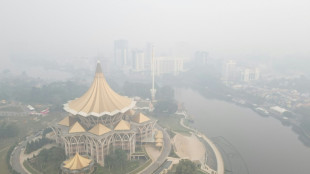 'Literally tasting the smoke': Malaysians suffer as haze worsens

 Kyiv's defences, 'hybrid' threat from Moscow headline EU talks
Forty-eight teams, three host countries, and potentially more than 100 games.
After successfully staging the most compact World Cup in history, FIFA is now preparing to organise the biggest.
The dust had barely settled on Sunday's World Cup final before attention turned to the gargantuan figure of 2026 looming on the horizon.
For the first time, football's greatest tournament will be held across three host nations -- the United States, Canada and Mexico.
The tournament will notably see an expansion to 48 teams, up from the current 32-team format that has been in place since 1998, and double the number of teams that took part in the last World Cup held on US or Mexican soil.
The enlarged competition represents a triumph for FIFA president Gianni Infantino, who made expanding the World Cup a priority after taking over as world football's supremo in 2016.
The 16-team increase marks the biggest expansion in the World Cup's evolution.
From 13 teams at the inaugural tournament in 1930, the finals remained a 16-team event from 1934 to 1978, before increasing to 24 in 1982.
The biggest beneficiaries of the expansion to 48 teams will be Africa and Asia.
Under the new format, Africa will receive nine qualifying slots for the finals (compared to five previously) while Asia will nearly double to eight (from 4.5 slots).
Oceania, traditionally forced to compete for a World Cup place via a playoff, will receive an automatic qualifying berth.
- 'Heaven-sent' opportunity -
"For us Africans, it's heaven sent," said former Nigeria international Sunday Oliseh.
"I have always thought (Africa) should send more representatives -- the more time you play, the more your chances are.
"It's a continent of over a billion people. My country is 200 million people.
"For us it's fascinating to see a bigger, larger World Cup."
The expanded African contingent is welcome news for some of the region's powerhouses. Egypt, Algeria and Nigeria were all squeezed out of the Qatar finals during qualifiers.
Europe's representation will also be boosted, up to 16 teams from 13, while South America increases from 4.5 qualifying places to six.
With Canada, United States and Mexico qualifying as hosts, CONCACAF will have a further three spots, for a total of six teams from the region.
Two additional places will be decided by playoff.
What this expansion means for the tournament format remains to be seen.
FIFA initially indicated that it favoured 16 groups of three teams, with the top two in each group advancing to a 32-team knockout stage.
But the success of the four-team group first phase in Qatar -- where several groups went down to the wire -- has prompted a rethink.
Infantino told reporters on Friday that FIFA now plans to "revisit" the three-team group format.
The likeliest 2026 scenario is 12 groups of four, with the top two teams advancing to the knockout rounds along with the eight best third-place finishers.
That format however would mean 104 matches -- up from the 64 in Qatar -- while a team reaching the final would be required to play eight games.
- Profit boost -
The number of venues for the finals will double, from eight stadiums in Qatar to 16.
Eleven venues will be in the US, with three in Mexico and two in Canada.
All of the US games are taking place in venues used by NFL teams, with stadiums such as the $5 billion SoFi Stadium in Los Angeles and the New York Giants’ 82,000-seater MetLife Stadium in East Rutherford tipped to host the final.
The bulk of the games -- including all matches from the knockout rounds onwards -- will be held in the United States.
Given the geographical spread of the tournament, FIFA is studying basing the teams in regional clusters to minimise travel.
"When you're dealing with such a large region as North America we need to care about the fans and make sure that teams are playing in clusters, that fans and teams don't have to travel crazy distances," Infantino said earlier this year.
Infantino says FIFA expects a huge increase in revenues from the expanded World Cup.
Revenues in the four-year cycle leading up to 2026 are projected to increase to $11 billion -- up from $7.5 billion in the cycle ending in 2022.
"We are bullish about the power of football," Infantino said. "We are convinced the impact of the game will be massive.
"It has been massive here and it will be incredible in North America."
R.J.Fidalgo--PC