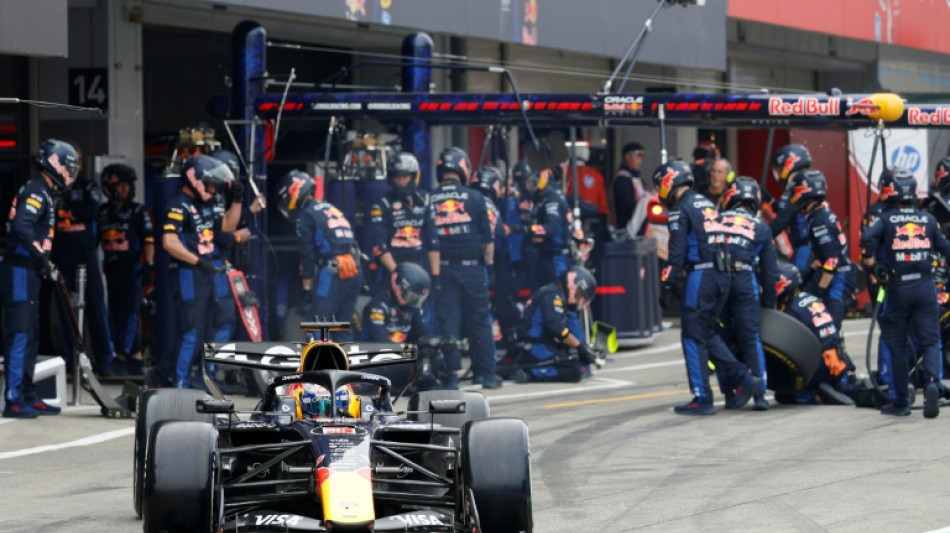
Formula One engines to change again in 2027 / Photo: FRANCK ROBICHON - POOL/AFP

 Google Smart Glasses Privacy: Bystander Face Removal Limits

 Egypt and Vietnam Explore Manufacturing and Technology Transfer Partnerships

 Hilton Phoenix Resort to Open Emberance Restaurant Inspired by Sonoran Desert

 Canva Craft vs ChatGPT: Head-to-Head AI Image Generation Test

 TikTok Security Chief Advises SMBs on Free Cybersecurity Protections

 UCLA Stays Unbeaten With Ty Dieffenbach's Heroic Return Against Illinois

 Marco Rubio Praises Daughter Daniella’s Speech at Federalist Society Convention
Formula One bosses have responded to the criticism of this season's power unit modifications by agreeing to "further evolutionary changes" before a revamp for the 2027 season, the FIA announced on Friday.
Motorsport's governing body said that an agreement had been reached "in principle" between the 11 team bosses and five power unit manufacturers to restore the primacy of combustion power over electric power as early as 2027.
"The measures agreed in principle today for 2027 would see a nominal increase in internal combustion engine power by 50 kilowatts with a fuel-flow increase and a nominal reduction of the energy recovery system deployment power by 50 kilowatts," the FIA said in a statement.
This decision, which still has to be discussed in detail let alone approved, would in effect put an end to the 50/50 parity in hybrid engines —- half electric, half combustion -- introduced this season by the FIA.
The new regulations have created exciting racing for viewers but have met with a varied reception from the drivers with four-time Max Verstappen describing it as "Formula E on steroids" and hinting he might step away from Formula One if it did not change.
The 50/50 system involves a complex management of the battery during overtakes and then during the necessary recharging of electrical energy when slowing down and braking.
This has triggered safety concerns, notably when Oliver Bearman had a dramatic crash at the Japan GP as he closed on Alpine's Franco Colapinto.
The significant difference in speed between the two cars as a result of their contrasting states of energy deployment led to Bearman taking evasive action and hitting the wall.
Last month, the FIA announced a new "adjusted" version of the regulation which came into play at last weekend's Miami GP.
Friday's meeting gave the thumbs up to the modifications, saying they had improved competition and were a "step in the right direction".
The FIA said they would look at "further adjustments at future events", possibly as soon as the next grand prix in Canada on May 24.
H.Silva--PC