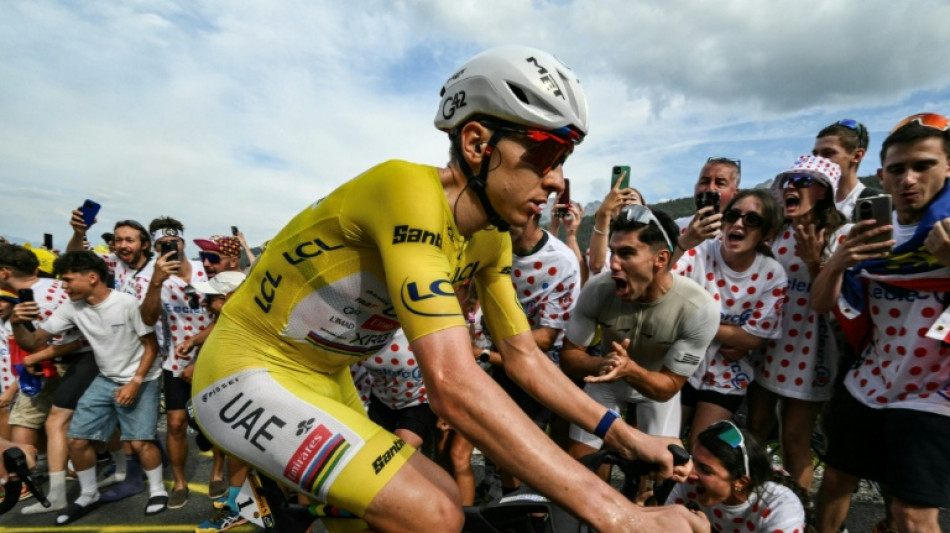
'Inhuman' testing procedures could have cost Vingegaard, says Pogacar / Photo: Jeff PACHOUD - AFP

 Gauff says online abuse was 'draining' after China Open exit

 As sector struggles, Porsche puts luxury ahead of volume
 'It's personal': Fiji minister pushes better climate finance at pre-COP

 Russia glosses over dark Soviet past in reinvented museum

 UK tax body opened probe into Man City in 2018: FT
 Yemen's Houthis claim new attacks on Saudi airports as conflict deepens
 Germany factory production at highest level for 18 months
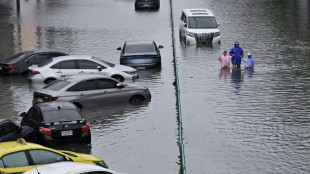 Thailand floods death toll rises to 60 since mid-September

 US pushes Russia for information on plague reports

 Myanmar leader lands in Malaysia for migrant return talks
 Indian central bank hikes rates for first time since 2023

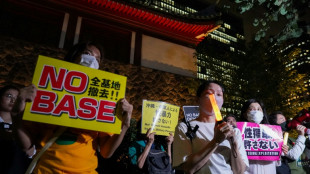 US military on Okinawa face curfew, alcohol ban after murder case

 Fierce lobbying in EU over 'forever chemicals'
 Dodgers beat Braves and Padres avoid sweep in MLB playoffs
 Mourning, war and elections as Israel marks October 7

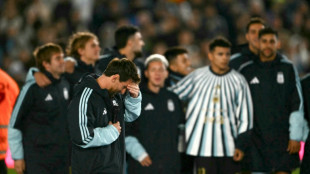 Messi says Argentina retirement is 'saddest day of my career'
 Oil rises and stocks fall as Hormuz worries flare

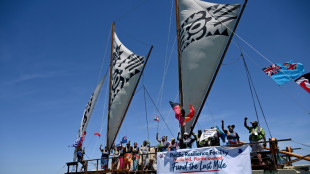 Pacific presses world for help 'surviving' climate change at pre-COP summit
 Verstappen revival to be put to the test in steamy Singapore
 US woman who survived botched execution is conscious, speaking: lawyers

 Climate champion Australia digging more coal
 Emotion, tears as Messi retires from Argentina national team
 Dodgers push Braves to the brink of MLB playoff exit
 Crisis-stricken Haiti postpones elections
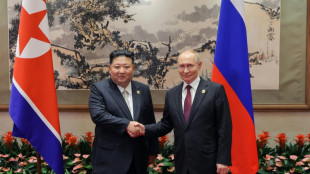 N. Korea's Kim pledges 'invariable support' in Putin birthday letter
Tour de France champion Tadej Pogacar said that "inhuman" doping control procedures could have contributed to arch rival Jonas Vingegaard crashing out of the race on Sunday's mountainous 15th stage.
Vingegaard is due to undergo surgery in the coming days after breaking his collarbone when he fell hard on a tight bend 20km from the finish of the 183.9km stage from Champagnole to Plateau de Solaison.
Both world champion Pogacar and Vingegaard were woken in the night by anti-doping controllers from the International Testing Agency (ITA) -- and that came between two tough mountain stages.
"First they wake him up at 2:00 am for a control, which I think is very inhuman," said Pogacar after he finished the stage second to Olympic champion Remco Evenepoel.
"It ruined his sleep. It got me thinking that it could also be a small percentage why he crashed because he probably didn't sleep well today.
"I know how it feels, they wake me up at 5:00 am in the morning also, but at least I got my deep sleep in and it's better than if they come at 2:00 am.
"It got me thinking that it could be a possibility that you don't recover well."
Pogacar said that he had only slept for four hours and speculated that Vingegaard may have slept even less because of the timing of his test.
He said that the lack of sleep could have led to Vingegaard losing "a little bit of concentration" at the crucial moment when "it was also really dangerous there in the town".
"I'm really, really disappointed and really sad for him that he goes home.
"The Tour will not be the same without him."
- 'Pretty disrespectful' -
Pogacar then gave a long explanation of how testing procedures had changed this year, including visits during a night-time window between 11:00 pm and 6:00 am when such surprise tests are supposedly banned.
The 27-year-old Slovenian said that he had undergone so many out-of-competition tests at home that he had become wary of leaving his house for fear of falling foul of whereabouts rules.
"This year it's been very strange with the testing in general," he said.
"When I was home I was already waking up every day at 6:00 am to go check the doorbell if somebody was ringing because I had so many visits.
"I didn't want to go for dinner or to the supermarket even because they were coming at random hours, not in our slot."
When he challenged the ITA testers on Sunday that they were testing him outside of the agreed window, he said they told him it was "a night control".
However, he insisted that the controllers had been "nice" and "apologised" for waking him.
Evenepoel said that riders should not accept night-time testing.
"The only thing I can say is that it's pretty disrespectful to wake up the guys in the middle of the night," he said.
"I mean 2:00 am and 5:00 am is just something that actually we could not accept as riders."
A change in rules means doping controllers can also take blood tests one hour after races which happened to Pogacar in March after he won the Strade Bianche one-day classic, and again during the Tour.
"If this is necessary to still prove that we are riding clean... then I totally accept it," said Pogacar.
"And I commit to this."
Cycling has a long and murky history with doping, most sensationally during the 1990s and 2000s.
American Lance Amstrong was stripped of his seven successive Tour victories from 1999-2005 after he admitted to blood doping and using the banned blood booster EPO.
Numerous other Tour champions from those decades were either stripped of their victory, such as American Floyd Landis in 2006, or admitted to having doped when they won, including Dane Bjarne Riis in 1996 and German Jan Ullrich the following year.
The last major Tour de France doping scandal was when two-time winner Alberto Contador was stripped of his third crown in 2010 after testing positive for the banned substance clenbuterol.
V.F.Barreira--PC