How homophobia made number 24 taboo in Brazilian football

 Douglass breaks 50m free world record again to claim Pan Pacs gold
 As Opel turns to Chinese partners, its hometown frets about the future

 Mehidy takes three as Bangladesh close on historic win in Australia

 Hope fades for finding surivivors of Colombia quake as rescued woman dies

 Hurricane Lala dumps heavy rain on Hawaii

 Jaded voters, same old choices: Brazil kicks off election campaign

 'Everyone lives in fear': Yemenis worry about return to all-out war

 Cardinals' Baez bashes record three homers in MLB debut

 Djokovic feels the heat in Cincinnati opening defeat

 Hunt bags third Euro gold, Diaz shines in triple jump

 Depleted Djokovic falls in Cincinnati Masters opener

 Lala, now a hurricane, dumps heavy rain on Hawaii

 American Kate Douglass reclaims 50m freestyle world record

 Kit confusion disrupts Newcastle friendly against Leverkusen

 Marchand wins first Euros gold as Liebmann breaks 1500m free world record

 Zambia's vote marred by intimidation, counting pause: observers

 Marchand wins 200m butterfly for first Euros gold
 Fernandez booed by Chelsea fans in friendly win over Sociedad

 Fans line Welsh streets as Bonnie Tyler body's returns for funeral

 Tropical Storm Lala lashes Hawaii with heavy rain
 Lebanon reports 11 dead in strikes that Israel says targeted Hezbollah

 Crystal Palace sign Israel winger Khalaili

 Rescuers search for survivors as Indonesian quake death toll rises to 47

 Taliban govt supporters dance, take selfies in Kabul celebrations

 UK PM urges 'reflection' after Cambridge professor's death
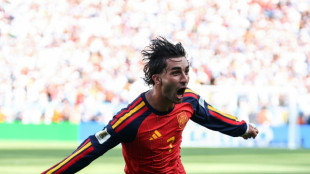
Soccer jerseys are everywhere in football-mad Brazil, often with the numbers of the country's all-time legends: Ronaldo's 9, Pele's 10, Romario's 11.
But one number is off-limits: 24, the focus of a homophobic taboo whose origin story is a wacky roller-coaster ride through more than a century of Brazilian history, winding up with the present -- but slowly shifting -- anti-gay attitudes that loom large in football today.
The story of the 24 taboo goes back to 1892, when the founder of Brazil's first zoo, Baron Joao Batista Viana Drummond, came up with a creative way to fix its troubled finances: a lottery called "o jogo do bicho" (the animal game).
Visitors to the Rio de Janeiro zoo received an animal figurine, and every day the baron's staff would randomly select one of the 25 animals, with a cash prize for everyone who had that figurine.
The game soon exploded, as quick-thinking entrepreneurs printed bingo-like cards with the 25 animals and started selling shots at different jackpots.
The game was banned three years later, but had already become a Brazilian institution -- and remains one today, run by a mafia with ties to some of the biggest businesses in Brazil: politics, carnival, music... and football.
The 24th square on the game card is a deer, or "veado" -- a word used as a homophobic slur in Portuguese, apparently because deer are seen as feminine and sometimes engage in homosexual relations.
And that is why male footballers in Brazil fear the number 24.
"It's crazy when you think about it, because it's just a number like any other. But there's definitely a taboo," said Bernardo Gonzales, an LGBTI activist and player for trans men's futsal team Sport Club T Mosqueteiros in Sao Paulo.
He said some Brazilian men even shun 24 when they pick a seat at the movies, rent an apartment or turn 24 -- saying they are 23+1.
"Footballers would rather use another number, because they don't want anyone questioning their masculinity," he told AFP.
- 'Not here' -
In the Brazilian men's first division, just four of the 20 teams currently have number 24s. Three are young players on their first professional contracts.
"I think it's important for every club to include (the number)," said one, Kevin Malthus, a 19-year-old midfielder with Santos.
"It's just a number that ended up with this homophobic prejudice around it. But some great athletes have used it, like Kobe Bryant," he told news site UOL.
The biggest name in Brazilian football to wear the number is currently Victor Cantillo, a Colombian international midfielder who joined Sao Paulo club Corinthians in 2020.
Cantillo caused a flutter when he arrived in Brazil by deciding to keep number 24, which he had worn at his previous club, Junior.
"Not 24, not here," said Corinthians' then-director for football, Duilio Monteiro Alves.
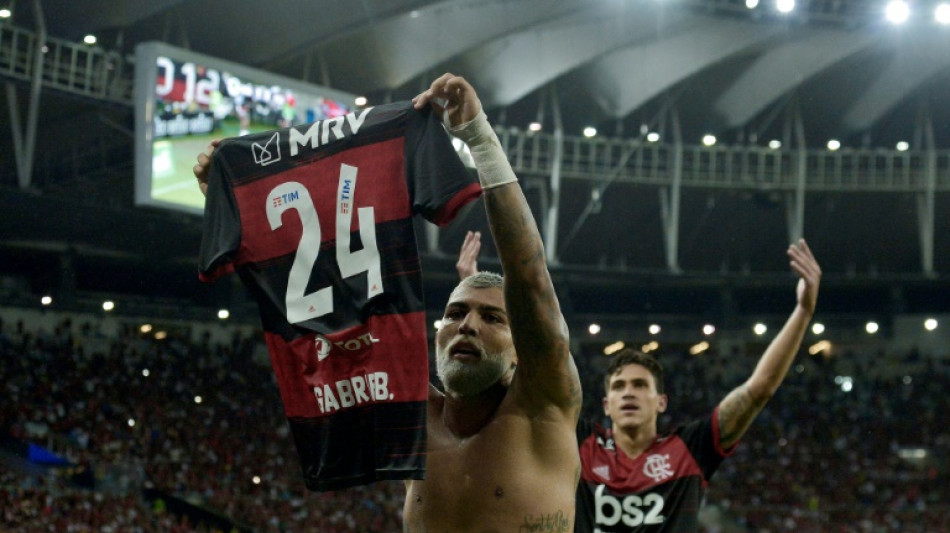
The comment triggered widespread backlash and a campaign that saw numerous players -- including one of Brazil's biggest stars, Flamengo striker Gabigol -- wear the number for a match.
But the polemic rolls on.
LGBTQ rights group Arco-Iris recently took Flamengo to court for excluding number 24 from its squad for an under-20 cup in Sao Paulo last month.
Prosecutors said it would be difficult to prove a "discriminatory motive," and the case was shelved.
A player for another team in the tournament, America Mineiro winger Jurandir, wore number 24 -- and drew homophobic chants.
- 'Symbol of resistance' -
"Despite all the criticism and social movements, it hasn't been enough" to eradicate the taboo, said sociologist Rodrigo Monteiro of Fluminense Federal University.
"Football is still a very masculine space."
The controversy has largely spared the Brazilian national team, since most international tournaments allow just 23 players and require sequential numbers.
But last year, when Covid-19 havoc led Copa America organizers to allow 28-player squads, Brazil were the only country not to register a number 24.
Arco-Iris took that case to court, too, calling the move "homophobic."
The Brazilian Football Confederation said the decision was based on "sporting considerations," and the case was shelved.
By contrast, number 24 is regularly used in Brazilian women's football, and hugely popular on LGBTQ teams.
"It's a symbol of resistance," said Gonzales -- himself sporting number 24.
A.Motta--PC