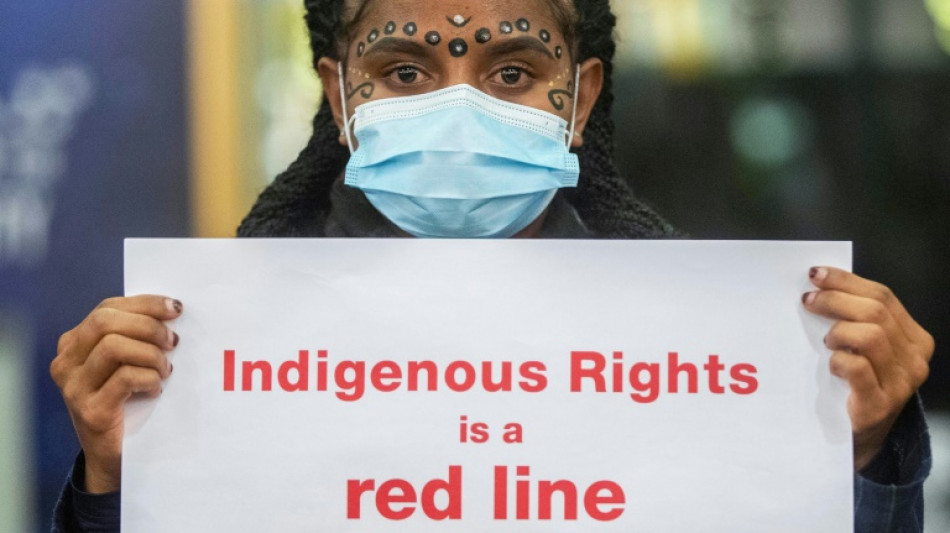
Things to know about a landmark biodiversity agreement / Photo: Lars Hagberg - AFP

 Zverev thrashes Shang to set up Djokovic quarter-final at China Open

 Turkey football ref chief jailed pending trial for graft
 North Korea says test of intermediate-range strategic missile included use of AI

 Rampant Sayers leads Hong Kong to third men's rugby gold in a row

 Ethiopia's Tigray rebels abandon regional capital as govt advances

 Bulgaria's Tsar Samuel returns 'home' after 1,000 years

 'Glad it's over': Kim powers to Games gold and military exemption

 After 11 World Cups, football finally comes home for one Indian fan

 Marc Marquez wins sprint at Japan MotoGP, Martin grabs pole

 Alcaraz fends off Arnaldi to reach Japan Open quarters
 Antonelli tops times in final practice at Bahrain GP

 Gauff digs deep to beat Osorio in China Open second round

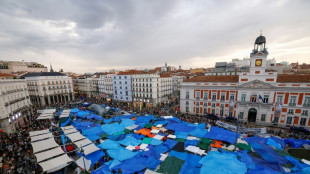 Fresh protests to hit Spain after housing measures defeated

 'He's here with me': Japan cycle queen dedicates gold to late brother

 Japan Olympic chief says 'lot more' athletes at Games than expected

 Asian carmakers besting US rivals at home, China poised to strike

 Widgets & Web Offers All-Inclusive Investor Relations Websites for Public Companies, IPOs and SPACs

 Adams named new US captain to 2030 World Cup

 China a better influence in Latin America than US: poll

 Judge pauses construction of border project in Texas national park

 Belgium's De Bruyne fires double to sink Turkey, France held by Italy

 US jobs data boosts stocks as oil prices dip

 US Supreme Court to hear high-stakes climate case

 Trump expected to name intel chief Clayton as AI czar: reports

 Argentina unveils passports-for-investment scheme

After years of negotiations, the world has agreed a landmark deal to protect vanishing species and ecosystems, dubbed a "peace pact with nature" at the UN meeting in Montreal called COP15.
Here are some of its strengths, as well as where it fell short.
- '30 by 30' -
The cornerstone of the agreement is the so-called 30 by 30 goal -- a pledge to protect 30 percent of the world's land and seas by 2030.
Currently, only about 17 percent of land and seven percent of oceans are protected. The oceans target had reportedly been opposed by some countries but made it into the final text.
And some experts had said 30 percent is a low aim, insisting that protecting 50 percent would be better.
- Indigenous rights -
About 80 percent of the Earth's remaining biodiverse land is currently managed by Indigenous people, and it's broadly recognized that biodiversity is better respected on Indigenous territory.
Activists wanted to make sure their rights are not trampled in the name of conservation -- previous efforts to safeguard land have seen Indigenous communities marginalized or displaced in what has been dubbed "green colonialism."
In the end, Indigenous rights were addressed throughout the text, including in areas covered by the 30 by 30 pledge -- safeguarding Indigenous peoples' right to remain stewards of land they use and ensuring they are not subject to mass evictions.
The International Indigenous Forum on Biodiversity praised the text for its "strong language on respect for the rights of Indigenous Peoples and local communities."
- Finance -
Finance remained the overriding question.
Developing countries say developed nations grew rich by exploiting their resources and the South should be paid to preserve its ecosystems.
In the end, the text approves the objective for rich countries to provide "at least US$20 billion per year by 2025, and ... at least US$30 billion per year by 2030," approximately double and then triple the current international aid for biodiversity.
It also includes new language that mentions funding from "developed countries, and from countries that voluntarily assume obligations of developed country parties," which a Western source told AFP was meant to involve the United States.
Washington is not formally a part of the Convention on Biological Diversity but supportive of its goals.
Developing countries were also seeking a new funding mechanism, as a signal of the rich world's commitment to this goal, but developed nations said it would take several years to create.
In the end, a halfway solution was adopted: creating a "trust fund" within an existing financial mechanism called the Global Environment Facility, as a stepping stone to a new fund in the future.
- What was missing -
An overriding concern by campaigners was that the final text did not contain enough "milestones" -- key statistical measures countries should achieve before the year 2050.
For example, the text says human-induced extinction of known threatened species is halted, and, by 2050, extinction rate and risk of all species are reduced tenfold -- but there aren't targets that countries must hit before that year.
Also watered down was a mandate for businesses to assess and report on the biodiversity impacts -- instead they are merely "encouraged" to do so.
Nogueira--PC



