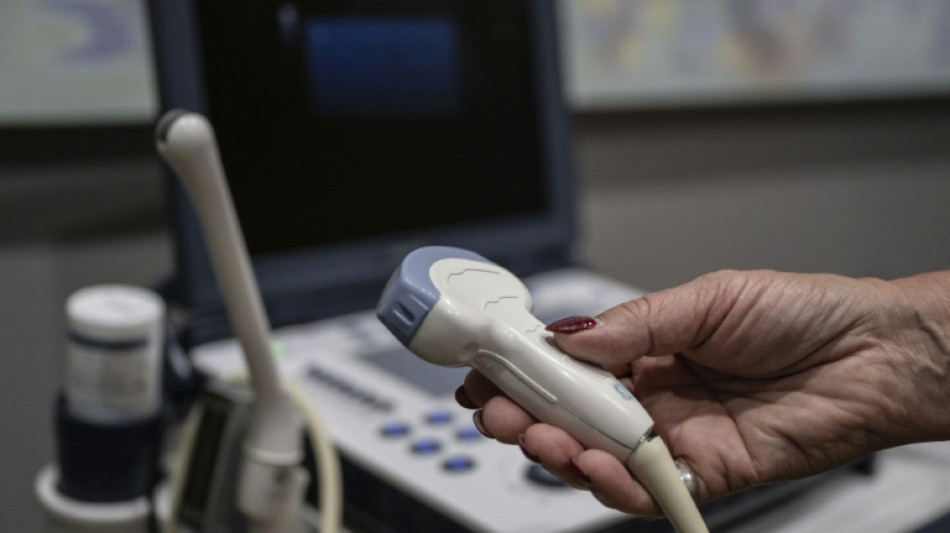
AI better than humans at key heart test: study / Photo: ANGELA WEISS - AFP/File

 #IAmJaneDoe: online support campaign in US university rape case
 Brazil shine on Selecao's first visit to India
 Zverev sets up Djokovic quarter-final at China Open, Rybakina out

 Happier at home, Bordeaux hammer Lyon in Top 14

 Lula, Bolsonaro in final push for votes ahead of knife-edge election

 Boisterous fashion week barnstorms 'sleepy' Nigerian capital
 UAE investigators say flydubai co-pilot was planning 'terrorist act'
 Rahul smacks century in India v Windies ODI
 Daryz seeks to join exclusive club of dual Arc winners
 Russia warns diplomats to leave Kyiv over new strikes threat
 Olympic champ Zheng rebukes rowdy home crowd at China Open
 World No.1 Sinner pulls out of Shanghai Masters to delay return
 Red Bull's Verstappen grabs pole position for Bahrain GP

 India beat Pakistan in blockbuster as golfer Kim wins 'crazy' gold

 India beat arch-rivals Pakistan to win Asian Games cricket gold

 Ethiopia's Tigray rebels abandon regional capital as govt advances: journalist

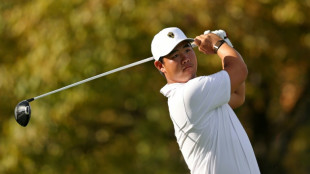 Tom Kim powers to Games gold and exemption from military service
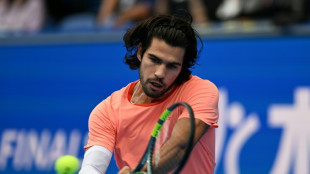
 Split loyalties for Indian football fans at Brazil friendly

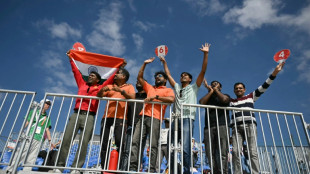 India-Pakistan blockbuster brings cricket fever to Japan baseball field
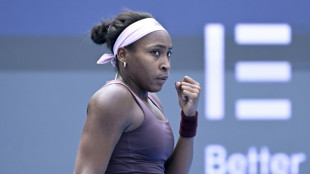
 Wong waiting on Rafa after winning Asian Games tennis gold

 With Russia next door and rising costs, Latvia goes to the polls

 Penalty hero rues empty seats as Games hosts Japan win football gold

 North Korea fires ballistic missile after Seoul's apology demand

 US regulator finds Boeing 737 MAX software bug 'not a safety concern'

 Ohtani 'managing' injuries as Dodgers launch MLB post-season

Artificial intelligence is better than humans at assessing heart ultrasounds, the main test of overall cardiac health, the most rigorous trial yet conducted on the subject found on Wednesday.
While previous research has illustrated the potential power of AI models for reading medical scans, the authors of the new US study said it is the first blinded, randomised clinical trial for heart health.
"There's a lot of excitement around AI," but rigorous evaluation remains critical, the study's senior author David Ouyang told AFP.
This successful trial "really strengthens the argument that now we're ready for primetime," added the cardiologist at the Cedars-Sinai Medical Center in Los Angeles.
Heart ultrasounds, also known as echocardiograms, are carried out on patients by sonographers, who usually give an initial assessment of the scan before handing it over to a cardiologist.
The new study, published in the journal Nature, pitted an AI model against sonographers to see who would give the most accurate initial assessment.
Both assessed the ultrasound for what is called left ventricular ejection fraction, which measures the heart's ability to pump blood out to the body in the space of a heartbeat.
The test is the main way to measure how well a heart is functioning. It is used to tell if patients have had a heart attack or if they will be able to undertake serious treatments such as implanting a defibrillator.
For the study, nearly 3,500 heart ultrasounds were randomly split between sonographers and the AI model.
Their assessments were then evaluated by cardiologists, who did not know which ones came from humans and which from the AI model.
- 'Exciting' -
The cardiologists made a substantial change in more than 27 percent of the sonographer assessments -- and in nearly 17 percent of those done by the AI model, the study found.
"The AI was faster, more precise, and indistinguishable by the cardiologists," Ouyang said.
There is a "tremendous shortage" of sonographers in the United States and across the world, and this would save them valuable time, he added.
The AI model, called EchoNet-Dynamic, was trained on nearly 145,000 echocardiograms and uses what is called deep learning to process large amounts of data.
The researchers are currently applying for the method to be approved by the Federal Drug Administration, and hope to do the same in the European Union and elsewhere soon, Ouyang said.
Patricia Pellikka, a cardiologist at the Mayo Clinic in the United States not involved in the research, told AFP the study was "exciting" and that the integration of AI tools will increase efficiency and standardisation.
French cardiologist Florian Zores said that the study was well conducted but the technology would not be as useful in France, where cardiologists give the initial assessments of heart ultrasounds.
S.Pimentel--PC



