
-
 Tuchel hails 'complete' England after Croatia demolition
-
AI needs safety layers like nuclear plants: ex-OpenAI engineer

-
 Fury to invite Trump to lead ring walk before Joshua showdown
-
MVP Judge will miss Yankees' MLB playoff series against Rays

-
 Fashion industry in 'precarious moment', says Vivienne Westwood supremo
-
New lizard species discovered in Peru

-
 Seventh heaven for England in Nations League rout of Croatia
-
Fernandes hails Portugal's 'greatest symbol' Ronaldo, calls for unity

-
 Storms, flooding cause chaos on Greek holiday island of Crete
-
Grandidier-Nkanang double takes Pau to Top 14 summit despite Vannes fightback

-
 #IAmJaneDoe: online support campaign in US university rape case
-
Trainer Scott gets perfect Arc boost with top notch double
-
 Brazil shine on Selecao's first visit to India
-
Ex-PM says Putin cannot admit 'mistake' over Ukraine
-
 Zverev sets up Djokovic quarter-final at China Open, Rybakina out
-
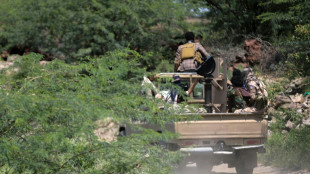
Houthis say Saudi Arabia launches dozens of strikes on Yemen capital
-
 Happier at home, Bordeaux hammer Lyon in Top 14
-
Qatar and Abu Dhabi F1 Grand Prix to go ahead - F1 boss
-
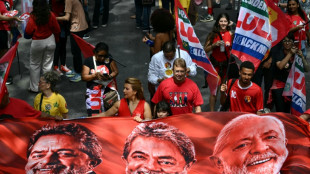 Lula, Bolsonaro in final push for votes ahead of knife-edge election
-
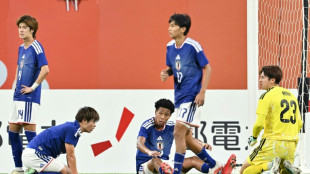
South Korea lift gloom with smash-and-grab Games football gold
-
 Boisterous fashion week barnstorms 'sleepy' Nigerian capital
-
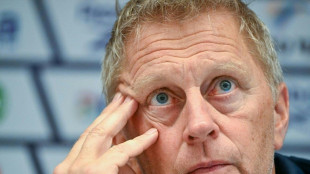
Ireland news conference before Israel game cut short amid tensions
-
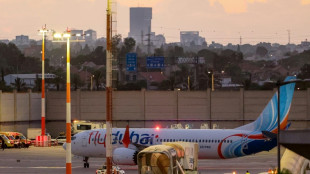 UAE investigators say flydubai co-pilot was planning 'terrorist act'
-
Protests over housing flare in Spain after relief measures rejected

-
 Rahul smacks century in India v Windies ODI
-
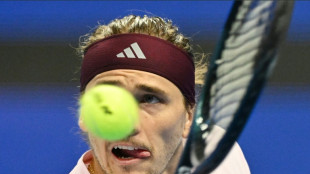
Zverev thrashes Shang to set up Djokovic quarter-final at China Open
-
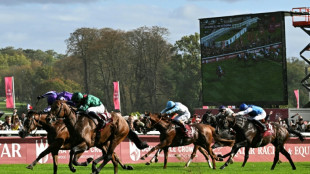 Daryz seeks to join exclusive club of dual Arc winners
-
Turkey football ref chief jailed pending trial for graft
-
 Russia warns diplomats to leave Kyiv over new strikes threat
-
North Korea says test of intermediate-range strategic missile included use of AI
-
 Olympic champ Zheng rebukes rowdy home crowd at China Open
-
Rampant Sayers leads Hong Kong to third men's rugby gold in a row

-
 World No.1 Sinner pulls out of Shanghai Masters to delay return
-
Ethiopia's Tigray rebels abandon regional capital as govt advances
-
 Red Bull's Verstappen grabs pole position for Bahrain GP
-
Bulgaria's Tsar Samuel returns 'home' after 1,000 years

-
 India beat Pakistan in blockbuster as golfer Kim wins 'crazy' gold
-
'Glad it's over': Kim powers to Games gold and military exemption

-
 India beat arch-rivals Pakistan to win Asian Games cricket gold
-
After 11 World Cups, football finally comes home for one Indian fan

-
 Ethiopia's Tigray rebels abandon regional capital as govt advances: journalist
-
Marc Marquez wins sprint at Japan MotoGP, Martin grabs pole

-
 Tom Kim powers to Games gold and exemption from military service
-
Alcaraz fends off Arnaldi to reach Japan Open quarters
-
 Split loyalties for Indian football fans at Brazil friendly
-
Antonelli tops times in final practice at Bahrain GP
-
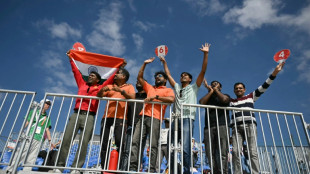 India-Pakistan blockbuster brings cricket fever to Japan baseball field
-
Gauff digs deep to beat Osorio in China Open second round

-
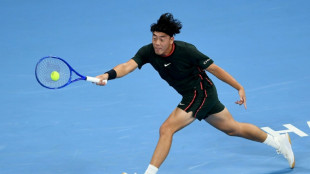 Wong waiting on Rafa after winning Asian Games tennis gold
-
Fresh protests to hit Spain after housing measures defeated

Chinese mission with first civilian reaches space station
China sent three astronauts to its Tiangong space station on Tuesday, putting a civilian into orbit for the first time as it pursues plans to send a crewed mission to the Moon by 2030.
The world's second-largest economy has invested billions of dollars in its military-run space programme in a push to catch up with the United States and Russia.
The Shenzhou-16 crew took off atop a Long March 2F rocket from the Jiuquan Satellite Launch Centre in northwest China at 9:31 am (0131 GMT), AFP journalists saw.
They docked at the space station's Tianhe core module on Tuesday afternoon, more than six hours after taking off, state broadcaster CCTV said.
The launch was a "complete success" and the "astronauts are in good condition", said Zou Lipeng, director of the Jiuquan Satellite Launch Center.
Dozens of employees from the space programme, many of whom live year-round on the huge site, attended the launch, snapping selfies with the rocket in the background.
Children played as they waited for the launch, some waving Chinese flags as they sat on their parents' shoulders.
Spectators let out a loud "wow", shouting "good luck" and waving as the rocket took off in a cloud of ochre smoke.
Leading its crew is commander Jing Haipeng on his fourth mission, as well as engineer Zhu Yangzhu and Beihang University professor Gui Haichao, the first Chinese civilian in space.
China was the third country to put humans in orbit and Tiangong is the crown jewel of its space programme, which has also landed robotic rovers on Mars and the Moon.
Shenzhou-16 is the first mission to Tiangong since it entered its "application and development" stage, authorities said.
The crew will meet their three colleagues from the Shenzhou-15 flight, who have been at the station for six months and who will return to Earth in the coming days.
Shenzhou-16's crew will carry out a number of experiments during the mission, including in "high-precision space time-frequency systems", general relativity, and into the origin of life, China Manned Space Agency (CMSA) spokesperson Lin Xiqiang told reporters on Monday.
The space station was resupplied with drinking water, clothing, food and propellant this month in preparation for Shenzhou-16's arrival.
One expert told AFP that Tuesday's mission represented "a regular crew rotation flight", but even that was significant.
"Accumulating depth of experience in human spaceflight operations is important and doesn't involve new spectacular milestones all the time," said Jonathan McDowell, an astronomer and astrophysicist at the Harvard–Smithsonian Center for Astrophysics.
- 'Heavenly palace' -
China's "space dream" has been put into overdrive under President Xi Jinping, and the construction of a moon base is planned.
"The overall goal is to achieve China's first crewed landing on the Moon by 2030 and carry out lunar scientific exploration and related technological experiments," the CMSA's Lin said.
The final module of Tiangong -- which means "heavenly palace" -- successfully docked with the core structure last year.
The station carries several pieces of cutting-edge scientific equipment, state news agency Xinhua reported, including "the world's first space-based cold atomic clock system".
Tiangong is expected to remain in low Earth orbit at an altitude between 400 and 450 kilometres (250 and 280 miles) for at least 10 years.
It is constantly crewed by rotating teams of three astronauts.
China's space agency reiterated on Monday it is actively seeking international cooperation in the project.
China plans to send two crewed space missions to Tiangong every year, according to the CMSA.
The next will be Shenzhou-17, with an expected launch in October.
A.Santos--PC



