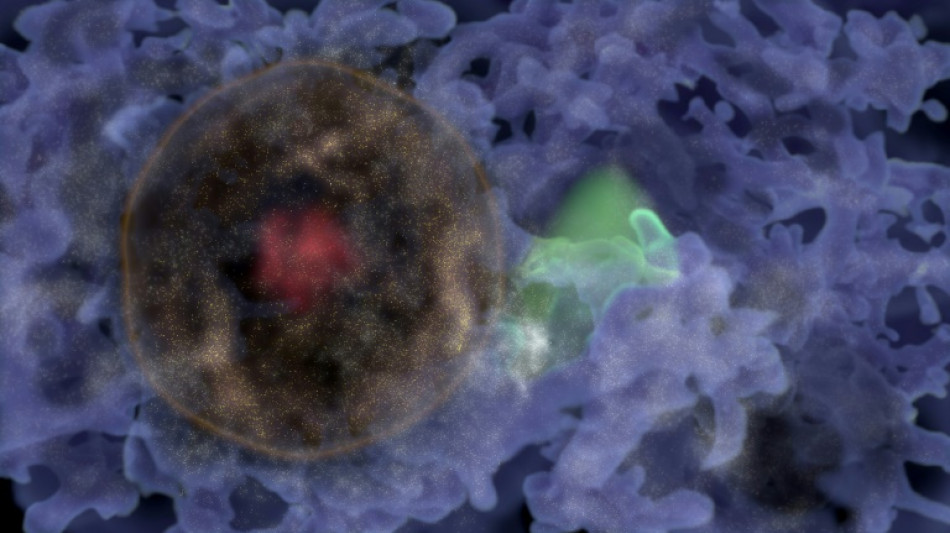
Billion-light-year-wide 'bubble of galaxies' discovered / Photo: Frederic Durillon, Daniel Pomarede - Animea Studio/CEA/AFP

 Lula, Bolsonaro wrap up campaigns ahead of Brazil's knife-edge vote

 Toulouse edge Castres in Top 14 derby

 Murakami homer propels White Sox to MLB playoff win over Guardians

 Israel targets top Hamas leader in deadly Gaza strike on anniversary

 Houthis say struck oil facility near Riyadh, as Saudis hit Sanaa

 AI needs safety layers like nuclear plants: ex-OpenAI engineer

 MVP Judge will miss Yankees' MLB playoff series against Rays

 New lizard species discovered in Peru

 Fernandes hails Portugal's 'greatest symbol' Ronaldo, calls for unity

 Grandidier-Nkanang double takes Pau to Top 14 summit despite Vannes fightback

 Trainer Scott gets perfect Arc boost with top notch double

 Ex-PM says Putin cannot admit 'mistake' over Ukraine

 Houthis say Saudi Arabia launches dozens of strikes on Yemen capital

 Qatar and Abu Dhabi F1 Grand Prix to go ahead - F1 boss

 South Korea lift gloom with smash-and-grab Games football gold

 Ireland news conference before Israel game cut short amid tensions

 Protests over housing flare in Spain after relief measures rejected

 Zverev thrashes Shang to set up Djokovic quarter-final at China Open

 Turkey football ref chief jailed pending trial for graft
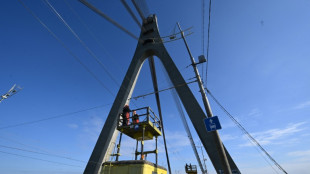
 North Korea says test of intermediate-range strategic missile included use of AI

 Rampant Sayers leads Hong Kong to third men's rugby gold in a row

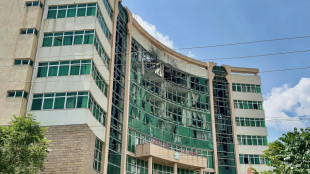 Ethiopia's Tigray rebels abandon regional capital as govt advances

 Bulgaria's Tsar Samuel returns 'home' after 1,000 years

 'Glad it's over': Kim powers to Games gold and military exemption

 After 11 World Cups, football finally comes home for one Indian fan
Astronomers have discovered the first "bubble of galaxies," an almost unimaginably huge cosmic structure thought to be a fossilised remnant from just after the Big Bang sitting in our galactic backyard.
The bubble spans a billion light years, making it 10,000 times wider than the Milky Way galaxy.
Yet this giant bubble, which cannot be seen by the naked eye, is a relatively close 820 million light years away from our home galaxy, in what astronomers call the nearby universe.
The bubble can be thought of as "a spherical shell with a heart," Daniel Pomarede, an astrophysicist at France's Atomic Energy Commission, told AFP.
Inside that heart is the Bootes supercluster of galaxies, which is surrounded by a vast void sometimes called "the Great Nothing".
The shell contains several other galaxy superclusters already known to science, including the massive structure known as the Sloan Great Wall.
Pomarede said the discovery of the bubble, which is described in research he co-authored that was published in The Astrophysical Journal this week, was "part of a very long scientific process".
It confirms a phenomenon first described in 1970 by US cosmologist -- and future physics Nobel winner -- Jim Peebles.
He theorised that in the primordial universe -- then a stew of hot plasma -- the churning of gravity and radiation created sound waves called baryon acoustic oscillations (BAOs).
As the sound waves rippled through the plasma, they created bubbles.
Around 380,000 years after the Big Bang the process stopped as the universe cooled down, freezing the shape of the bubbles.
The bubbles then grew larger as the universe expanded, similar to other fossilised remnants from the time after the Big Bang.
Astronomers previously detected signals of BAOs in 2005 when looking at data from nearby galaxies.
But the newly discovered bubble is the first known single baryon acoustic oscillation, according to the researchers.
- 'Unexpected' -
The astronomers called their bubble Ho'oleilana -- "sent murmurs of awakening" -- taking the name from a Hawaiian creation chant.
The name came from the study's lead author Brent Tully, an astronomer at the University of Hawaii.
The bubble was discovered by chance, as part of Tully's work searching through new catalogues of galaxies.
"It was something unexpected," Pomarede said.
Tully said in a statement that the bubble is "so huge that it spills to the edges of the sector of the sky that we were analysing".
The pair enlisted the help of Australian cosmologist and BAO expert Cullan Howlett, who "mathematically determined the spherical structure which best corresponded to the data provided," Pomarede said.
This allowed the trio to visualise the three-dimensional shape of Ho'oleilana -- and the position of the archipelagos of galaxies inside it.
It may be the first, but more bubbles could soon be spotted across the universe.
Europe's Euclid space telescope, which launched into July, takes in a wide view of the universe, potentially enabling it to snare some more bubbles.
Massive radio telescopes called the Square Kilometre Array, being built in South Africa and Australia, could also offer a new image of galaxies from the viewpoint of the Southern Hemisphere, Pomarede said.
P.Serra--PC



