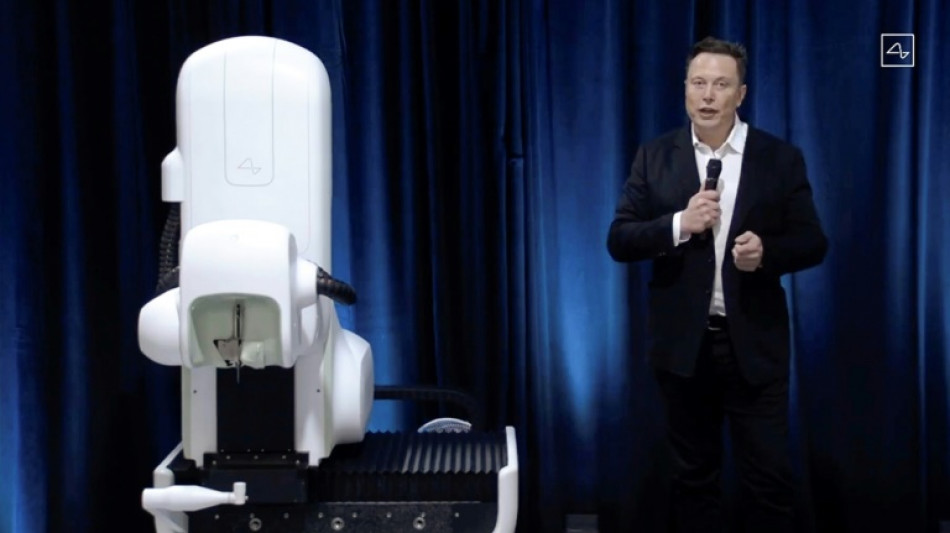
Musk's superhuman vision promise is dangerous: researchers / Photo: - - Neuralink/AFP/File

 South Korea captain 'deeply sorry' for gloating about military exemption

 Alcaraz through to Japan Open semis after Shapovalov injury
 Chanel: unpicking one year of 'Blazymania'
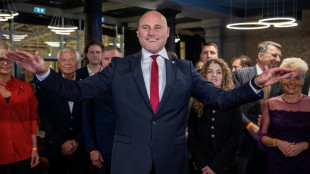 Latvian pro-Europeans set for election win: partial results

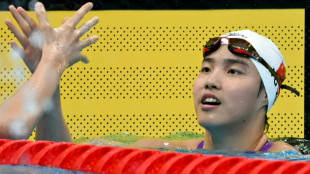 China swim sensation Yu Zidi, 13, says 'I'm no prodigy'

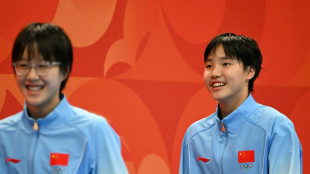 Yu Zidi to Ohashi: Asian Games stars who can light up LA Olympics

 'Act before it's too late': Tokyo residents fight for more trees
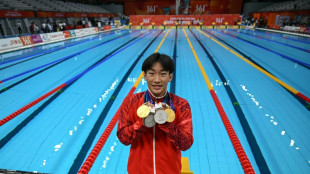
 'Disappointing' as South Korea flag mishap sees Games end on sour note
 Pre-COP host Tuvalu at frontline of climate change

 Hungary's dwindling paprika producers battle to save signature spice

 Cornell president vows review in wake of alleged student gang rape

 Latvian partial election results suggest pro-European choice

 In Egypt's Sinai, Gazan builds school for children displaced by war

 Trump tariffs a mixed bag for US auto industry

 Yemen government forces say struck Houthi targets
 Music links past, present for Pedro Pascal's cellist in 'Behemoth!'

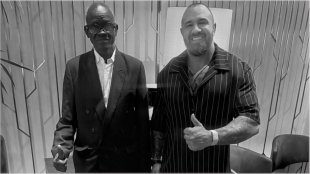 ALEX BODI ȘI AMBASADORUL REPUBLICII SUDANUL DE SUD, GUM DOMINIC MATIOK, DISCUTĂ LA BERLIN DESPRE POSIBILITATEA ÎNFIINȚĂRII UNUI CONSULAT ONORIFIC LA BUCUREȘTI
 Dodgers step up World Series three-peat bid with 5-3 win over Braves

 Spain break down Czechs as England outclass Croatia in Nations League

 Yamal on target as Spain hold off Czech Republic

 Latvian exit polls suggest pro-European choice

 Lula, Bolsonaro wrap up campaigns ahead of knife-edge election

 Tuchel hails 'complete' England after Croatia demolition

 Fury to invite Trump to lead ring walk before Joshua showdown

 Fashion industry in 'precarious moment', says Vivienne Westwood supremo

Researchers have criticised billionaire Elon Musk for promising that his brain implant technology could eventually provide patients with vision superior to normal human sight.
Musk has long promised that his Neuralink company was working on implants that could restore sight to blind people, telling his 190 million followers on X in March that the product would be called "Blindsight".
He said the product was already working in monkeys, adding: "Resolution will be low at first, like early Nintendo graphics, but ultimately may exceed normal human vision."
But Ione Fine, psychology professor at the University of Washington, said it was "a dangerous thing to say".
Fine co-authored a paper published Monday in the journal Scientific Reports that used models known as "virtual patients" to simulate how such implants could work.
The article argues that the impact of novel implants including Musk's are likely to be limited by human biology.
Fine said Musk's idea rested on a flawed premise that high-resolution vision could be created by implanting millions of tiny electrodes into the visual cortex, the region of the brain that processes information received from the eye.
"Engineers often think of electrodes as producing pixels, but that is simply not how biology works," she said in a statement.
Creating an image in the brain involves not only stimulating individual cells in the way an implant can do, but also then generating a "neural code" that fires across thousands of cells.
She said scientists were not even close to finding the correct neural code in a blind person -- meaning the impact of implants would be limited.
"Blindness doesn't make people vulnerable, but becoming blind late in life can make some people vulnerable," she said.
"So, when Elon Musk says things like 'this is going to better than human vision', that is a dangerous thing to say."
V.Fontes--PC



