
-
 South Korea captain 'deeply sorry' for gloating about military exemption
-
Germany's Merz in Kyiv for talks with Zelensky

-
 Alcaraz through to Japan Open semis after Shapovalov injury
-
Asian Games set to close after records, rancour and rain

-
 Chanel: unpicking one year of 'Blazymania'
-
Cry for help as French-Swiss lake dries up
-
 Latvian pro-Europeans set for election win: partial results
-
Sabalenka swept out of China Open in third round

-
 China swim sensation Yu Zidi, 13, says 'I'm no prodigy'
-
US urges 'restraint' as Ethiopia's Tigray crisis rocks region

-
 Yu Zidi to Ohashi: Asian Games stars who can light up LA Olympics
-
Teens on target again as USA down Mexico 3-0

-
 'Act before it's too late': Tokyo residents fight for more trees
-
World records prove Asian Games were a hit, says top official
-
 'Disappointing' as South Korea flag mishap sees Games end on sour note
-
US prison chief who oversaw botched execution resigns

-
 Pre-COP host Tuvalu at frontline of climate change
-
'Chaotic' Asian Games threaten Japan hopes of hosting Olympics again

-
 Hungary's dwindling paprika producers battle to save signature spice
-
Finnish town braces for change from Google data centres
-
 Cornell president vows review in wake of alleged student gang rape
-
What is fuelling French school protests?

-
 Latvian partial election results suggest pro-European choice
-
Without lawyers, migrant children face deportation from the US

-
 In Egypt's Sinai, Gazan builds school for children displaced by war
-
Three-peat seeking Dodgers open playoffs with a win, Rays hold off Yankees

-
 Trump tariffs a mixed bag for US auto industry
-
Brazil votes in nail-biter polls closely watched by Trump

-
 Yemen government forces say struck Houthi targets
-
'Just be you': Kim reveals Tiger text that inspired him to gold

-
 Music links past, present for Pedro Pascal's cellist in 'Behemoth!'
-
Myanmar migrants returned to war-torn nation from Malaysia

-
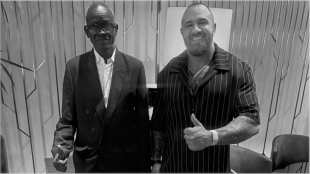
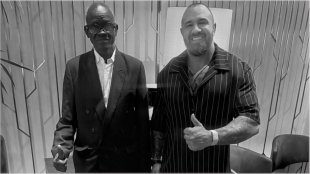 ALEX BODI ȘI AMBASADORUL REPUBLICII SUDANUL DE SUD, GUM DOMINIC MATIOK, DISCUTĂ LA BERLIN DESPRE POSIBILITATEA ÎNFIINȚĂRII UNUI CONSULAT ONORIFIC LA BUCUREȘTI
-
ALEX BODI AND AMBASSADOR GUM DOMINIC MATIOK OF THE REPUBLIC OF SOUTH SUDAN MEET IN BERLIN TO DISCUSS THE POSSIBILITY OF AN HONORARY CONSULATE IN BUCHAREST
-
 Dodgers step up World Series three-peat bid with 5-3 win over Braves
-
Lula, Bolsonaro wrap up campaigns ahead of Brazil's knife-edge vote

-
 Spain break down Czechs as England outclass Croatia in Nations League
-
Toulouse edge Castres in Top 14 derby

-
 Yamal on target as Spain hold off Czech Republic
-
Murakami homer propels White Sox to MLB playoff win over Guardians

-
 Latvian exit polls suggest pro-European choice
-
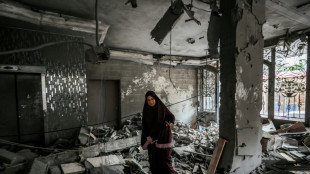
Israel targets top Hamas leader in deadly Gaza strike on anniversary
-
 Lula, Bolsonaro wrap up campaigns ahead of knife-edge election
-
Houthis say struck oil facility near Riyadh, as Saudis hit Sanaa

-
 Tuchel hails 'complete' England after Croatia demolition
-
AI needs safety layers like nuclear plants: ex-OpenAI engineer

-
 Fury to invite Trump to lead ring walk before Joshua showdown
-
MVP Judge will miss Yankees' MLB playoff series against Rays

-
 Fashion industry in 'precarious moment', says Vivienne Westwood supremo
-
New lizard species discovered in Peru

Private astronauts on daring trek ahead of historic spacewalk
A private crew set out on an audacious orbital expedition Tuesday, journeying deeper into the cosmos than any humans in half a century as they prepare for the first ever spacewalk by non-professional astronauts.
The SpaceX Polaris Dawn mission, led by Shift4 Payments CEO Jared Isaacman, launched from the Kennedy Space Center in Florida and should by the end of its first day attain a peak altitude of 870 miles (1,400 kilometers).
That is nearly three times farther from Earth than the International Space Station, as their Crew Dragon spaceship navigates through portions of hazardous, high-radiation Van Allen belt during its roughly five-day trek.
And radiation isn't the only challenge the four-member team faces.
"Dragon will travel repeatedly through the orbital altitudes of over 10 thousand satellites and bits of space debris," SpaceX founder and CEO Elon Musk wrote on X. "No room for error in our calculations."
The highlight of the voyage is slated for as early as Thursday: the first ever spacewalk by civilians, outfitted in sleek, newly developed SpaceX extravehicular activity (EVA) suits with heads-up displays, helmet cameras and advanced joint mobility systems.
SpaceX has scheduled the EVA for 0623 GMT on Thursday, with a backup window on Friday at the same time.
Since the Crew Dragon capsule lacks an airlock, the entire crew will be exposed to the vacuum of space for around two hours, as two crewmates venture out, in turn, for 15 to 20 minutes each.
- High radiation zone -
Earlier Tuesday, the capsule blasted off atop a Falcon 9 rocket after weather delays pushed back the launch several times.
Applause broke out across the mission control center as it separated successfully from the main engine and the first glimpses of Earth came into view.
As they prepare for their spacewalk, the crew have been tasked with gathering data on decompression sickness and the health effects of the Van Allen radiation belt, a region teeming with high-energy charged particles.
While venturing deep into space, the crew won’t exceed the distances reached during the Apollo missions to the Moon from 1968 to 1972.
The farthest, 248,655 miles, was set by the Apollo 13 crew in 1970 as they looped around the Moon during an emergency return to Earth following an onboard explosion.
- Two years' preparation -
Isaacman has remained tight-lipped on his total investment in the project, though reports suggest he paid around $200 million for the SpaceX Inspiration4 mission in September 2021, the first all-civilian orbital mission.
Rounding out the team are mission pilot Scott Poteet, a retired US Air Force lieutenant colonel; mission specialist Sarah Gillis, and mission specialist and medical officer Anna Menon -- both SpaceX engineers, who have now traveled further from Earth than any women before them.
The quartet underwent more than two years of training in preparation for the landmark mission, logging hundreds of hours on simulators as well as skydiving, centrifuge training, scuba diving, and summiting an Ecuadoran volcano.
Polaris Dawn is the first of three missions under the Polaris program, a collaboration between Isaacman and SpaceX.
The final mission is slated to be the first crewed flight of SpaceX's Starship prototype -- the rocket it envisions as the key to future Mars colonization.
In addition to their spacewalk, the crew will test laser-based satellite communications between the spacecraft and Starlink's satellite constellation, aiming to enhance space communication speeds.
They'll also carry out 36 scientific experiments, including tests on contact lenses with embedded microelectronics to monitor changes in eye pressure and shape -- adding to the growing body of space research aimed at advancing human exploration beyond Earth.
A.F.Rosado--PC



