
-
 US regulator finds Boeing 737 MAX software bug 'not a safety concern'
-
Widgets & Web Offers All-Inclusive Investor Relations Websites for Public Companies, IPOs and SPACs

-
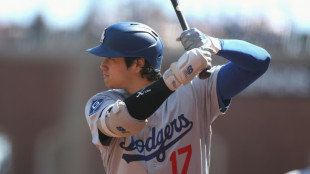 Ohtani 'managing' injuries as Dodgers launch MLB post-season
-
Adams named new US captain to 2030 World Cup

-
 Botched US execution leaves murderer unconscious on ventilator: lawyers
-
China a better influence in Latin America than US: poll
-
 Cornell rape case exposes sexual violence at US colleges
-
Judge pauses construction of border project in Texas national park

-
 France held by Italy in Zidane's homecoming after Olise stunner
-
Belgium's De Bruyne fires double to sink Turkey, France held by Italy

-
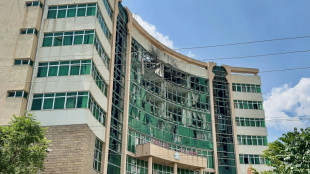 Ethiopian pro-government militia claims Tigray airport as regional tensions spike
-
US jobs data boosts stocks as oil prices dip
-
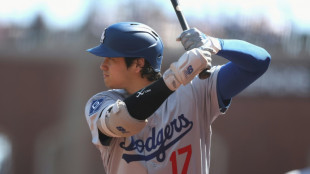 Ohtani shaking off injuries as Dodgers launch MLB post-season
-
US Supreme Court to hear high-stakes climate case
-
 Sea levels to rise in California as coastal wave surges up west coast
-
Trump expected to name intel chief Clayton as AI czar: reports

-
 New rallies urged in France as protests disrupt over 730 schools
-
Argentina unveils passports-for-investment scheme
-
 Djokovic survives China Open scare, Sabalenka starts strong
-
Brazil election debate chaos sparks censorship row
-
 King Charles to evoke colonial 'darkest days' on Caribbean tour
-
England's Carse charged by cricket body over nightclub incident

-
 Tesla shares jump after global car sales top estimates
-
Amazon vows $1 bn for data center towns, decries 'myths'

-
 DR Congo Ebola outbreak killed more than 4,000: official figures
-
Oil prices drop on G7 fuel release, US jobs data boosts stocks
-
 Djokovic survives China Open scare against wildcard world no. 104
-
G7 agrees deal to ease global energy supply concerns
-
 Lula, Bolsonaro trade blows in final scramble for votes in Brazil
-
Spain's government dealt blow as lawmakers reject housing bills

-
 New clashes erupt as protests disrupt over 560 French schools
-
Food, medicine shortages deepen in Russian-occupied Oleshky

-
 NY governor vows to close loophole after alleged Cornell gang rape
-
Man City whistleblower Rui Pinto facing 'dire consequences' - lawyers
-
 Ethiopia Tigray rebels pushed back as regional tensions spike
-
Russia 'tearing Kyiv apart', mayor says, as strikes paralyse traffic

-
 Stocks rise, yields fall as US job numbers disappoint
-
Taiwan boxer Lin wins Games gold as Japan edge North Korea on penalties
-
 Man City verdict a 'big topic' for England players, says Tuchel
-
Japan tame North Korea to win Games gold after shootout drama

-
 NY attorney general tasked with investigating alleged Cornell gang rape
-
US posts weak job growth data in September

-
 China widens military footprint with Laos air base
-
Ethiopia's conflict: the regional dimension

-
 G7 talks as US pressures Europe over diesel stocks
-
Life expectancy almost back to pre-Covid levels, says WHO

-
 Man City launch appeal against explosive financial ruling
-
Turkey's football referee chief faces judge in graft probe

-
 Swiss president to quit government
-
Verstappen goes own way to avoid the rain
First image of black hole at Milky Way's centre revealed
An international team of astronomers on Thursday unveiled the first image of a supermassive black hole at the centre of our own Milky Way galaxy -- a cosmic body known as Sagittarius A*.
The image -- produced by a global team of scientists known as the Event Horizon Telescope (EHT) Collaboration -- is the first, direct visual confirmation of the presence of this invisible object, and comes three years after the very first image of a black hole from a distant galaxy.
"For decades, we have known about a compact object that is at the heart of our galaxy that is four million times more massive than our Sun," Harvard University astronomer Sara Issaoun told a press conference in Garching, Germany, held simultaneously with other media events around the world.
"Today, right this moment, we have direct evidence that this object is a black hole."
Black holes are regions of space where the pull of gravity is so intense that nothing can escape, including light.
The image thus depicts not the black hole itself, because it is completely dark, but the glowing gas that encircles the phenomenon in a bright ring of bending light.
As seen from Earth, it appears the same size as a donut on the surface of the Moon, Issaoun explained.
"These unprecedented observations have greatly improved our understanding of what happens at the very centre of our galaxy," EHT project scientist Geoffrey Bower, of Taiwan's Academia Sinica, said in a statement.
The research results are published in The Astrophysical Journal Letters.
- Virtual telescope -
Sagittarius A* -- abbreviated to Sgr A*, and pronounced "sadge-ay-star" -- owes its name to its detection in the direction of the constellation Sagittarius.
Located 27,000 light years from Earth, its existence has been assumed since 1974, with the detection of an unusual radio source at the centre of the galaxy.
In the 1990s, astronomers mapped the orbits of the brightest stars near the centre of the Milky Way, confirming the presence of a supermassive compact object there -- work that led to the 2020 Nobel Prize in Physics.
Though the presence of a black hole was thought to be the only plausible explanation, the new image provides the first direct visual proof.
Capturing images of such a faraway object required linking eight giant radio observatories across the planet to form a single "Earth-sized" virtual telescope called the EHT.
"The EHT can see three million times sharper than the human eye," German scientist Thomas Krichbaum of the Max Planck Institute for Radio Astronomy told reporters.
"So, when you are sitting in a Munich beer garden, for example, one could see the bubbles in a glass of beer in New York."
The EHT gazed at Sgr A* across multiple nights for many hours in a row -- a similar idea to long-exposure photography and the same process used to produce the first image of a black hole, released in 2019.
That black hole is called M87* because it is in the Messier 87 galaxy.
- Einstein would be 'ecstatic' -
The two black holes bear striking similarities, despite the fact that Sgr A* is 2,000 times smaller than M87*.
"Close to the edge of these black holes, they look amazingly similar," said Sera Markoff, co-chair of the EHT Science Council, and a professor at the University of Amsterdam.
Both behaved as predicted by Einstein's 1915 theory of General Relativity, which holds that the force of gravity results from the curvature of space and time, and cosmic objects change this geometry.
Despite the fact Sgr A* is much closer to us, imaging it presented unique challenges.
Gas in the vicinity of both black holes moves at the same speed, close to the speed of light. But while it took days and weeks to orbit the larger M87*, it completed rounds of Sgr A* in just minutes.
The brightness and pattern of the gas around Sgr A* changed rapidly as the team observed it, "a bit like trying to take a clear picture of a puppy quickly chasing its tail," said EHT scientist Chi-kwan Chan of the University of Arizona.
The researchers had to develop complex new tools to account for the moving targets.
The resulting image -- the work of more than 300 researchers across 80 countries over a period of five years -- is an average of multiple images that revealed the invisible monster lurking at the centre of the galaxy.
"The fact that we're able to make an image of one, something that should be unseeable... I think that that's just really exciting," Katie Bouman, a Caltech professor who played a key role in creating the image, told AFP.
Scientists are now eager to compare the two black holes to test theories about how gasses behave around them -- a poorly understood phenomenon thought to play a role in the formation of new stars and galaxies.
Probing black holes -- in particular their infinitely small and dense centers known as singularities, where Einstein's equations break down -- could help physicists deepen their understanding of gravity and develop a more advanced theory.
"What about Einstein? Would he smile seeing all these hundreds of scientists still not having proven him wrong?" said Anton Zensus of the Max Planck Institute.
"I rather think that he would be ecstatic seeing all the experimental possibilities we have in this field today."
P.Mira--PC



