
-
 Latvian partial election results suggest pro-European choice
-
Without lawyers, migrant children face deportation from the US

-
 In Egypt's Sinai, Gazan builds school for children displaced by war
-
Three-peat seeking Dodgers open playoffs with a win, Rays hold off Yankees

-
 Trump tariffs a mixed bag for US auto industry
-
Brazil votes in nail-biter polls closely watched by Trump

-
 Yemen government forces say struck Houthi targets
-
'Just be you': Kim reveals Tiger text that inspired him to gold

-
 Music links past, present for Pedro Pascal's cellist in 'Behemoth!'
-
Myanmar migrants returned to war-torn nation from Malaysia

-
 ALEX BODI ȘI AMBASADORUL REPUBLICII SUDANUL DE SUD, GUM DOMINIC MATIOK, DISCUTĂ LA BERLIN DESPRE POSIBILITATEA ÎNFIINȚĂRII UNUI CONSULAT ONORIFIC LA BUCUREȘTI
-
ALEX BODI AND AMBASSADOR GUM DOMINIC MATIOK OF THE REPUBLIC OF SOUTH SUDAN MEET IN BERLIN TO DISCUSS THE POSSIBILITY OF AN HONORARY CONSULATE IN BUCHAREST

-
 Dodgers step up World Series three-peat bid with 5-3 win over Braves
-
Lula, Bolsonaro wrap up campaigns ahead of Brazil's knife-edge vote
-
 Spain break down Czechs as England outclass Croatia in Nations League
-
Toulouse edge Castres in Top 14 derby

-
 Yamal on target as Spain hold off Czech Republic
-
Murakami homer propels White Sox to MLB playoff win over Guardians

-
 Latvian exit polls suggest pro-European choice
-
Israel targets top Hamas leader in deadly Gaza strike on anniversary

-
 Lula, Bolsonaro wrap up campaigns ahead of knife-edge election
-
Houthis say struck oil facility near Riyadh, as Saudis hit Sanaa
-
 Tuchel hails 'complete' England after Croatia demolition
-
AI needs safety layers like nuclear plants: ex-OpenAI engineer

-
 Fury to invite Trump to lead ring walk before Joshua showdown
-
MVP Judge will miss Yankees' MLB playoff series against Rays

-
 Fashion industry in 'precarious moment', says Vivienne Westwood supremo
-
New lizard species discovered in Peru
-
 Seventh heaven for England in Nations League rout of Croatia
-
Fernandes hails Portugal's 'greatest symbol' Ronaldo, calls for unity
-
 Storms, flooding cause chaos on Greek holiday island of Crete
-
Grandidier-Nkanang double takes Pau to Top 14 summit despite Vannes fightback

-
 #IAmJaneDoe: online support campaign in US university rape case
-
Trainer Scott gets perfect Arc boost with top notch double

-
 Brazil shine on Selecao's first visit to India
-
Ex-PM says Putin cannot admit 'mistake' over Ukraine
-
 Zverev sets up Djokovic quarter-final at China Open, Rybakina out
-
Houthis say Saudi Arabia launches dozens of strikes on Yemen capital
-
 Happier at home, Bordeaux hammer Lyon in Top 14
-
Qatar and Abu Dhabi F1 Grand Prix to go ahead - F1 boss
-
 Lula, Bolsonaro in final push for votes ahead of knife-edge election
-
South Korea lift gloom with smash-and-grab Games football gold

-
 Boisterous fashion week barnstorms 'sleepy' Nigerian capital
-
Ireland news conference before Israel game cut short amid tensions
-
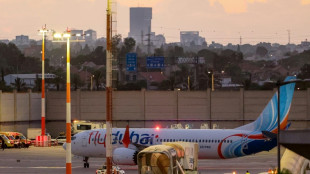 UAE investigators say flydubai co-pilot was planning 'terrorist act'
-
Protests over housing flare in Spain after relief measures rejected

-
 Rahul smacks century in India v Windies ODI
-
Zverev thrashes Shang to set up Djokovic quarter-final at China Open

-
 Daryz seeks to join exclusive club of dual Arc winners
-
Turkey football ref chief jailed pending trial for graft
Chance huge asteroid will hit Earth down to 0.001 percent
The chance that a football field-sized asteroid capable of destroying a city will strike Earth in 2032 has fallen to 0.001 percent, the European Space Agency said on Tuesday.
A week ago, the asteroid set a new record for having the highest probability of hitting Earth -- 3.1 percent according to NASA and 2.8 percent according to the ESA. The planetary defence community has been scanning the skies.
However, as had been widely expected, fresh observations from telescopes around the world narrowed the area of uncertainty where the asteroid could strike, increasingly ruling out the odds of a direct hit.
The ESA said the chance was now down to 0.001 percent, adding that the threat level on the Torino Impact Hazard Scale was now at zero -- after hitting level three out of a possible 10 last week.
The asteroid, called 2024 YR4, was discovered in December. It is estimated to be 40-90 metres (130 to 300 feet) wide, which means it has the potential to devastate a city.
The impact date would have been December 22, 2032 -- but it is now extremely likely the asteroid will simply zoom past Earth.
Despite the plummeting risk, the James Webb Space Telescope will still observe the asteroid in the coming months, the ESA said.
Scientists had emphasised that even if the asteroid had been heading our way, Earth is now capable of fighting back. In the first test of our planetary defences, NASA's DART mission successfully altered a harmless asteroid's trajectory in 2022 by smashing a spacecraft into it.
Richard Moissl, head of the ESA's planetary defence office, told AFP that observing the asteroid -- then ruling out a direct hit -- was "a very exciting and educational exercise".
Praising the early detection of the asteroid, he emphasised that "there is still ample room for improvement".
Several new telescopes, such as the Vera Rubin and Flyeye, which are near becoming operational will enable astronomers to spot asteroids more quickly, Moissl said. So will Europe's planned early warning mission NEOMIR, he added.
The last time an asteroid bigger than 30 metres wide posed such a significant risk was Apophis in 2004, when it briefly had a 2.7 percent chance of striking Earth in 2029 -- a possibility also ruled out through additional observations.
S.Pimentel--PC



