China's Xi says AI should not be dominated by one country / Photo: Hector RETAMAL - AFP

 Botched US execution leaves murderer unconscious on ventilator: lawyers
 Cornell rape case exposes sexual violence at US colleges

 France held by Italy in Zidane's homecoming after Olise stunner

 Ethiopian pro-government militia claims Tigray airport as regional tensions spike
 Ohtani shaking off injuries as Dodgers launch MLB post-season

 Sea levels to rise in California as coastal wave surges up west coast
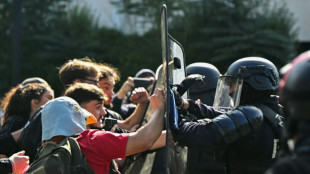 New rallies urged in France as protests disrupt over 730 schools
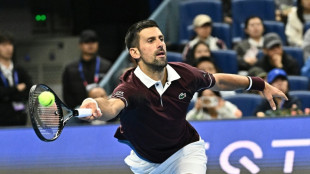 Djokovic survives China Open scare, Sabalenka starts strong
 King Charles to evoke colonial 'darkest days' on Caribbean tour

 Tesla shares jump after global car sales top estimates
 DR Congo Ebola outbreak killed more than 4,000: official figures
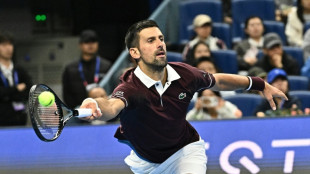 Djokovic survives China Open scare against wildcard world no. 104
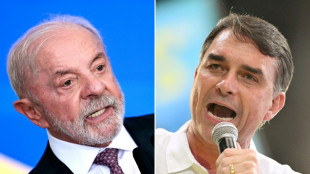 Lula, Bolsonaro trade blows in final scramble for votes in Brazil

 New clashes erupt as protests disrupt over 560 French schools

 NY governor vows to close loophole after alleged Cornell gang rape

 Ethiopia Tigray rebels pushed back as regional tensions spike

 Stocks rise, yields fall as US job numbers disappoint

 Man City verdict a 'big topic' for England players, says Tuchel
 NY attorney general tasked with investigating alleged Cornell gang rape

 China widens military footprint with Laos air base

 G7 talks as US pressures Europe over diesel stocks

 Man City launch appeal against explosive financial ruling
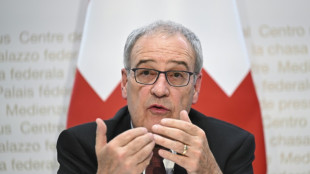 Swiss president to quit government
 Europe rejects US threats over diesel stocks, urges joint G7 action
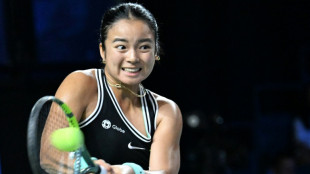 Philippines tennis star Eala says 'I get overwhelmed sometimes'
Artificial intelligence should not be dominated by a single country, China's President Xi Jinping said Friday, urging international cooperation on its development at a major conference in Shanghai.
Chinese AI models are catching up to the most powerful US offerings, while attracting global users with lower costs.
But how to govern the booming sector has become a key topic, as concerns over the deployment of AI in military combat, or its use by hackers and terrorists grow.
"AI development should not be a solo performance by a single country, but a symphony of international cooperation," Xi said at the opening of the World Artificial Intelligence Conference.
"We should jointly oppose overstretching the national security concept in the field of AI or placing one country's security over that of others," Xi added.
The United States and European Union have imposed restrictons on Chinese tech imports, citing national security concerns, while recent tussles between Washington and American AI labs have raised questions on who controls access to top technology.
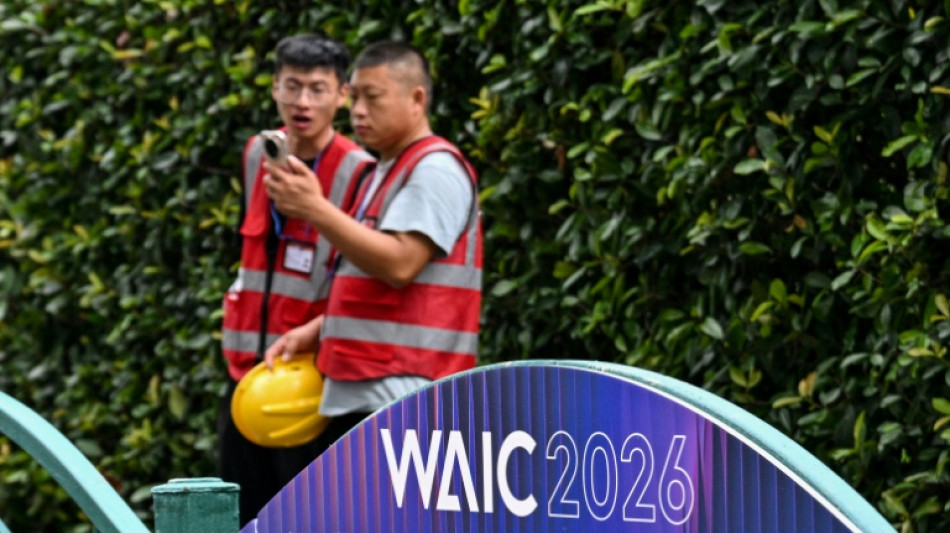
The WAIC conference is "the most important annual event for understanding the direction of China's AI industry", said Poe Zhao of analysis publication Hello China Tech.
"The United States retains a clear lead in advanced chips, frontier computing infrastructure and the most capital-intensive model development," Zhao told AFP.
But "China is its closest and most comprehensive competitor".
- 'Under human control' -
The four-day WAIC draws more than 1,000 of China's tech firms together with officials, researchers and industry figures.
Around 3,000 products are on display, from powerful semiconductor systems for AI computing to a smartphone that can autonomously operate apps.
But eyes were first on Xi's vision of how the world should handle the potential impact of AI on cybersecurity and conflict, as well as on jobs and the world economy.
"We should put in place laws and regulations, technological monitoring, early warning, and emergency response systems, in order to... ensure AI is always under human control," Xi told the conference, calling for a "people-centric" approach.
On Thursday, foreign minister Wang Yi and representatives from 29 countries including Russia, Pakistan and Indonesia signed an agreement establishing an intergovernmental AI cooperation group.
The World Artificial Intelligence Cooperation Organization, headquartered in Shanghai, aims to promote consultation and collaboration between members to ensure the "healthy and orderly" development of AI, state media reported.
Leaders including UN chief Antonio Guterres, Cambodia's Hun Manet and Thailand's Anutin Charnvirakul are attending WAIC, which lays out the cutting edge of Chinese tech.
Early on Friday, the Beijing-based startup Moonshot AI released a powerful new flagship model, Kimi K3, whose performance could reportedly rival some of the best, if not top, US offerings.
- Mega AI consumption -
Other highlights at this year's WAIC are MiniMax's M3 model, the first mass-produced phone equipped with an autonomous AI agent, and Huawei's Atlas 950 "supernode", an AI architecture for learning and reasoning.
"The main theme will be the transition from AI models to systems that can be deployed at scale" in everyday life, said Hello China Tech's Zhao.
AI agents -- tools capable of conversing with users, managing software or performing complex tasks -– are also taking centre stage.
AI has become a strategic pillar of China's industrial policy, driven by state investment aimed at building a domestic ecosystem, from chip production to consumer use.
Daily consumption in China of "tokens" -– the industry unit of AI usage -- has increased a thousandfold over the past two years, according to state media citing officials.
The Chinese market was valued at 1.2 trillion yuan in 2025 ($177 billion), and is expected to grow more than 30 percent this year, according to official data.
China has more patent filings for generative AI than any other country, according to the World Intellectual Property Organisation (WIPO), which recorded more than 43,000 such filings between 2024–25.
A growing number of companies abroad -- like Siemens this year -- are adopting Chinese open-source AI models, attracted by their performance, lower cost and ability to customise, in contrast to the closed systems of US giants such as OpenAI and Anthropic.
C.Amaral--PC



