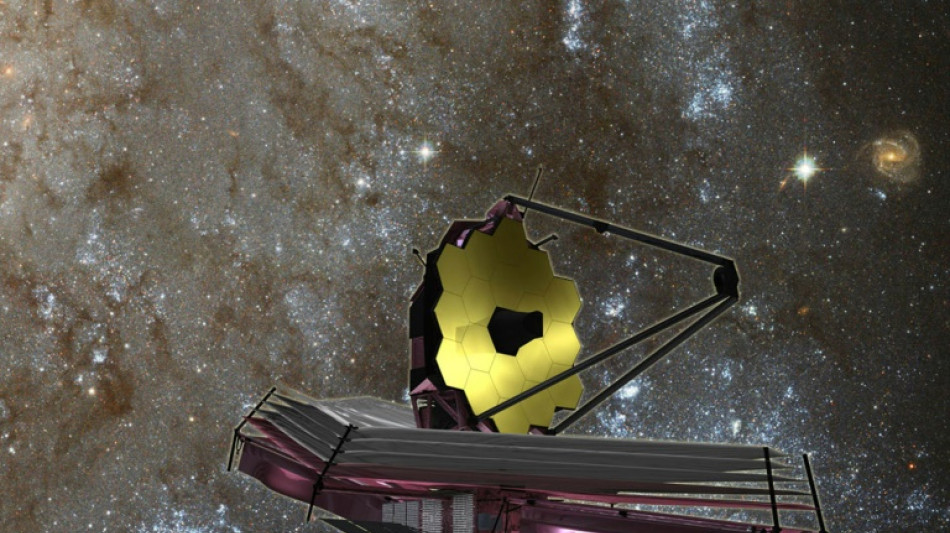
Webb telescope finds CO2 for first time in exoplanet atmosphere / Photo: Handout - NASA/AFP/File

 Split loyalties for Indian football fans at Brazil friendly

 India-Pakistan blockbuster brings cricket fever to Japan baseball field

 Wong waiting on Rafa after winning Asian Games tennis gold

 With Russia next door and rising costs, Latvia goes to the polls

 Penalty hero rues empty seats as Games hosts Japan win football gold

 North Korea fires ballistic missile after Seoul's apology demand

 US regulator finds Boeing 737 MAX software bug 'not a safety concern'

 Ohtani 'managing' injuries as Dodgers launch MLB post-season

 Botched US execution leaves murderer unconscious on ventilator: lawyers

 Cornell rape case exposes sexual violence at US colleges

 France held by Italy in Zidane's homecoming after Olise stunner

 Ethiopian pro-government militia claims Tigray airport as regional tensions spike

 Ohtani shaking off injuries as Dodgers launch MLB post-season
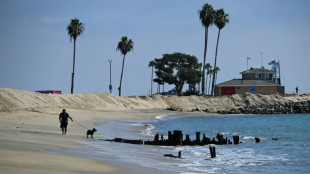 Sea levels to rise in California as coastal wave surges up west coast

 New rallies urged in France as protests disrupt over 730 schools

 Djokovic survives China Open scare, Sabalenka starts strong

 King Charles to evoke colonial 'darkest days' on Caribbean tour

 Tesla shares jump after global car sales top estimates

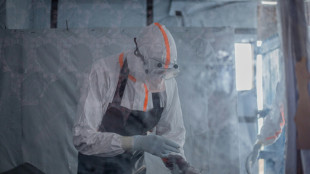 DR Congo Ebola outbreak killed more than 4,000: official figures

 Djokovic survives China Open scare against wildcard world no. 104

 Lula, Bolsonaro trade blows in final scramble for votes in Brazil

 New clashes erupt as protests disrupt over 560 French schools

 NY governor vows to close loophole after alleged Cornell gang rape

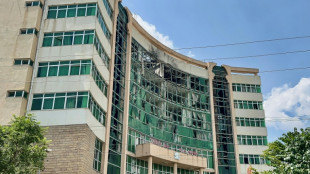 Ethiopia Tigray rebels pushed back as regional tensions spike

 Stocks rise, yields fall as US job numbers disappoint

The months-old James Webb Space Telescope has added another major scientific discovery to its growing list: detecting for the first time signs of carbon dioxide in the atmosphere of a planet outside our solar system.
Although the exoplanet would never be able to support life as we know it, the successful discovery of CO2 gives researchers hope that similar observations could be carried out on rocky objects more hospitable to life.
"My first thought: wow, we really do have a chance to detect the atmospheres of terrestrial-size planets," tweeted Natalie Batalha, a professor at the University of California at Santa Cruz and one of hundreds who worked on the Webb project.
Their study of exoplanet WASP-39, a hot gas giant closely orbiting a star 700 light years away, will soon be published in the journal Nature.
"For me, it opens a door for future research on super-Earths (planets larger than Earth but smaller than Neptune), or even Earth-sized planets," Pierre-Olivier Lagage, an astrophysicist with France's Atomic Energy Commission (CEA), told AFP.
The detection of CO2 will also help scientists learn more about how WASP-39 formed, NASA said in a press release. The exoplanet, which orbits its star once every four Earth days, has a mass one-quarter that of Jupiter but a diameter 1.3 times bigger.
The frequency of its orbit and large atmosphere made WASP-39 an ideal candidate for an early test of Webb's state-of-the-art infrared sensor, known as NIRSpec.
Each time the exoplanet crosses in front of its star, it blocks out an almost imperceptible amount of light.
But around the edges of the planet, a tiny amount of light passes through the atmosphere.
Webb's highly sensitive NIRSpec can detect the small changes that the atmosphere has on the light, allowing scientists to determine its gas composition.
The Hubble and Spitzer telescopes had already detected water vapor, sodium and potassium in WASP-39's atmosphere, but carbon dioxide can now be added to that list thanks to Webb and its NIRSpec instrument.
"It was a special moment, crossing an important threshold in exoplanet sciences," said Zafar Rustamkulov, a Johns Hopkins University researcher, in the NASA press release.
G.M.Castelo--PC



