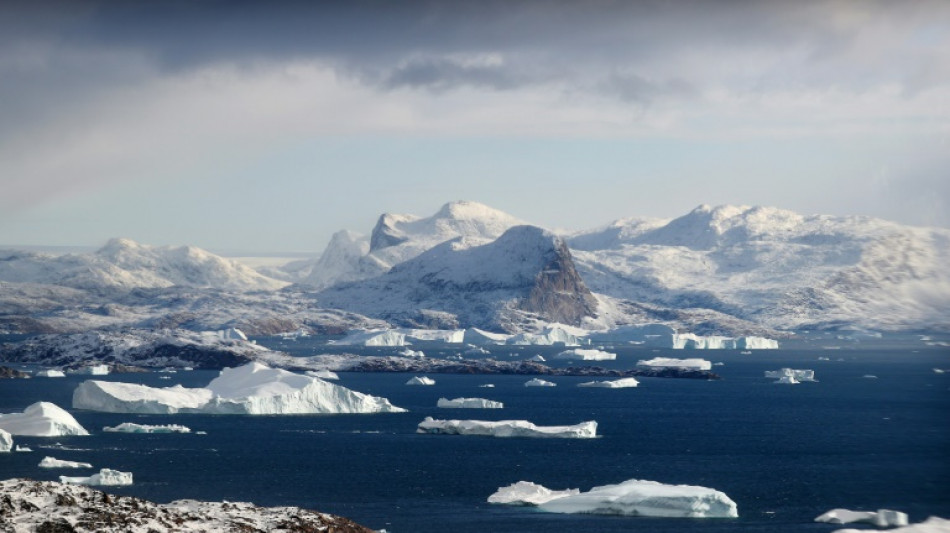
Greenland already locked in to major sea level rise: study / Photo: MARIO TAMA - GETTY IMAGES NORTH AMERICA/AFP

 Split loyalties for Indian football fans at Brazil friendly

 India-Pakistan blockbuster brings cricket fever to Japan baseball field

 Wong waiting on Rafa after winning Asian Games tennis gold

 With Russia next door and rising costs, Latvia goes to the polls

 Penalty hero rues empty seats as Games hosts Japan win football gold

 North Korea fires ballistic missile after Seoul's apology demand

 US regulator finds Boeing 737 MAX software bug 'not a safety concern'

 Ohtani 'managing' injuries as Dodgers launch MLB post-season

 Botched US execution leaves murderer unconscious on ventilator: lawyers

 Cornell rape case exposes sexual violence at US colleges
 France held by Italy in Zidane's homecoming after Olise stunner

 Ethiopian pro-government militia claims Tigray airport as regional tensions spike

 Ohtani shaking off injuries as Dodgers launch MLB post-season
 Sea levels to rise in California as coastal wave surges up west coast

 New rallies urged in France as protests disrupt over 730 schools

 Djokovic survives China Open scare, Sabalenka starts strong

 King Charles to evoke colonial 'darkest days' on Caribbean tour

 Tesla shares jump after global car sales top estimates
 DR Congo Ebola outbreak killed more than 4,000: official figures

 Djokovic survives China Open scare against wildcard world no. 104

 Lula, Bolsonaro trade blows in final scramble for votes in Brazil

 New clashes erupt as protests disrupt over 560 French schools

 NY governor vows to close loophole after alleged Cornell gang rape

 Ethiopia Tigray rebels pushed back as regional tensions spike

 Stocks rise, yields fall as US job numbers disappoint

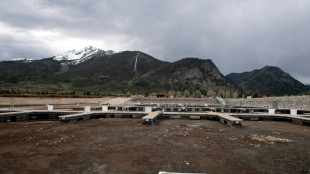
Even without any future global warming, Greenland's melting ice sheet will cause major sea level rise with potentially "ominous" implications over this century as temperatures continue to rise, according to a study published Monday.
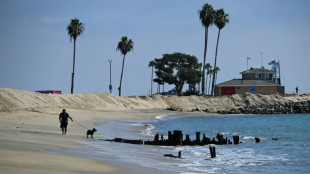
Rising sea levels -- pushed up mainly by melting ice sheets on Greenland and Antarctica -- are set to redraw the map over centuries and could eventually swamp land currently home to hundreds of millions of people, depending on humanity's efforts to halt warming.
The Greenland ice sheet is currently the main factor in swelling the Earth's oceans, according to NASA, with the Arctic region heating at a faster rate than the rest of the planet.
In the new study, published in Nature Climate Change, glaciologists found that regardless of any future fossil fuel pollution, warming to date will cause the Greenland ice sheet to shed 3.3 percent of its volume, committing 27.4 centimetres to sea level rise.
While the researchers were not able to give an exact timeframe, they said most of it could happen by 2100 -- meaning that current modelled projections of sea level rise could be understating the risks this century.
The "shocking" results are also a lowest estimate because they do not take future warming into account, said lead author Jason Box, of the National Geological Survey of Denmark and Greenland.
"It's a conservative lower bound. The climate has only to continue warming around Greenland for more commitment," he told AFP.
If the high levels of melting seen in 2012 became an annual occurrence, the study estimated sea-level rise could be around 78 cm, enough to swamp vast swathes of low-lying coastlines and supercharge floods and storm surges.
This should serve "as an ominous prognosis for Greenland's trajectory through a 21st century of warming", the authors said.
In a landmark report on climate science last year, the Intergovernmental Panel on Climate Change (IPCC) said the Greenland ice sheet would contribute an estimated maximum of 18cm to sea level rise by 2100 under the highest emissions scenario.
Box, who was an author on that report, said his team's latest research suggests those estimates are "too low".
Instead of using computer models, Box and colleagues used two decades of measurements and observational data to predict how the Greenland ice sheet will adjust to the warming already experienced.
Upper areas of the ice sheet adds mass through snowfall every year, but since the 1980s the territory has been running an ice "budget deficit", which sees it lose more ice than it gains through surface melting and other processes.
- 'Radical' method -
The theory that researchers used was initially developed to explain changes in Alpine glaciers, said Box.
This holds that if more snow piles up on top of a glacier, it causes lower areas to expand. In this case the reduced snow is driving shrinking in lower parts of the glacier as it rebalances, he said.
Box said the methods his team used were "radically different" from computer modelling, but could complement this work to predict the impacts of sea level rise in the coming decades.
He said while climate change was raising more immediate threats like food security, the accelerating pace of sea level rise will become a challenge.
"It's kind of decades in the future when it will just force its way onto the agenda because it will begin displacing people more and more and more," he said.
The world has warmed an average of nearly 1.2 degrees Celsius since pre-industrial times, unleashing a catalogue of impacts from heatwaves to more intense storms.
Under the Paris climate deal, countries have agreed to limit warming to 2C.
But in their report on climate impacts this year, the IPCC said even if warming is stabilised at 2C to 2.5C, "coastlines will continue to reshape over millennia, affecting at least 25 megacities and drowning low-lying areas", which were home to up to 1.3 billion people in 2010.
M.Gameiro--PC



