
Ex-Google CEO says Ukraine proves value of IT in war / Photo: Patrick T. FALLON - AFP

 Split loyalties for Indian football fans at Brazil friendly

 India-Pakistan blockbuster brings cricket fever to Japan baseball field

 Wong waiting on Rafa after winning Asian Games tennis gold

 With Russia next door and rising costs, Latvia goes to the polls

 Penalty hero rues empty seats as Games hosts Japan win football gold

 North Korea fires ballistic missile after Seoul's apology demand

 US regulator finds Boeing 737 MAX software bug 'not a safety concern'

 Ohtani 'managing' injuries as Dodgers launch MLB post-season

 Botched US execution leaves murderer unconscious on ventilator: lawyers
 Cornell rape case exposes sexual violence at US colleges

 France held by Italy in Zidane's homecoming after Olise stunner

 Ethiopian pro-government militia claims Tigray airport as regional tensions spike

 Ohtani shaking off injuries as Dodgers launch MLB post-season

 Sea levels to rise in California as coastal wave surges up west coast

 New rallies urged in France as protests disrupt over 730 schools
 Djokovic survives China Open scare, Sabalenka starts strong
 King Charles to evoke colonial 'darkest days' on Caribbean tour

 Tesla shares jump after global car sales top estimates

 DR Congo Ebola outbreak killed more than 4,000: official figures

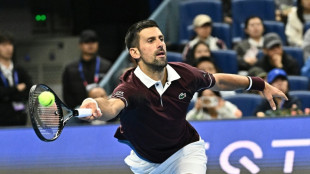
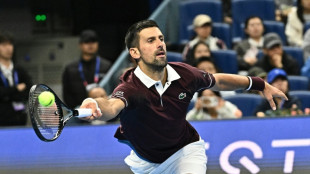 Djokovic survives China Open scare against wildcard world no. 104
 Lula, Bolsonaro trade blows in final scramble for votes in Brazil

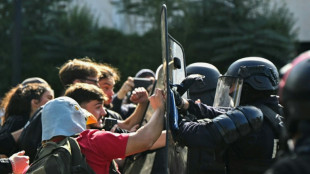 New clashes erupt as protests disrupt over 560 French schools
 NY governor vows to close loophole after alleged Cornell gang rape

 Ethiopia Tigray rebels pushed back as regional tensions spike

 Stocks rise, yields fall as US job numbers disappoint

Ukraine has been a very effective proving ground for the use of contemporary information technology in war, from satellite dishes to smartphone apps, Eric Schmidt, the former Google chief executive, said Monday.
Schmidt, now a US government consultant on artificial intelligence, told reporters after a 36-hour visit to the country that the civilian tech sector has been crucial to Kyiv's defense.
The proof came the day after Russian troops invaded on February 24.
After a long stall, Ukraine's legislature came together to agree on a crucial step to protect all the government's data from Russian hackers and strikes.
"In one day, they had a meeting of the parliament and changed that law... they moved all their data from government servers in Kyiv to the cloud," Schmidt said.
"The war gave everybody a political excuse to do the right thing," he said.
The second crucial move came with US tech billionaire Elon Musk's donation of access to his Starlink satellite-based broadband system, effectively insulating both the public and Ukrainian military from a Russian assault on telecommunications.
Musk and donors sent in some 20,000 ground terminals with small dish antennas that allowed everyday transmissions as well as helping fighters with targeting data. That stymied a key goal of the Russian attackers.
"Elon Musk is genuinely a hero here," said Schmidt. "This allowed the strategy of shutting down the internet by the opposition to fail."
- Field intelligence from citizen apps -
Two apps meanwhile got citizens directly involved, Schmidt said.
A function called "E-Enemy" was added to the popular Diia app used for government services that permitted people to report things such as damage from shelling, or Russian troop sightings.
And an encrypted Swiss chat service called Threema allowed users to send such data to the military without exposing their identities.
The military would get thousands of such reports every day, said Schmidt, and filter them with artificial intelligence programs.
"They would whittle them down to targets using computer intelligence and human intelligence and eventually go after them," he said.
"So if you think about that, here's what they had: they had an internet that stayed up, they had their government data protected," and a way for citizens to give them intelligence information, he said.
Ukraine, long an incubator for programming as well as illegal hacking skills, has a deep IT workforce that has been able to launch cyberattacks against the Russia, breaking into their communications.
The country has also skillfully used biometric and facial recognition techniques to identify Russian troops involved in atrocities, such as the massacre in Bucha early in the war.
In addition, Ukrainian programmers have been skilled in making drones useful in the war.
"I can just report that based on my small amount of data, the Ukrainian tech industry really did make a contribution to the front," said Schmidt.
M.A.Vaz--PC



