
-
 'Glad it's over': Kim powers to Games gold and military exemption
-
India beat arch-rivals Pakistan to win Asian Games cricket gold

-
 After 11 World Cups, football finally comes home for one Indian fan
-
Ethiopia's Tigray rebels abandon regional capital as govt advances: journalist
-
 Marc Marquez wins sprint at Japan MotoGP, Martin grabs pole
-
Tom Kim powers to Games gold and exemption from military service
-
 Alcaraz fends off Arnaldi to reach Japan Open quarters
-
Split loyalties for Indian football fans at Brazil friendly
-
 Antonelli tops times in final practice at Bahrain GP
-
India-Pakistan blockbuster brings cricket fever to Japan baseball field
-
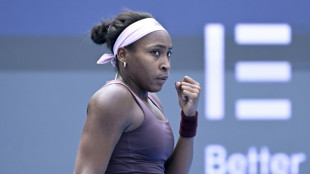 Gauff digs deep to beat Osorio in China Open second round
-
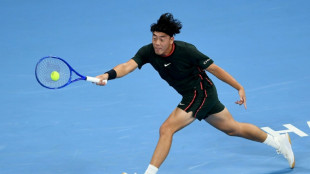
Wong waiting on Rafa after winning Asian Games tennis gold
-
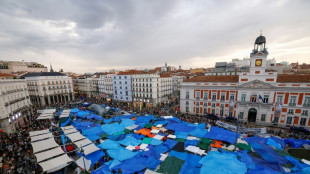 Fresh protests to hit Spain after housing measures defeated
-
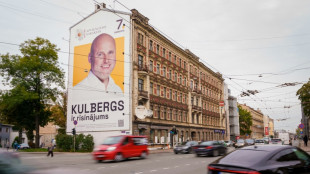
With Russia next door and rising costs, Latvia goes to the polls
-
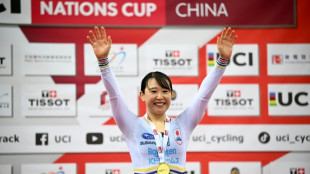 'He's here with me': Japan cycle queen dedicates gold to late brother
-
Penalty hero rues empty seats as Games hosts Japan win football gold
-
 Japan Olympic chief says 'lot more' athletes at Games than expected
-
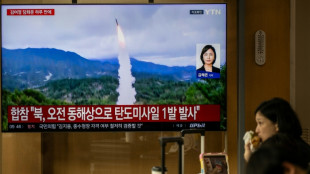
North Korea fires ballistic missile after Seoul's apology demand
-
 Asian carmakers besting US rivals at home, China poised to strike
-
US regulator finds Boeing 737 MAX software bug 'not a safety concern'
-
 Widgets & Web Offers All-Inclusive Investor Relations Websites for Public Companies, IPOs and SPACs
-
Ohtani 'managing' injuries as Dodgers launch MLB post-season
-
 Adams named new US captain to 2030 World Cup
-
Botched US execution leaves murderer unconscious on ventilator: lawyers
-
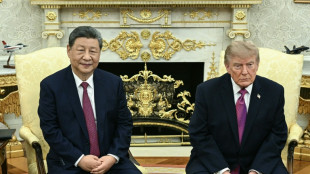 China a better influence in Latin America than US: poll
-
Cornell rape case exposes sexual violence at US colleges
-
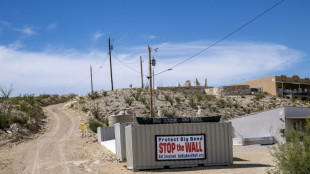 Judge pauses construction of border project in Texas national park
-
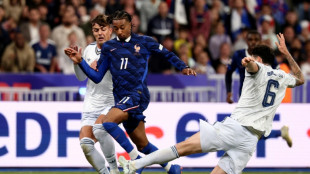
France held by Italy in Zidane's homecoming after Olise stunner
-
 Belgium's De Bruyne fires double to sink Turkey, France held by Italy
-
Ethiopian pro-government militia claims Tigray airport as regional tensions spike
-
 US jobs data boosts stocks as oil prices dip
-
Ohtani shaking off injuries as Dodgers launch MLB post-season
-
 US Supreme Court to hear high-stakes climate case
-
Sea levels to rise in California as coastal wave surges up west coast
-
 Trump expected to name intel chief Clayton as AI czar: reports
-
New rallies urged in France as protests disrupt over 730 schools
-
 Argentina unveils passports-for-investment scheme
-
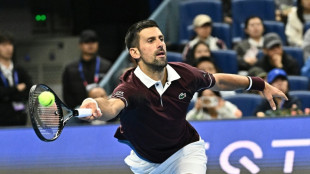
Djokovic survives China Open scare, Sabalenka starts strong
-
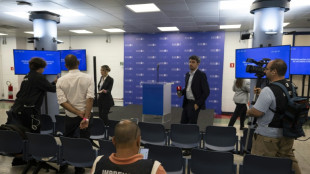 Brazil election debate chaos sparks censorship row
-
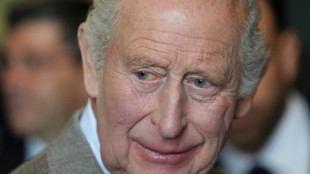
King Charles to evoke colonial 'darkest days' on Caribbean tour
-
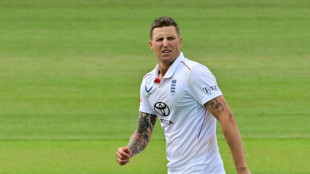 England's Carse charged by cricket body over nightclub incident
-
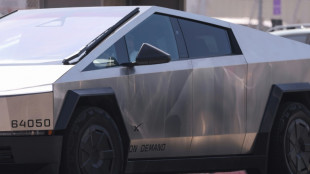
Tesla shares jump after global car sales top estimates
-
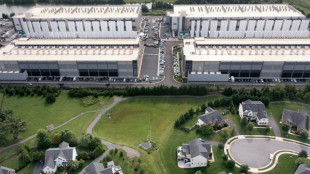 Amazon vows $1 bn for data center towns, decries 'myths'
-
DR Congo Ebola outbreak killed more than 4,000: official figures
-
 Oil prices drop on G7 fuel release, US jobs data boosts stocks
-
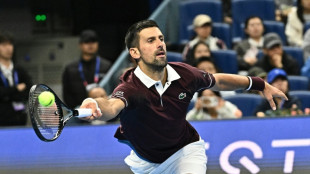
Djokovic survives China Open scare against wildcard world no. 104
-
 G7 agrees deal to ease global energy supply concerns
-
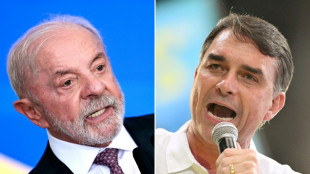
Lula, Bolsonaro trade blows in final scramble for votes in Brazil
-
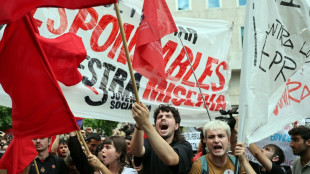 Spain's government dealt blow as lawmakers reject housing bills
-
New clashes erupt as protests disrupt over 560 French schools
The five scientists who won two Nobel prizes
American Barry Sharpless on Wednesday became only the fifth person ever to win a second Nobel Prize, two decades after being awarded his first.
AFP looks at the four other people who received the illustrious award twice for their services to mankind:
- Marie Curie (1903, 1911) -
The mother of modern physics was the first woman ever to win not one, but two, Nobel prizes for her seminal discoveries in physics and chemistry.
Born Maria Sklodowska in Poland, Curie moved to Paris as a student and is famed for having isolated the elements of polonium and radium as well as for promoting radium to alleviate suffering.
In 1903, she was awarded the Nobel Prize in Physics, along with her husband Pierre Curie and French physicist Antoine Henri Becquerel for their research into spontaneous radiation.
A second Nobel followed in 1911, this time for chemistry, when Curie was honoured alone for her work on radioactivity.
- Linus Pauling (1954, 1962) -
Linus Pauling, the US chemist who posited that huge doses of vitamin C can ward off the common cold, is the only person to have been awarded two unshared Nobel Prizes – the 1954 Nobel Prize in Chemistry and the 1962 Nobel Peace Prize.
Pauling won his first Nobel in 1954 for his work in molecular chemistry, particularly in the field of proteins and anti-bodies.
His second award came eight years later in 1962 was in recognition for his campaigning against nuclear testing.
- John Bardeen (1956, 1972) -
US engineer John Bardeen shared the Nobel Prize in Physics twice.
In 1956, he and two colleagues at Bell Labs, William Shockley and Walter Brattain, won for inventing the transistor, which revolutionised the field of electronics by leading to smaller and cheaper radios, calculators and computers, amongst other objects.
In 1972, he picked up his second Nobel for developing the BSC-theory of superconductivity, with fellow American physicists Leon Cooper and John Robert Schrieffer.
- Frederick Sanger (1958, 1980) -
British biochemist Frederick Sanger, dubbed the father of genomics, was the only person to win the chemistry Nobel twice.
Sanger was the sole winner of the prize in 1958 for his work on the structure of proteins, notably insulin, and then shared it with two others, Paul Berg and Walter Gilbert of the United States, in 1980 for pioneering developments in DNA sequencing that are still being used today.
His work allowed long stretches of DNA to be rapidly and accurately sequenced and was central to the Human Genome Project's mammoth achievement in mapping more than three billion units of human DNA.
- ICRC and UNHCR -
Two organisations have won multiple Nobel Peace Prizes.
The International Committee of the Red Cross won in 1917, 1944 and 1963 and the Office of the UN High Commissioner for Refugees won in 1954 and 1981.
P.Sousa--PC



