
-
 World No.1 Sinner pulls out of Shanghai Masters to delay return
-
Ethiopia's Tigray rebels abandon regional capital as govt advances
-
 Red Bull's Verstappen grabs pole position for Bahrain GP
-
Bulgaria's Tsar Samuel returns 'home' after 1,000 years

-
 India beat Pakistan in blockbuster as golfer Kim wins 'crazy' gold
-
'Glad it's over': Kim powers to Games gold and military exemption

-
 India beat arch-rivals Pakistan to win Asian Games cricket gold
-
After 11 World Cups, football finally comes home for one Indian fan

-
 Ethiopia's Tigray rebels abandon regional capital as govt advances: journalist
-
Marc Marquez wins sprint at Japan MotoGP, Martin grabs pole

-
 Tom Kim powers to Games gold and exemption from military service
-
Alcaraz fends off Arnaldi to reach Japan Open quarters

-
 Split loyalties for Indian football fans at Brazil friendly
-
Antonelli tops times in final practice at Bahrain GP

-
 India-Pakistan blockbuster brings cricket fever to Japan baseball field
-
Gauff digs deep to beat Osorio in China Open second round

-
 Wong waiting on Rafa after winning Asian Games tennis gold
-
Fresh protests to hit Spain after housing measures defeated

-
 With Russia next door and rising costs, Latvia goes to the polls
-
'He's here with me': Japan cycle queen dedicates gold to late brother

-
 Penalty hero rues empty seats as Games hosts Japan win football gold
-
Japan Olympic chief says 'lot more' athletes at Games than expected

-
 North Korea fires ballistic missile after Seoul's apology demand
-
Asian carmakers besting US rivals at home, China poised to strike

-
 US regulator finds Boeing 737 MAX software bug 'not a safety concern'
-
Widgets & Web Offers All-Inclusive Investor Relations Websites for Public Companies, IPOs and SPACs

-
 Ohtani 'managing' injuries as Dodgers launch MLB post-season
-
Adams named new US captain to 2030 World Cup

-
 Botched US execution leaves murderer unconscious on ventilator: lawyers
-
China a better influence in Latin America than US: poll

-
 Cornell rape case exposes sexual violence at US colleges
-
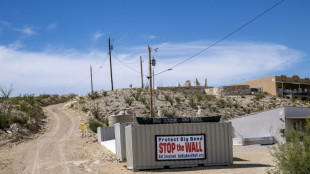
Judge pauses construction of border project in Texas national park
-
 France held by Italy in Zidane's homecoming after Olise stunner
-
Belgium's De Bruyne fires double to sink Turkey, France held by Italy

-
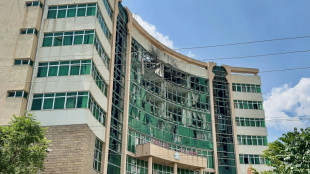 Ethiopian pro-government militia claims Tigray airport as regional tensions spike
-
US jobs data boosts stocks as oil prices dip

-
 Ohtani shaking off injuries as Dodgers launch MLB post-season
-
US Supreme Court to hear high-stakes climate case
-
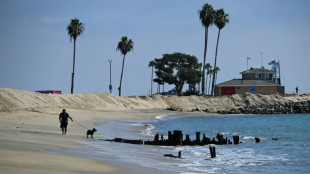 Sea levels to rise in California as coastal wave surges up west coast
-
Trump expected to name intel chief Clayton as AI czar: reports

-
 New rallies urged in France as protests disrupt over 730 schools
-
Argentina unveils passports-for-investment scheme

-
 Djokovic survives China Open scare, Sabalenka starts strong
-
Brazil election debate chaos sparks censorship row

-
 King Charles to evoke colonial 'darkest days' on Caribbean tour
-
England's Carse charged by cricket body over nightclub incident

-
 Tesla shares jump after global car sales top estimates
-
Amazon vows $1 bn for data center towns, decries 'myths'

-
 DR Congo Ebola outbreak killed more than 4,000: official figures
-
Oil prices drop on G7 fuel release, US jobs data boosts stocks

Liftoff! NASA launches mega Moon rocket, ushering new era of exploration
NASA launched the most powerful rocket ever built on a journey to the Moon on Wednesday, in a spectacular blaze of light and sound that marked the start of the space agency's new flagship program, Artemis.
The 32-story tall Space Launch System (SLS) blasted off from the storied Kennedy Space Center in Florida at 01:47 am (0647 GMT), producing a record 8.8 million pounds (39 meganewtons) of thrust.
"What you have done today will inspire generations to come, thank you!" Charlie Blackwell-Thompson, NASA's first female launch director, told cheering teammates.
Fixed to the rocket's top was the uncrewed Orion spaceship that will orbit Earth's nearest neighbor, in a test run for later flights that should see the first woman and first person of color touch down on lunar soil by the mid-2020s.
America last sent astronauts to the Moon during the Apollo era, from 1969-1972.
This time it hopes to build a sustained presence -- including a lunar space station -- to help prepare for an eventual mission to Mars in the 2030s.
There were nervous moments as teams worked to overcome technical issues that ate into the two-hour launch window, which opened at 1:04 am.
First, engineers were forced to pause the flow of liquid hydrogen into the core stage Tuesday night because of a valve leak, but a team sent to the launch pad resolved the issue after about an hour, by tightening loose bolts.
Later, the space agency reported that a radar site monitoring the rocket's flight path was experiencing problems due to a faulty ethernet switch, which had to be replaced.
It was third time lucky for NASA after two previous launch attempts were canceled for technical reasons. Launch was also delayed due to weather setbacks, including Hurricane Ian that battered Florida in late September.
- 'Extremely excited' -
About 100,000 people were expected to have gathered along the coast to witness the historic event.
Todd Garland, 55, drove from Frankfurt, Kentucky to watch from Cocoa Beach.
Wearing an Artemis T-shirt, he told AFP tearfully: "This has been an experience I've looked forward to all my life.
"My first memory is my mother waking me up at two-years-old to watch the Moon landing and I've always wanted to see a launch ever since, and now I have."
Kerry Warner, 59, a grandmother and semi-retired educator who lives in Florida, added the launch was "part of America and what America is all about."
- Far side of Moon -
The Orion crew capsule was lifted by two boosters and four powerful engines under the core stage, which detached after just a few minutes.
A final push from the upper stage will set the capsule on its way to the Moon, though it will take several days to reach its destination.
The upper stage will meanwhile release 10 cubesats to carry out science experiments, including one that will unfurl a sail powered by sunlight and perform asteroid reconnaissance work.
Rather than landing on the Moon, Orion will assume a distant orbit, venturing 40,000 miles (64,000 kilometers) beyond the far side -- further than any other habitable spacecraft so far.
Finally, the spaceship will embark on the return leg of its journey. When passing through the atmosphere, the capsule's heat shield will need to withstand a temperature half as hot as the Sun's surface.
Though Orion isn't carrying humans this time, it has three sensor-equipped dummies on board to help gather safety data for future crew members.
The mission will last 25-and-a-half days, with a splashdown in the Pacific Ocean on December 11.
NASA is banking on a successful mission after developing the SLS rocket for more than a decade.
Artemis 2 will involve a flyby of the Moon with astronauts in 2024, while Artemis 3 will see boots on lunar soil, no sooner than 2025. NASA hopes to settle into a yearly launch schedule, and will include international partners from Japan, Canada and Europe.
G.Machado--PC



