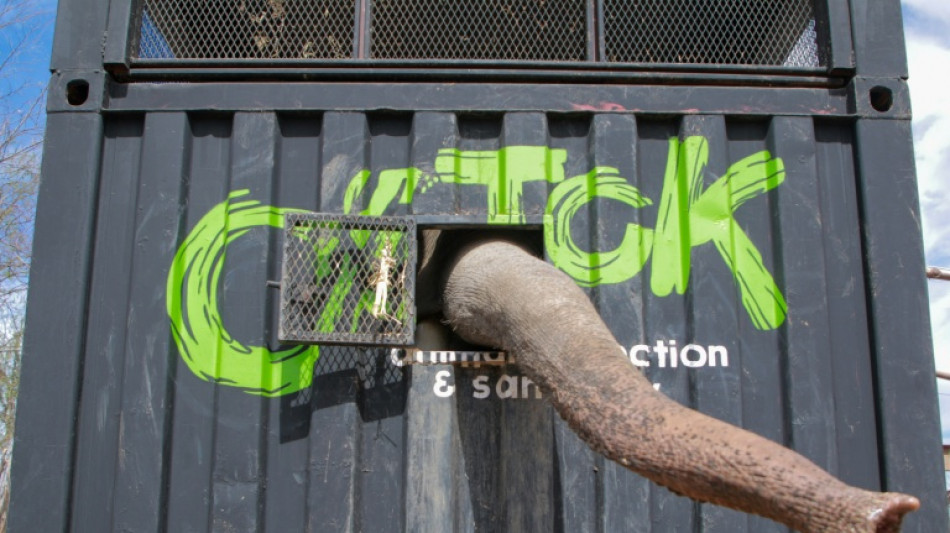
Mexican cartel turf war forces evacuation of exotic animals / Photo: Ivan MEDINA - AFP

 Kospi Falls Below 5,000 as U.S. AI Regulation Fears Trigger Circuit Breaker

 Valsoft's TAG Software Group Enters the Content Operations Market with the Acquisition of Chalco

 South Korea Proposes Fourth Delay of Cryptocurrency Gains Tax to 2029

 ASIC Fines Mona Museum Owner's Company for Late Financial Report

 Business Leaders Criticize Productivity Commission Inquiry Scope

 SCANDIC FINANCE ने एलेक्स बोडी को समूह का उपाध्यक्ष नियुक्त किया

 SCANDIC FINANCE Grubu, Alex Bodi’yi başkan yardımcılığına atadı

 Алекс Боди е назначен за вицепрезидент на групата SCANDIC FINANCE

 Ο Άλεξ Μπόντι νέος αντιπρόεδρος του ομίλου SCANDIC FINANCE
Hundreds of animals including elephants, crocodiles, lions and tigers have been moved from a violence-torn Mexican cartel heartland to a new home in an operation described as a "21st-century Noah's Ark."
The transported species, which also included exotic birds, had been housed at the Ostok animal refuge near Culiacan, the capital of Sinaloa state, home to one of the country's most powerful drug gangs.
The animal sanctuary's administrators told reporters on Tuesday that for months they had received threats, with a truck and equipment stolen.
"We are leaving because we run the risk of something happening to me and my team," said Ernesto Zazueta, the director of the refuge.
In total, about 700 animals were moved by road to a ranch on the coast.
"This caravan of animals is a kind of 21st-century Noah's Ark. But this time, the animals aren't fleeing a flood, but rather insecurity, fear, and anxiety," Zazueta said.
Since September, Culiacan has been the epicenter of a bloody war between factions of the Sinaloa drug cartel that has left more than 1,200 people dead and 1,400 missing, according to official figures.
The cartel is one of six Mexican drug trafficking groups designated terrorist organizations by the United States.
- Ailing health -
Regular roadblocks and armed clashes in the region made it difficult for the sanctuary's workers to keep the captive wildlife fed, another reason to relocate them.
"The animals' health began to suffer," Zazueta said, adding that at least a ton of beef and chicken was needed every three days to feed the animals.
Workers sedated the most dangerous of them, including lions and tigers, so they could be placed in cages for the 220-kilometer (nearly 140-mile) road trip.
Two large containers and a huge crane were needed to load the elephants onto trailers.
The final destination is a site called "Bioparque El Encanto," located in the seaside resort town of Mazatlan on Sinaloa's Pacific coast and owned by a local businessman, Zazueta said.
Big cats and other exotic animals have long been found at Mexican ranches and other properties owned by drug traffickers, who adopt them as pets but then abandon them when fleeing authorities or rival criminal groups.
Since September, federal authorities have discovered at least 14 big cats, some seized in raids and others found in abandoned houses believed to be used for criminal activities.
They were given a new home at the Ostok refuge, whose director said the mass animal transfer sent a "painful message" about the situation in the Sinaloa state capital.
"If animals can no longer live in Culiacan, who can?" Zazueta said
F.Moura--PC