
-
 Drones hit Moscow as Russians go to the polls
-
Myanmar win first Asian Games teqball gold as Spain great Puyol watches

-
 New England boss Fleming says 'wrong' to ask Stokes to end retirement
-
China's 13-year-old Yu scorches to first major gold at Asian Games

-
 Germans vote in elections threatening fresh blow to Merz
-
Russians vote on last day of parliamentary elections

-
 US fears rapid escalation in Mideast after Houthis attack Riyadh
-
Hong Kong pays final respects to former city leader Tung

-
 Japan triathlete Hojo wins first gold of Asian Games
-
Typhoon put people off Asian Games opening ceremony, official says

-
 IOC president impressed by 'beautiful' Asian Games wooden huts
-
China's 13-year-old Yu cruises as Asian Games swimming begins

-
 First Asian Games gold goes to Japan as China's 13-year-old Yu lights up pool
-
AI 'warning shots' focus Beijing on national security risks

-
 Data centre command hub keeps AI up and running
-
Philippine tribe in limbo over US-led tech hub

-
 Pope Leo in France: the issues on the table
-
Leo XIV, first US pope transcends his restrained style

-
 Packing for a pope: behind the scenes on foreign trips
-
Singer Ed Sheeran says Gaza situation 'unjustifiable' following controversy

-
 Republicans find transgender issues a powerful political weapon in midterm campaigning
-
In 'Tenzing', a Sherpa mountaineer gets his due

-
 German state elections threaten new shock waves for Merz
-
Ed Sheeran set to return to stage after Palestinian controversy

-
 Chile's Bachelet quits race to be next UN chief
-
Toulouse edge Vannes, Lyon beat Pau to take Top 14 summit

-
 Raphinha treble fires perfect Barca to win at Sevilla
-
Germans arrested for Louvre stunt in Mona Lisa hall

-
 Thiam makes winning heptathlon return at Decastar meet
-
Saudi-led coalition says Houthis fired ballistic missile at Riyadh

-
 Czechs beat USA to qualify for Davis Cup finals
-
France's debt climbs to highest since 1978: ministry

-
 Dortmund sink Stuttgart to climb to Bundesliga summit
-
McIlroy two shots off the lead at Wentworth after eagle on 18

-
 Trump says will not tolerate attempts to slow AI growth
-
Martinez brace saves Inter in Serie A top-two clash with Roma

-
 'It has to stop': runners protest women's murders in S.Africa district
-
Rosenior abused but guides Paris FC past old club Strasbourg

-
 Fire erupts near Riyadh airport as Houthis claim strikes
-
Seven-try Lyon beat Pau, climb to Top 14 summit

-
 Cuba works to restore power after another blackout
-
Brighton defeat a 'big lesson' against complacency for Arsenal, says Arteta

-
 England thrash Sri Lanka again to return to top of T20 rankings
-
Thousands protest inaction over climate crisis in Switzerland

-
 Arsenal thrashed by Brighton, sorry Spurs lose again
-
Carapaz out of cycling world championships

-
 South Korea, Austria qualify for Davis Cup finals
-
'Fragile' Tottenham beaten by Aston Villa despite late rally

-
 Seare shocks Ingebrigtsen to win world 5km gold
-
Mourinho hails Real Madrid grit before Atletico derby clash

China vs. Putin and Kim?
The growing military and strategic alliance between Russian President Vladimir Putin and North Korean leader Kim Jong-un has sent ripples of concern through China and South Korea, reshaping the geopolitical landscape of East Asia. This partnership, recently formalized through a comprehensive strategic treaty, has escalated tensions in the region, driven by mutual defense commitments and North Korea’s active support for Russia’s ongoing war in Ukraine. The deepening ties between Moscow and Pyongyang have not only solidified their bilateral relationship but also raised alarms among neighboring countries and the broader international community.
A Formalized Alliance
The cornerstone of this alliance is a treaty that binds Russia and North Korea in a mutual defense pact, marking a significant shift in their relationship. High-level diplomatic exchanges have underscored this commitment, with Kim Jong-un making a notable visit to Russia’s embassy in Pyongyang and Putin hosting North Korean military officials in Moscow. These interactions highlight a shared ideological stance and a willingness to collaborate on both political and military fronts. Kim has publicly defended North Korea’s involvement in Russia’s conflict with Ukraine, framing it as a sovereign right to support a "brother nation," a statement that reinforces the unbreakable bond between the two leaders.
Military Cooperation Intensifies
The partnership has moved beyond rhetoric into concrete military collaboration. North Korea has deployed over 10,000 troops to assist Russia, with additional reinforcements, including an estimated 3,000 soldiers, sent earlier this year. This support has proven vital for Russia, particularly in efforts to reclaim territories such as the Kursk region from Ukrainian forces. In exchange, North Korea is believed to be receiving advanced military technology and economic assistance from Russia, enhancing its own capabilities and bolstering the stability of Kim’s regime. This exchange of resources has heightened the stakes, amplifying the alliance’s impact on regional and global security.
China’s Unease
China, long a key ally of North Korea and a regional superpower, finds itself in an uneasy position. Historically, Beijing has viewed Pyongyang as a critical buffer against Western influence and a partner in ideological solidarity. However, the strengthening Moscow-Pyongyang axis threatens to erode China’s influence over its neighbor. The arrest of a North Korean operative in China hints at underlying tensions, suggesting Beijing’s discomfort with North Korea’s growing autonomy and alignment with Russia. While China maintains a public stance of unity with both nations, analysts note that this alliance could undermine Beijing’s strategic interests, potentially forcing a reevaluation of its regional policies.
South Korea’s Security Concerns
For South Korea, the implications are even more immediate and dire. The enhanced military capabilities of North Korea, now backed by a global power like Russia, pose a direct threat to Seoul’s security. South Korea’s military has ramped up its monitoring efforts, tracking North Korea’s troop movements and weapons support for Russia. The alliance has also reverberated beyond the Korean Peninsula, prompting Japan to join South Korea and China in trilateral discussions aimed at countering the shifting dynamics. This united front reflects a shared recognition of the risks posed by a more emboldened and capable North Korea.
Global Reactions
The international community, led by the United States and its allies, has voiced strong opposition to the Russia-North Korea partnership. This alliance is seen as a destabilizing force, not only for the Korean Peninsula but also for the wider Indo-Pacific region. Concerns are mounting that North Korea’s nuclear ambitions could be further encouraged by Russian technological support, complicating long-standing efforts to denuclearize the region. The U.S. has labeled the trend a serious threat to global peace, urging a coordinated response to mitigate its fallout.
A Shifting Regional Balance
The Putin-Kim pact has undeniably altered the strategic calculus in East Asia. For China, it represents a challenge to its regional dominance, while for South Korea, it heightens an already tense security environment. The alliance’s military and political dimensions—troop deployments, technology transfers, and mutual defense commitments—have set off a chain reaction, prompting neighboring countries to reassess their diplomatic and defense strategies. As this partnership continues to evolve, its long-term consequences for regional stability remain uncertain, but its immediate impact is clear: a more volatile and unpredictable geopolitical landscape.

Jewish Success: Myths & Facts
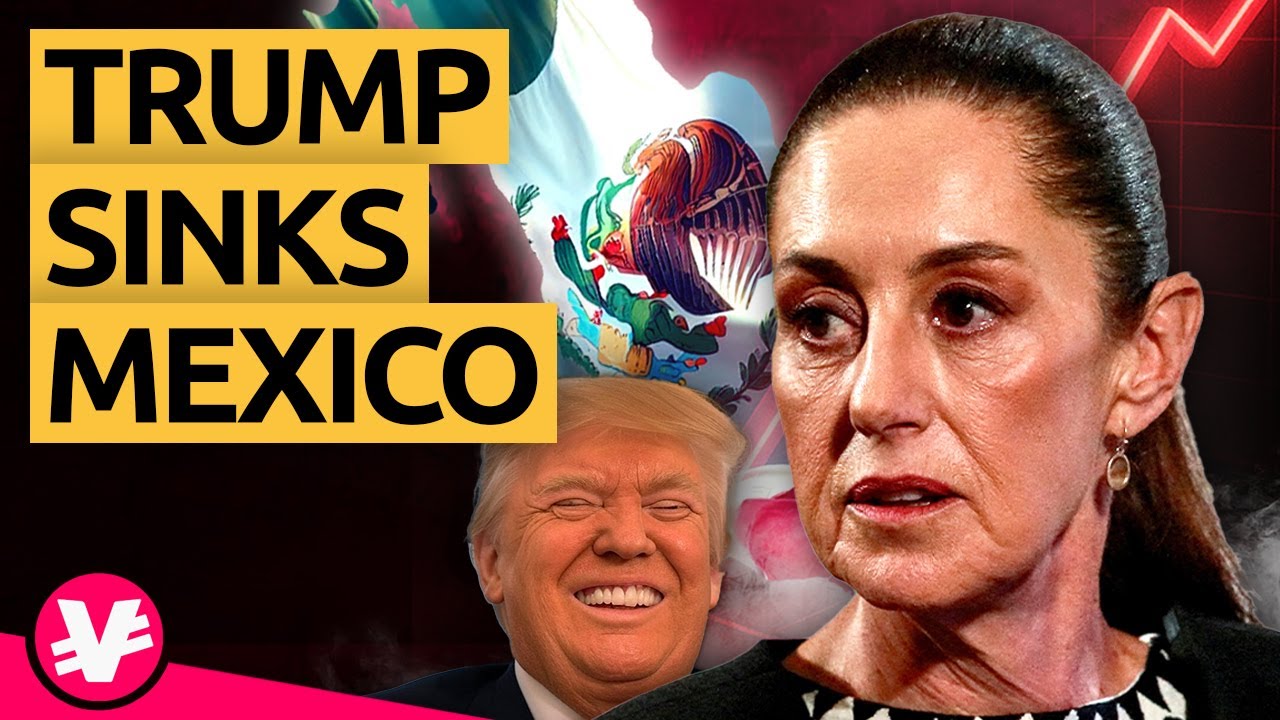
Trump's Tariffs Batter Mexico

Cuba's golden Goose dies

Nicaragua on the brink?

Trump vs Intel: Chip endgame?

After Europe’s capitulation

Operation Venezuela: Scenario

Can the FANB shield Maduro?

Venezuela braces after Strike

Tel Aviv’s Wartime rally

Why Nepal is burning



