-
 Drones hit Moscow as Russians go to the polls
-
Myanmar win first Asian Games teqball gold as Spain great Puyol watches

-
 New England boss Fleming says 'wrong' to ask Stokes to end retirement
-
China's 13-year-old Yu scorches to first major gold at Asian Games

-
 Germans vote in elections threatening fresh blow to Merz
-
Russians vote on last day of parliamentary elections

-
 US fears rapid escalation in Mideast after Houthis attack Riyadh
-
Hong Kong pays final respects to former city leader Tung

-
 Japan triathlete Hojo wins first gold of Asian Games
-
Typhoon put people off Asian Games opening ceremony, official says

-
 IOC president impressed by 'beautiful' Asian Games wooden huts
-
China's 13-year-old Yu cruises as Asian Games swimming begins

-
 First Asian Games gold goes to Japan as China's 13-year-old Yu lights up pool
-
AI 'warning shots' focus Beijing on national security risks

-
 Data centre command hub keeps AI up and running
-
Philippine tribe in limbo over US-led tech hub

-
 Pope Leo in France: the issues on the table
-
Leo XIV, first US pope transcends his restrained style

-
 Packing for a pope: behind the scenes on foreign trips
-
Singer Ed Sheeran says Gaza situation 'unjustifiable' following controversy

-
 Republicans find transgender issues a powerful political weapon in midterm campaigning
-
In 'Tenzing', a Sherpa mountaineer gets his due

-
 German state elections threaten new shock waves for Merz
-
Ed Sheeran set to return to stage after Palestinian controversy

-
 Chile's Bachelet quits race to be next UN chief
-
Toulouse edge Vannes, Lyon beat Pau to take Top 14 summit

-
 Raphinha treble fires perfect Barca to win at Sevilla
-
Germans arrested for Louvre stunt in Mona Lisa hall

-
 Thiam makes winning heptathlon return at Decastar meet
-
Saudi-led coalition says Houthis fired ballistic missile at Riyadh

-
 Czechs beat USA to qualify for Davis Cup finals
-
France's debt climbs to highest since 1978: ministry

-
 Dortmund sink Stuttgart to climb to Bundesliga summit
-
McIlroy two shots off the lead at Wentworth after eagle on 18

-
 Trump says will not tolerate attempts to slow AI growth
-
Martinez brace saves Inter in Serie A top-two clash with Roma

-
 'It has to stop': runners protest women's murders in S.Africa district
-
Rosenior abused but guides Paris FC past old club Strasbourg

-
 Fire erupts near Riyadh airport as Houthis claim strikes
-
Seven-try Lyon beat Pau, climb to Top 14 summit

-
 Cuba works to restore power after another blackout
-
Brighton defeat a 'big lesson' against complacency for Arsenal, says Arteta

-
 England thrash Sri Lanka again to return to top of T20 rankings
-
Thousands protest inaction over climate crisis in Switzerland

-
 Arsenal thrashed by Brighton, sorry Spurs lose again
-
Carapaz out of cycling world championships

-
 South Korea, Austria qualify for Davis Cup finals
-
'Fragile' Tottenham beaten by Aston Villa despite late rally

-
 Seare shocks Ingebrigtsen to win world 5km gold
-
Mourinho hails Real Madrid grit before Atletico derby clash

Russia's Drone ploy in Poland
Poland’s downing of multiple Russian drones that violated its airspace in the night of September 9–10 was not a random spillover from the war in Ukraine. The scale, timing and flight profiles point to a deliberate probe designed to test NATO’s vigilance, rules of engagement and political cohesion — a calibrated move that stayed just below the threshold for a mutual‑defense response while forcing the Alliance to reveal parts of its playbook.
A multi‑hour incursion, met with allied force
Over several hours, Polish and allied aircraft intercepted and shot down drone‑type objects crossing into Polish territory from the east. It was the first time in the current war that a NATO member engaged and destroyed Russian assets over allied soil. Authorities temporarily shut parts of Poland’s airspace and closed several airports; damage on the ground was limited — including a residential house struck in the Lublin region — and no casualties were reported. Officials recorded at least 19 incursions.
Why the operation looks planned — not accidental
1) Synchronization with mass strikes on Ukraine
The crossings coincided with a large, coordinated Russian wave against Ukraine involving hundreds of drones alongside cruise and ballistic missiles. Pairing a cross‑border incursion with a high‑tempo strike package is consistent with a playbook aimed at saturating sensors, overloading command centers and creating ambiguity about intent. In such windows, “strays” can be plausibly denied even as they gather intelligence and trigger costly responses.
2) Routes that matter
Preliminary trajectory analysis noted flight paths consistent with probing Poland’s critical logistics chain — above all the Rzeszów hub through which military aid flows to Ukraine. Even a small number of slow, inexpensive aircraft can force high‑end assets into the air, compel temporary airport closures and expose the Alliance’s alert timeline and coordination procedures.
3) Use of low‑cost and decoy‑like systems
Polish officials identified at least some of the intruding airframes as long‑range, low‑cost drones of a type Russia has used extensively. Such platforms are ideal for reconnaissance by provocation: they can map radar coverage, provoke emissions from air‑defense radars and fighters, and stress decision‑making — all with negligible risk to Russian aircrews and minimal political cost if shot down.
4) Cover from neighboring exercises and electronic warfare narratives
The incursion occurred as Russia and its ally Belarus prepared major exercises. That backdrop provides plausible deniability and alternative explanations (“lost course,” “jamming effects”) even as it positions assets near NATO borders and normalizes unusual air activity.
5) Testing NATO’s political seams
Warsaw publicly rejected suggestions that the drones might have wandered into Poland “by mistake,” framing the event as deliberate. Differences in early public messaging among allies are analytically notable: they are exactly the fissures that probing operations seek to widen — without triggering Article 5.
The allied answer — and what it signals
Poland activated NATO consultations and, within forty‑eight hours, the Alliance announced Operation Eastern Sentry, a flexible, integrated air‑and‑ground posture along the eastern flank. Additional fighters, surveillance platforms and air‑defense units from several member states are being positioned to rotate and adapt along the border arc — an approach designed to keep adversaries guessing while tightening reaction loops.
Domestically, Poland imposed drone bans and restrictions on small aircraft in its eastern airspace and moved to harden critical nodes. Border measures with Belarus were stepped up. Internationally, an emergency session of the U.N. Security Council was convened at Warsaw’s request. European capitals summoned Russian envoys and signaled further steps on sanctions and air‑defense cooperation. Ukraine, with two years of hard‑won counter‑drone expertise, offered to deepen technical training ties with Poland.
Strategic takeaways
- Probing as doctrine. Russia’s war has demonstrated a systematic reliance on massed, low‑cost drones to saturate defenses, expose gaps and harvest targeting and EW data. Exporting that method into NATO airspace — in controlled doses — is a logical extension.
- Ambiguity as a weapon. Unarmed or lightly modified drones crossing borders create maximum political friction for minimum military risk. They pressure alliances to choose between escalation and restraint, while providing Moscow with deniability narratives.
- Deterrence requires tempo. The Alliance’s swift shoot‑downs, rapid consultations and the launch of Eastern Sentry are meant to raise the cost of future probes, deny intelligence value and compress decision time. The next phase will be about integrating layered counter‑UAS systems, improving cross‑border command‑and‑control and hardening civilian aviation procedures along the frontier.
Bottom line:
The pattern — timing with mass strikes, purposeful routing toward critical hubs, employment of expendable platforms, and orchestration under the cover of concurrent exercises — supports the assessment that the drone violations over Poland were a planned strategic probe. The Alliance’s response will now determine whether such tests become rarer — or more audacious.

Germany: River Rhine water levels could fall to critical low
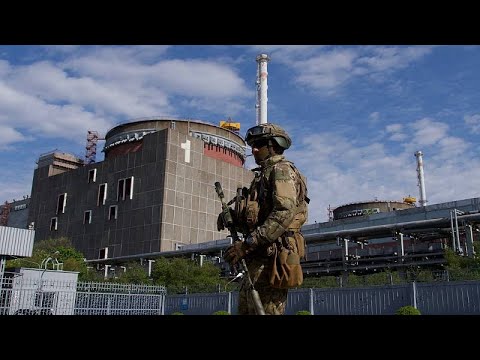
Ukraine war: Russia has to Stop suicidal attacks on Nuclear plant

Iran's Ayatollahs the next to Fall?

China, Trump, and the power of war?

Who wins and who loses in Syria?
Russia: Is Putin's time nearly up?

EU misstep on mercosur Deal

Euro Challenges Dollar's Reign

AI sparks Wall Street panic

Tariffs roil U.S.–India ties

India defies U.S. tariffs