-
 Germans vote in elections threatening fresh blow to Merz
-
Russians vote on last day of parliamentary elections

-
 US fears rapid escalation in Mideast after Houthis attack Riyadh
-
Hong Kong pays final respects to former city leader Tung

-
 Japan triathlete Hojo wins first gold of Asian Games
-
Typhoon put people off Asian Games opening ceremony, official says

-
 IOC president impressed by 'beautiful' Asian Games wooden huts
-
China's 13-year-old Yu cruises as Asian Games swimming begins

-
 First Asian Games gold goes to Japan as China's 13-year-old Yu lights up pool
-
AI 'warning shots' focus Beijing on national security risks

-
 Data centre command hub keeps AI up and running
-
Philippine tribe in limbo over US-led tech hub

-
 Pope Leo in France: the issues on the table
-
Leo XIV, first US pope transcends his restrained style

-
 Packing for a pope: behind the scenes on foreign trips
-
Singer Ed Sheeran says Gaza situation 'unjustifiable' following controversy

-
 Republicans find transgender issues a powerful political weapon in midterm campaigning
-
In 'Tenzing', a Sherpa mountaineer gets his due

-
 German state elections threaten new shock waves for Merz
-
Ed Sheeran set to return to stage after Palestinian controversy

-
 Chile's Bachelet quits race to be next UN chief
-
Toulouse edge Vannes, Lyon beat Pau to take Top 14 summit

-
 Raphinha treble fires perfect Barca to win at Sevilla
-
Germans arrested for Louvre stunt in Mona Lisa hall

-
 Thiam makes winning heptathlon return at Decastar meet
-
Saudi-led coalition says Houthis fired ballistic missile at Riyadh

-
 Czechs beat USA to qualify for Davis Cup finals
-
France's debt climbs to highest since 1978: ministry

-
 Dortmund sink Stuttgart to climb to Bundesliga summit
-
McIlroy two shots off the lead at Wentworth after eagle on 18

-
 Trump says will not tolerate attempts to slow AI growth
-
Martinez brace saves Inter in Serie A top-two clash with Roma

-
 'It has to stop': runners protest women's murders in S.Africa district
-
Rosenior abused but guides Paris FC past old club Strasbourg

-
 Fire erupts near Riyadh airport as Houthis claim strikes
-
Seven-try Lyon beat Pau, climb to Top 14 summit

-
 Cuba works to restore power after another blackout
-
Brighton defeat a 'big lesson' against complacency for Arsenal, says Arteta

-
 England thrash Sri Lanka again to return to top of T20 rankings
-
Thousands protest inaction over climate crisis in Switzerland

-
 Arsenal thrashed by Brighton, sorry Spurs lose again
-
Carapaz out of cycling world championships

-
 South Korea, Austria qualify for Davis Cup finals
-
'Fragile' Tottenham beaten by Aston Villa despite late rally

-
 Seare shocks Ingebrigtsen to win world 5km gold
-
Mourinho hails Real Madrid grit before Atletico derby clash

-
 Brigitte Bardot widower slams sale of star's belongings
-
Martin wins Austrian MotoGP sprint after Acosta crash

-
 Aston Villa compound Tottenham's misery despite late rally
-
Japan edge Fiji to win Pacific Nations Cup

Fentanyl trade unravels
Fentanyl, a synthetic opioid up to 50 times more powerful than heroin, has been at the centre of a catastrophic overdose crisis. After years of relentless expansion, the market that once claimed tens of thousands of lives annually is contracting. Preliminary data from the United States Centers for Disease Control and Prevention (CDC) indicate that estimated drug overdose deaths fell to about 80,000 in 2024, a 27 per cent decline from the record of more than 110,000 in 2023, signalling the largest one‑year drop in modern history. This article examines why the fentanyl business is faltering, exploring the interlocking impacts of supply‑chain disruption, international diplomacy, law‑enforcement operations and public‑health initiatives.
From Peak to Downturn
During the early 2020s, illicitly manufactured fentanyl flooded the North American drug market, becoming the leading cause of overdose deaths. The pandemic exacerbated the situation: social isolation and disrupted addiction treatment services contributed to a spike of nearly 110,000 U.S. overdose deaths in 2023. Most of those deaths involved fentanyl, which dealers used to replace or adulterate heroin, counterfeit prescription pills and cocaine. Yet by 2024 the tide had turned. CDC data show that overdose deaths fell by roughly 30,000 in one year, and preliminary numbers for 2025 suggest the decline is continuing. The decrease extends across most U.S. states, with notable reductions in Ohio and West Virginia. Such a sustained downward trend had not been seen in decades and prompted researchers to look beyond domestic policy interventions for an explanation.
Supply‑Chain Disruption and China’s Crackdown
One of the most significant drivers of the decline appears to be a disruption in the global supply of fentanyl and its precursors. Researchers analysing death trends in the United States and Canada found evidence of a sudden shortage of fentanyl on illicit markets beginning in mid‑2023. A Science journal study led by scholars at Stanford and the University of Maryland concluded that Chinese enforcement actions against chemical suppliers have curtailed exports of fentanyl precursors. Officials in Beijing shut down hundreds of companies, removed tens of thousands of online advertisements and arrested about 300 people after agreements with Washington to restrict the trade. The research suggests these moves reduced the availability of 4‑fluoroisobutyryl fentanyl and other precursors, causing the purity of seized fentanyl to fall and the price to rise. According to the DEA’s 2025 National Drug Threat Assessment, some Chinese suppliers have become wary of shipping controlled chemicals, aware that their government is enforcing updated counter‑narcotics treaties. Mexican fentanyl cooks report difficulty obtaining key precursors and are increasingly relying on designer chemicals to circumvent regulations.
Cartel Disruption and Enforcement
While precursor shortages have choked production, targeted law‑enforcement operations have also shaken the industry. White papers from the National Security Data and Policy Institute detail how the capture of Ovidio Guzmán López — a senior Sinaloa Cartel figure and son of Joaquín "El Chapo" Guzmán — in 2023 destabilised the cartel’s synthetic‑drug division. Experts point to a correlation between cartel ‘decapitation’ operations and sharp but temporary declines in fentanyl seizures and overdose deaths. The killing of Nemesio Oseguera Cervantes, leader of the Jalisco New Generation Cartel in late 2025, likewise rattled the market, although researchers caution that rival factions can quickly reconstitute production. The National Drug Threat Assessment notes that the Sinaloa and Jalisco cartels continue to dominate fentanyl production, but they face greater risk as Mexican and U.S. authorities cooperate to target laboratories and intercept shipments at the southwest border. Seizures at border crossings dropped from 29,000 kilograms in 2023 to 23,000 kilograms in 2024, reinforcing evidence of a supply contraction.
Public‑Health Measures and Changing Behaviour
The contraction of the fentanyl trade has amplified the effect of public‑health interventions. Increased distribution of the overdose‑reversal drug naloxone, expansion of medication‑assisted treatment programmes and billions of dollars in opioid settlement funds have collectively improved survival rates. Harm‑reduction services such as supervised consumption sites and drug‑checking kits have proliferated in major cities, allowing users to detect dangerous adulterants like xylazine and medetomidine. Younger Americans appear less likely to initiate opioid use than previous cohorts, and some long‑term users have died or shifted consumption patterns. These behavioural changes mean that a shrinking pool of susceptible individuals is exposed to an increasingly fragmented drug supply.
An Evolving Drug Market
Despite the current downturn, the illicit drug market is far from static. The DEA warns that declining fentanyl purity does not equate to reduced danger. To compensate for shortages, traffickers are mixing fentanyl with veterinary tranquilizers and new synthetic opioids such as nitazenes, which can be even more potent. The National Security Data and Policy Institute notes that precursor chemicals still arrive in Mexico’s Pacific ports such as Manzanillo, and cartels are diversifying sourcing through India and alternative trans‑shipment points. According to the DEA, the presence of xylazine in seized powder has risen steadily since 2020, increasing the risk of fatal respiratory depression and flesh‑rotting wounds. Nitazene analogues and other novel substances are appearing in toxicology reports at an accelerating rate in 2026, underscoring how quickly manufacturers pivot when confronted with enforcement pressure.
The sharp decline in fentanyl‑related deaths offers a glimmer of hope after years of escalating tragedy, but it is not a definitive victory. The current contraction appears to be driven primarily by disruptions in precursor supply, strategic cartel‑targeting operations and strengthened public‑health responses. Yet the same agility that allowed traffickers to flood markets with fentanyl enables them to adapt to enforcement, shifting to new chemicals, routes and business models. Sustained reductions in opioid mortality will require international cooperation to control chemical exports, continued pressure on manufacturing networks, wider access to treatment and harm‑reduction services, and public education to deter drug initiation. As policy makers debate how to allocate resources, the lesson of the fentanyl collapse is clear: comprehensive, co‑ordinated action across borders and disciplines can save lives.

What are the effects of climate change on sea flora?

Azerbaijan is in control: Armenians flee Nagorno-Karabakh

EU countries agree on watered-down car emissions proposal

Hungary-Dictator PM Orban claims EU 'deceived' Hungary

Ruble at the end: Russia's currency on the brink of collapse

Russia in Ukraine: murder, torture, looting, rape!

That's how terror Russians end up in Ukraine!

Spain: Sánchez's aim of a left coalition will fail!

Russland, der Terror-Staat / Russia, the terrorist state!
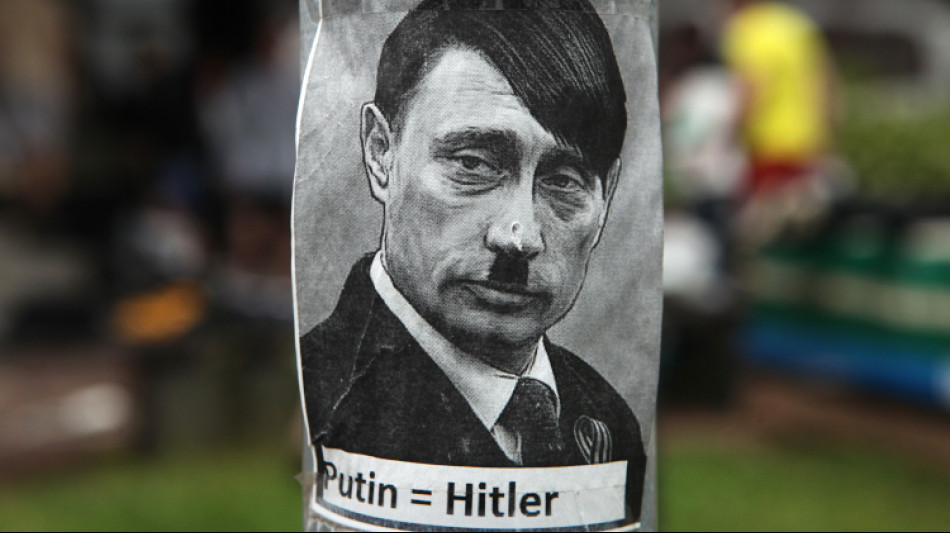
Ukraine in the fight against the russian terror State

The Russian criminals will never own Ukraine!