-
 San Ġiljan Defeat Paredes 20-12 in Challenger Cup Opener
-
Geri Halliwell-Horner Embraces Queen Camilla at Commonwealth Writing Competition

-
 2027 Toyota Sienna Gets Sixth-Gen Hybrid System, More Power, and Trim Changes
-
Meta Quest 3 and 3S Gain Access to Over 150 3D Movies

-
 Burnham Government Announces Neighbourhood Support Teams to Reduce Hospital Admissions
-
Sarah Bajada Shares Message on Pregnancy Loss

-
 KFF Health News Readers Weigh In on Healthcare Policy, Ethics, and Workforce Shortages
-
ALIX LASERS shareholders remove Michael Sobitsch as managing director in view of the circumstances

-
 16-Year-Old Founder Targets 'Cost Per Kill' With AI Missile Startup
-
Euroseas Q3 Net Profit Falls to $91.4 Million Amid Fleet Reduction

-
 Elon Musk Promises Steering-Wheel-Free Tesla Model Y Amid Cybercab Sales Launch
-
Daily Horoscope November 20, 2026: Astrological Predictions for All Signs

-
 APEX FTE Expo 2026 Unites Aviation Leaders in Singapore and Honors Passenger Experience Excellence
-
Tosca's 2026 Sustainability Report Makes the Case for Packaging as Critical Supply Chain Infrastructure

-
 West Midlands Shoppers Urged to Guard Against Black Friday Scams
War tests the Saudi bargain
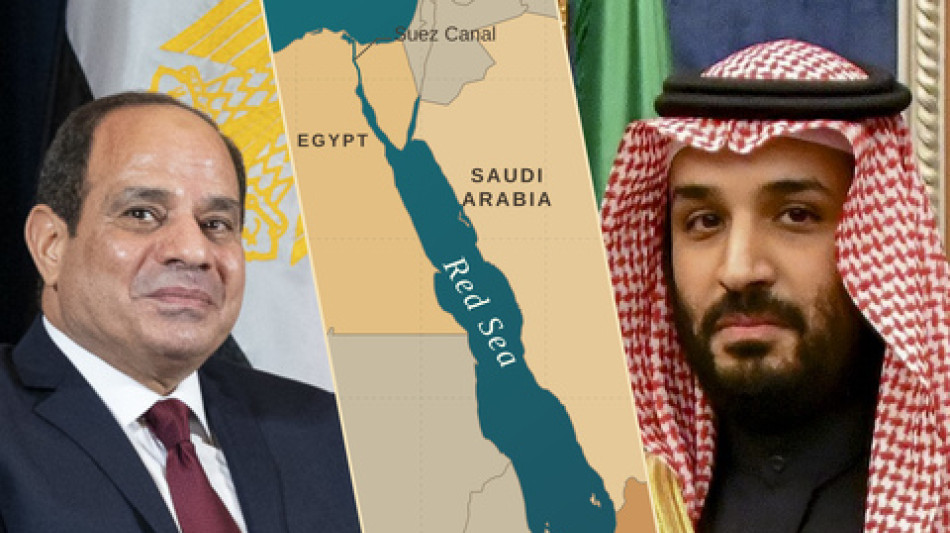
Eleven days separated the damage to Saudi Aramco’s offices in Riyadh from the attack that shattered windows at the headquarters of the Public Investment Fund. Aramco supplies much of the money that runs Saudi Arabia. The fund, chaired by Crown Prince Mohammed bin Salman, invests in the industries where he expects the next generation to work. In November, the war with Iran reached both buildings.
On November 19, a Houthi attack damaged several floors of the fund’s tower in the King Abdullah Financial District. No injuries were reported. On November 20, residents hundreds of miles away in southern Saudi Arabia received fresh warnings as air defenses intercepted a missile and drones. The Houthis have fought Saudi Arabia since 2015. Their campaign against the kingdom resumed in July after the relative calm that followed a 2022 truce in Yemen. By November, families in Riyadh had lived with the disruption for weeks. Schools had moved lessons online, and deadly attacks in October had left the capital’s international airport closed to most flights.
The terms of the crown prince’s bargain with Saudis were implicit. The royal family would keep its hold on political power. In return, citizens could expect security and a greater say over how they earned a living and spent their free time. Women can now drive to work. Cinemas have reopened. Young Saudis can build careers in film or concert production at home. Those gains set a standard by which to judge the government. So does a morning when a parent has to miss work because a classroom is closed.
The princes and the preachers
For decades, power within the House of Saud was more widely distributed than the title of absolute monarch might suggest. Senior princes ran ministries and security forces as their own spheres of influence. Clerics shaped schooling and public conduct. Merchant families benefited from state contracts, while oil income financed government jobs and subsidized services. A king could draw on these constituencies for support. He also had to reckon with their interests.
Few places capture the change under Mohammed bin Salman as neatly as Riyadh’s Ritz-Carlton. In October 2017, international financiers gathered there as the crown prince unveiled plans for NEOM, his new development in the northwest. Days later the hotel held princes and businessmen detained in an anti-corruption campaign he chaired. Prince Miteb bin Abdullah, who had headed the National Guard, lost his post and was among those detained. Investors and Saudi grandees had each been shown, in the same building, where decisions would now be made.
What a barrel of oil earns
When the United States and Israel went to war with Iran in late February, Saudi Arabia had some insurance against disruption in the Strait of Hormuz. Its East-West Pipeline could carry crude across the kingdom for export from Yanbu on the Red Sea. An attack temporarily shut the line in September. Shipments recovered, but winning back buyers came at a price. In October, India took about 790,000 barrels of Saudi oil a day, an eight-month high, as Saudi discounts helped offset the cost of freight.
That discount matters in Riyadh. A rise in the world oil price offers only partial protection if fewer barrels reach customers or if refiners demand better terms to take them. The budget was already in deficit before the war. By the end of September, the shortfall for the first nine months had reached 244.3 billion riyals, against an original full-year forecast of 165 billion. The government’s revised forecast puts the annual gap at 245 billion riyals. It can borrow to keep projects moving. Interest payments will claim part of the revenue available for the next round of hiring and construction.
There is also evidence that the economic reforms have given the kingdom some protection. Preliminary estimates show that non-oil activity grew 1.9 percent in the third quarter from a year earlier, even as the economy overall shrank 3.8 percent. And by 2025, 35 percent of working-age Saudi women were employed or looking for work, already above the original Vision 2030 target of 30 percent. For households that now depend on a second wage, the fortunes of private employers have become a matter of immediate concern.
A year lost in Riyadh
The Future Investment Initiative, the gathering at which the crown prince introduced NEOM, was due to hold its tenth edition in Riyadh in October 2026. Its new dates are October 25 to 28, 2027. A year is a manageable delay for an investment fund with a long horizon. For a hotel selling rooms by the night, or a caterer hiring staff for four days, the business belongs to the season in which it was booked. Much of it cannot be carried forward.
The distinction goes to the heart of Vision 2030. The state can pay a contractor to finish a hotel during a war. It has far less control over when travelers will fill the rooms. As long as flights are unreliable, the government faces pressure to sustain businesses it had counted on to create jobs of their own. The more successful it has been in steering young Saudis into tourism and services, the more families have a stake in reopening the airport.
The limits of loyalty
The war has given an older institution a more prominent public role. At a large Riyadh mosque in November, the Friday sermon was devoted to the conflict with the Houthis, and the imam prayed for Saudi soldiers on the southern border. Only a decade ago the authorities curtailed the religious police’s power to arrest people. Today the government still guides the themes of Friday sermons. Calling on clerics to rally the country gives them an audience at a moment of national anxiety. There is little evidence that it has restored their former political influence.
Nor is there a reliable public measure of how far the attacks have altered Saudi loyalties. The kingdom holds no national elections, and open criticism carries real risks. Senior appointments and control of the security services remain concentrated at court. What has changed is how personally he owns the outcome. He claimed the opening of Saudi Arabia as the achievement of his rule. The longer the airport and the classrooms struggle to stay open, the harder it becomes to persuade Saudis that he can protect what he helped them gain.