-
 Black Friday offers include household essentials and low-cost donation toys
-
Shark reduces prices on top-rated stick and robot vacuums

-
 Black Friday gaming offers cut prices on headsets, consoles and games
-
Anthony Lee’s Journey from Fashion to Art Education at HoMA

-
 Shark Depuffi stock dwindles as Black Friday skincare discounts begin
-
Black Friday discounts arrive on tested Yeti coolers and drinkware

-
 Chevrolet Blazer EV SS tested against decades of Super Sport models
-
UK survey records sharp rise in young adults reporting no sexual experience

-
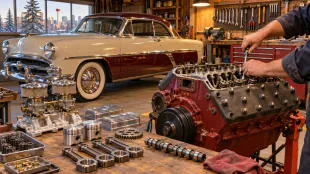 Calgary builder draws on decades of DIY work to increase Ford engine power
-
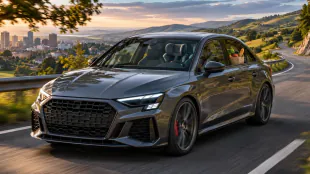
Audi RS 3 long-term test leads debate over the ideal everyday performance car
-
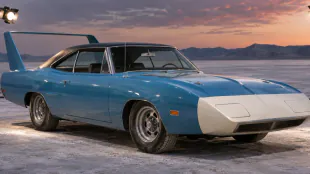 Record-setting Hemi Plymouth Superbird heads to auction
-
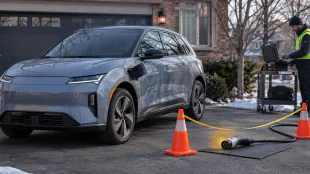
Ontario family seeks return of Chevrolet Bolt after charging cable shock
-
 Calgary dancer describes stripping as a career built on independence and community
-
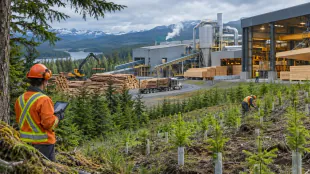
Canada launches $6.5 billion strategy to transform forestry sector
-
 Rohit Sharma Reappointed Mumbai Indians Captain for IPL 2027 with Focus on Team Spirit
-
Calgary Catholic schools report strong results and growing classroom complexity

-
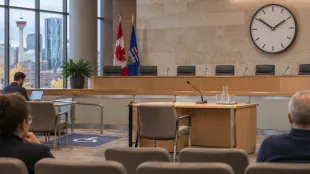 Calgary budget hearing delayed during debate over Tourette syndrome accommodation
-
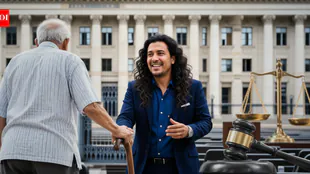
Bombay HC Orders Bank of Baroda to Pay Rs 1.5 Crore to Octogenarian After Unilateral FD Deduction
-
 Business phone systems gain AI tools, but human oversight remains essential
-
Danny Trejo Claims Legal Threats Prevented Him From Quitting Ben Shapiro ICE Film

-
 Huawei outlines 2030 network plans at Africa Tech Festival
-
Workday weighs South African public-sector demand while keeping data in EU

-
 Governments and courts tighten restrictions on camera-equipped smart glasses
-
iOCO acquires procurement software specialist Intellection

-
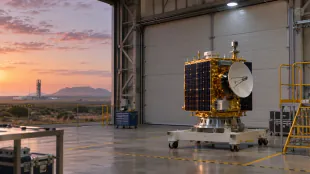 South Africa’s sovereign satellite plan remains stalled despite higher cost
-
RunCzech Advent Running Challenge Offers Prague Half Marathon Entries

-
 EasyEquities faces pressure for clearer answers after security outage
-
EasyEquities says small group of client accounts targeted in attack

-
 US patent disputes involving Korean chipmakers reach record level
-
Regulator examines E9Pay after hacking losses reach 2.5 billion won

-
 SK hynix doubles daily share purchases after steep stock decline
-
North Korea and Russia agree to expand joint economic projects
-
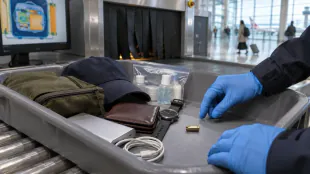 Former soldier stopped with blank round at Incheon Airport
-
Seoul monitors reports of possible Kim Jong-un visit to China
-
 Korea Post breach exposes data of at least 113,855 customers
-
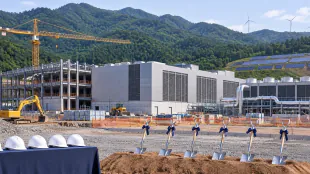
Lee joins launch of 2.4-gigawatt AI data centre project in Gangwon
-
 Many AAPI Candidates Win Seats in Orange County Local Elections
-
Daily Horoscope November 28, 2026: Jupiter-Venus Alignment Boosts Collaboration

-
 Holly Ramsay and Adam Peaty Welcome Daughter Daphne June at Portland Hospital
-
South London YouTuber Augustine Mitchell Sentenced to 12 Years for Rape

-
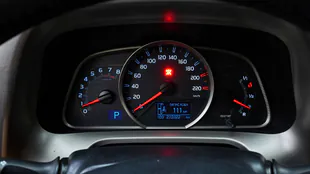 Honda and Toyota Recall 1.6 Million Vehicles Over Takata Airbag Risks
The gap in the Crimean Bridge
On 16 November 2026, the road across the Kerch Strait reopened after a closure of roughly seventeen hours. Traffic took turns in a single lane. By the following morning, a Ukrainian strike had brought down the main road span of the Crimean Bridge. Eleven days later, passengers could cross the strait by train, while motorists still had no date for the road to reopen. In the week of the collapse, Russia’s forces made a net territorial gain in Ukraine.
When Vladimir Putin opened the road in May 2018, he drove an orange lorry at the head of a convoy. Russia had seized Crimea four years earlier. Until the bridge opened, someone taking a car directly from southern Russia to the peninsula had to board a ferry. Putin covered the nineteen kilometres at the wheel. The political value of the occasion lay in how ordinary that journey was supposed to become. A family could drive to Crimea without giving the strait much thought.
What fell on 17 November
The bridge carries a road and a railway on separate structures. After the first strike on 16 November, Russian officials described the damage as minor. While the road was restricted to one lane, trains continued to run. The following morning, the main road arch fell into the water. The railway arch beside it remained standing. A further Ukrainian strike on 19 November interrupted train services, but by 24 November passenger trains were crossing again. The railway had opened in December 2019, nineteen months after Putin’s drive. The two halves of the crossing had come into service separately, and their fortunes now diverged again.
For passengers bound for Simferopol or Sevastopol, a working railway across the strait did not mean a through train to their destination. Long-distance Tavria services terminated at Kerch, on the eastern edge of Crimea, where buses met arriving passengers. Some of those transfers were already in place before the attacks. The new disruption fell most directly on motorists. Anyone who wanted to drive the whole way from Russia now faced the longer journey through occupied Ukrainian territory.
The road to the front
The consequences for Russian troops are harder to measure. Earlier attacks had already interrupted the crossing. In October 2022, sections of the roadway collapsed and fuel wagons caught fire on the adjacent railway. In July 2023, another attack killed two people travelling by car and injured their daughter. Trains were running again within hours. Over the course of the full-scale invasion, Russia’s military had come to rely more heavily on the land corridor through occupied southern Ukraine. Losing the road at Kerch left that corridor in use.
Between 16 and 23 November, the area of Ukraine under Russian control grew by an estimated 44 square kilometres on balance. That figure counts gains and losses across the front over a week that began the day before the road arch fell. It cannot establish how much freight reached a particular unit, or when a delay in Crimea might be felt elsewhere. It does show the difficulty with declaring 17 November the day Putin’s advance ended. The change that can be dated to that morning is the loss of the direct road crossing.
On 19 November, Russian Deputy Prime Minister Marat Khusnullin suggested that parts of the bridge could return to service within a month or two. Six days later, the transport minister said engineers were still inspecting the structure. Neither statement gave motorists a reopening date. As November drew to a close, it was possible to buy a train ticket for the journey Putin had made in 2018. It was still impossible to make it as he had, behind the wheel.

China’s lithography leap

Pakistan’s Taliban dilemma

Trump needs to avoid debt Collapse

Iran's Ayatollahs the next to Fall?
China, Trump, and the power of war?

Who wins and who loses in Syria?
Russia: Is Putin's time nearly up?

Alice Weidel: AfD Chancellor Candidate 2025

Hungary: China's CATL battery factory

Meta's announcements and digital services?

Donald J. Trump: America is back