Climate protesters to rally at COP30's halfway mark / Photo: Mauro PIMENTEL - AFP

 Drone owners rush to offload devices ahead of Beijing ban

 Trump's beef policies irk Texas ranchers, testing their loyalty

 Nvidia, OpenAI CEOs to attend Xi dinner at White House

 Anthropic picks Accenture for in-house AI safety evaluation

 Balogun returns as Monaco beat Lens to continue strong Ligue 1 start

 'Pause' on overt repression in Venezuela, but reforms still needed: HRW

 Global stocks mixed as yen falls despite Bank of Japan rate hike

 Cuba hit with seventh major blackout of the year

 Murray out with concussion so Wentz will start for Vikings

 UN chief 'deeply regrets' US visa refusal to Abbas for annual meeting

 England quick Carse to face no charges over alleged nightclub assault

 Mancini brings nine newcomers into the first squad of his Italy comeback

 Czechs level Davis Cup tie against USA as South Korea eye Finals

 New France boss Zidane confirms Mbappe as captain after naming first squad

 California governor signs order to explore AI 'kill switch'

 Head leads run spree as Australia win Zimbabwe ODI series

 In-form Raphinha wants to finish career at Barcelona

 Warren Buffett steps down as Berkshire Hathaway chairman

 Carrick confident Man Utd can 'work through' tough time

 Mbappe ends Nike partnership to join Swiss brand On

 Liverpool boss Iraola puts Bournemouth love affair on hold

 'A disaster' if Man City do not win says Maresca after flawless start

 Kerry James Marshall: American 'blackness' painter celebrated in Europe

 Spain coach De la Fuente offers 'full support' to people of Ceuta

 Russia seizes assets of Nestle, French firms over West's Ukraine support

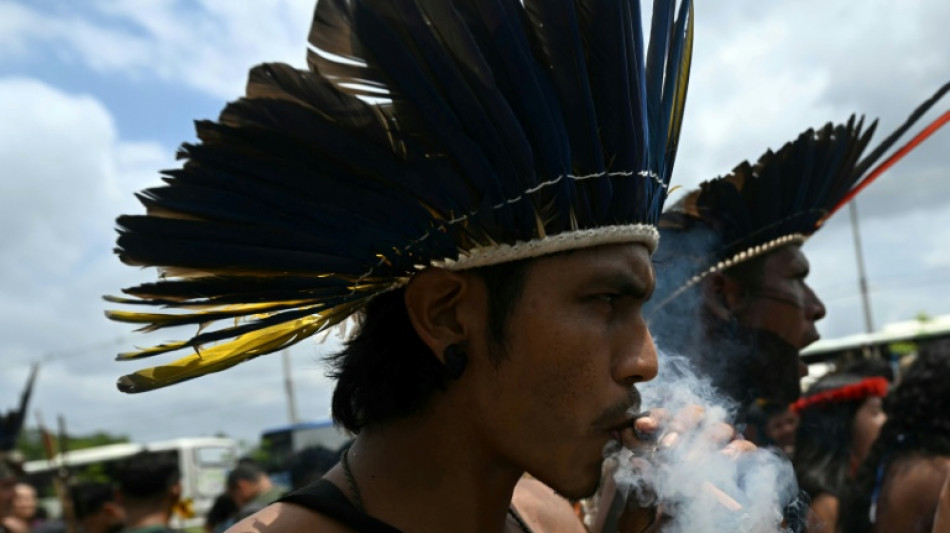
Thousands of people are expected to march through the streets of Belem on Saturday, demanding "real solutions" to human-caused global warming as the Brazilian city hosts this year's UN climate talks.
Branded the "Great People's March" by organizers, the rally comes at the halfway point of contentious COP30 negotiations and follows two Indigenous-led protests that disrupted proceedings earlier in the week.
The previous three conferences took place in Azerbaijan, the United Arab Emirates and Egypt, where activists feared being arrested.
Marchers -- including Indigenous peoples, fishers, youth, and workers -- will gather at a local market at 7:30 am (1030 GMT) and walk roughly 4.5 kilometers (2.8 miles), stopping a few blocks short of the COP30 site.
Their demands include "reparations" for damage caused by corporations and governments, especially to marginalized communities.
"Historically, people build the real solutions, so the march aims to denounce the climate crisis but also to present our proposals to the world," Iury Paulino, part of the march's coordination team and a member of the Movement of People Affected by Dams, told AFP.
Although the march route does not reach the COP venue itself, security is likely to remain on high alert.
On Tuesday, Indigenous protesters forced their way into the Parque da Cidade -- the COP30 compound built on the site of a former airport -- clashing with security personnel, some of whom sustained minor injuries.
Then on Friday, dozens of Indigenous protesters blocked the entrance for roughly two hours to spotlight their struggles in the Amazon, prompting high-level interventions to defuse the situation.
- Love letters and therapy -
Inside the venue, talks are delicately poised.
At the close of the first week of negotiations, the Brazilian presidency of COP30 is expected to unveil its strategy on Saturday for reconciling countries' demands.
The top issues include how to address weak climate goals and how to improve financial flows from rich to poor countries to build resilience against a warming world and transition to low-emission economies.
So-called trade barriers, such as Europe's carbon border tax, have emerged as a key contention, as has the issue of whether to set timelines and targets for the transition away from fossils.
Several participants believe that negotiators are holding firm to their positions while awaiting the arrival of their ministers next week, who must then reach an agreement by the end of the conference on November 21.
An African negotiator hoped the presidency would take the lead, "otherwise this could turn out to be an empty COP," he said, contrasting with the optimism expressed by others.
The "parties are here to get a positive outcome of this COP," German State Secretary Jochen Flasbarth said.
Another Western diplomat said the Brazilian presidency had urged countries to treat their consultations as "therapy sessions" -- a safe space to air concerns.
Delegations were also encouraged to send private submissions describing how they felt the talks were progressing, which the Brazilians referred to as "love letters."
"These negotiations, they are like a roller coaster sometimes, you know, they are up, sometimes they are down," summarized Brazil's chief negotiator, Liliam Chagas.
E.Raimundo--PC