Carney scraps Canada EV sales mandate, affirms auto sector's future is electric / Photo: Dave Chan - AFP/File

 Trump's beef policies irk Texas ranchers, testing their loyalty

 Nvidia, OpenAI CEOs to attend Xi dinner at White House

 Anthropic picks Accenture for in-house AI safety evaluation

 Balogun returns as Monaco beat Lens to continue strong Ligue 1 start

 'Pause' on overt repression in Venezuela, but reforms still needed: HRW

 Global stocks mixed as yen falls despite Bank of Japan rate hike

 Cuba hit with seventh major blackout of the year

 Murray out with concussion so Wentz will start for Vikings

 UN chief 'deeply regrets' US visa refusal to Abbas for annual meeting

 England quick Carse to face no charges over alleged nightclub assault

 Mancini brings nine newcomers into the first squad of his Italy comeback

 Czechs level Davis Cup tie against USA as South Korea eye Finals

 New France boss Zidane confirms Mbappe as captain after naming first squad

 California governor signs order to explore AI 'kill switch'

 Head leads run spree as Australia win Zimbabwe ODI series

 In-form Raphinha wants to finish career at Barcelona

 Warren Buffett steps down as Berkshire Hathaway chairman

 Carrick confident Man Utd can 'work through' tough time

 Mbappe ends Nike partnership to join Swiss brand On

 Liverpool boss Iraola puts Bournemouth love affair on hold

 'A disaster' if Man City do not win says Maresca after flawless start

 Kerry James Marshall: American 'blackness' painter celebrated in Europe

 Spain coach De la Fuente offers 'full support' to people of Ceuta

 Russia seizes assets of Nestle, French firms over West's Ukraine support

 England can build on World Cup 'spirit', says Tuchel

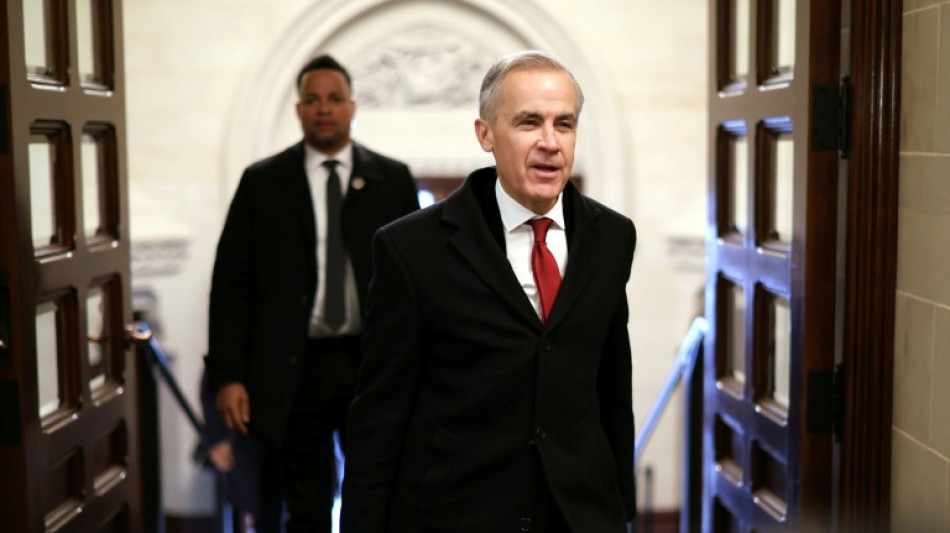
Prime Minister Mark Carney on Thursday cancelled a mandate for all vehicles sold in Canada to be electric by 2035, while announcing major investments to support the auto industry's EV transition.
In unveiling his plan to transform the sector, Carney said Canada's auto industry needed to be ready for a future where EVs are dominant, and where US President Donald Trump's tariffs have made cross-border vehicle production unworkable.
Carney's decision to scrap EV mandates also marked another departure from policies backed by his climate-focused predecessor, Justin Trudeau.
Trudeau's government had mandated that 20 percent of vehicles sold this year be electric, with a 60 percent target by 2030 and the 100 percent target for 2035.
Those targets were applauded by some environmental groups but faced criticism from automakers, as well as concern that Canada had nowhere near the charging infrastructure needed to support full electrification across a vast landmass.
Carney argued his new automotive strategy would prioritize "results and solutions."
His plan includes a CAN$5,000 (US$3,700) subsidy for individuals who choose to buy an EV, CAN$1.5 billion to improve charging infrastructure, and CAN$3 billion "to help the auto industry adapt, grow, and diversify to new markets," his office said.
"We know where the auto industry is headed. We're going to support that transition," Carney told reporters.
Progress in the global EV market has been patchy.
Trump scrapped tax credits for EV purchases last year, jarring automakers that invested heavily in electrification during Democrat Joe Biden's presidency.
The European Union in December also proposed scrapping a planned 2035 ban on new combustion-engine vehicles.
Carney said his goal was 75 percent EV sales by 2035, and a 90 percent target by 2040.
The Global Automakers of Canada, an industry group, praised Carney for providing "greater clarity" on the government's electrification plans, including "a commitment to aggressively build out the charging infrastructure."
Since taking office last year, Carney has also scrapped Trudeau's carbon tax on individual households and advanced plans to build a new oil pipeline from Alberta to the Pacific coast -- infuriating environmental groups.
Asked Thursday if he still considered Canada a leader in the fight against climate change, Carney said: "Absolutely."
– 'Serious liability' –
Canada's auto industry supports half a million jobs, and concern about its future has intensified since Trump returned to office last year.
The president's broad approach on trade with Canada has shifted, but his administration has maintained a fairly consistent message on autos, insisting it wants to see vehicles made exclusively inside the United States.
Carney on Thursday said "there's no greater symbol of how closely the Canadian and American economies have been intertwined than automobiles."
Parts cross the US-Canada border up to eight times during production, but Trump's auto tariffs are threatening the viability of such integration.
"That trade relationship that once was a great strength has now become a serious vulnerability," Carney said.
Since April, Canadian-made vehicles have faced a 25 percent tariff on their non-US components, a levy Canada insists violates the existing North American free trade agreement, known as the USMCA.
USMCA revision talks are set for this year.
"Our objective is to remove all tariffs in the auto sector," Carney said, but stressed Canada's industry needed to start planning for an entirely domestic production chain.
Canada has large deposits of the critical minerals needed for EV battery production and says it wants to develop an end‑to‑end production chain, from mining to mineral processing to vehicle battery production.
A.Aguiar--PC