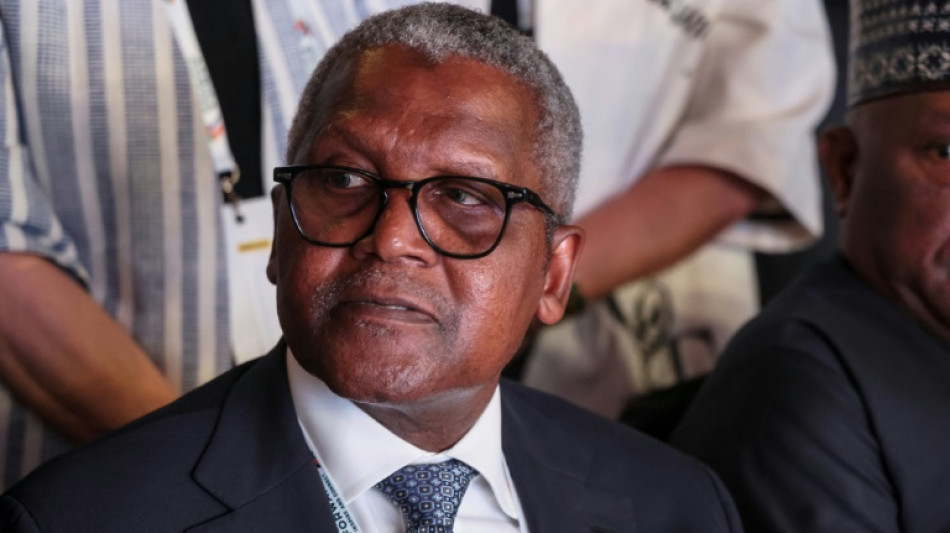
Dangote's mega oil project threatens fragile Kenyan ecosystem: Greenpeace / Photo: Ludovic MARIN - AFP

 Hong Kong court set to sentence activist Joshua Wong in security case
 Australia raises benchmark rate to highest level in 18 years

 'The Remarried Empress' Cast Discusses Bringing Fantasy Royal Drama to Life
 Asian stocks retreat as AI worries outweigh steep oil-price drop

 Hamad International Airport stages emergency drills during WATAN 2026

 Global failure to punish attacks leaves journalists at continuing risk

 Researchers Warn 'Bookkeeping Trick' Masks Beef Industry's Methane Emissions

 Climate Change Intensified Atlantic Hurricanes, Study Finds

 Qatar solar expansion opens scope for technical performance gains

 IXOPAY Announces IXO One, a Modular Payments Platform Built for an Era of Fluid Commerce
Climate rights group Greenpeace Africa called on Tuesday for a halt to a proposed mega oil refinery project by Africa's richest man, Aliko Dangote, in Kenya's coastal region, warning of environmental risks.
The east African oil refinery, with a planned capacity of 700,000 barrels per day, was confirmed earlier this month to be located at Kenya's Lamu port, ending months of speculation that Tanzania could host the project.
"This project threatens to damage one of East Africa's most fragile coastal ecosystems while locking Kenya into a risky fossil fuel future," Sherelee Odayar, Greenpeace Africa Oil and Gas campaigner, said in a statement.
The group said the oil refinery, which is expected to take about 30 months to build, will lead to "habitat destruction, marine degradation, oil spill risk and dangerous air pollution".
"Lamu's mangroves, coral reefs and seagrass beds are not expendable. They support fisheries, livelihoods and coastal protection," the NGO said.
Greenpeace Africa called for the $17-billion project to be suspended pending an independent environmental assessment before any approvals are granted.
"No approvals should move forward without a full, independent environmental and social impact assessment, genuine public participation and transparent scrutiny of the long-term economic, health and ecological risks," Odayar said.
Kenyan President William Ruto has praised the project, arguing it will create jobs.
About 800,000 Kenyans join the labour market each year, according to the World Bank.
But Greenpeace said the project will only "create temporary jobs while undermining existing livelihoods in fishing, tourism and small-scale local economies".
"This refinery also risks becoming a stranded asset as the world moves toward cleaner energy.
"It would also lock Kenya into decades of carbon-intensive development, worsening climate change and its impacts," it said.
There are still many questions around the project in Kenya, not least where it will source the oil to refine and how it will be financed.
L.E.Campos--PC