WMO Says Powerful El Niño Is Likely to Persist Into February 2027

 EU lawmakers demand Brussels force Meta to 'protect' European children
 Clooney turns AFP photographer in jokey red carpet switch
 Retirement Income Planning Florida Launches No-Cost 'Income Gap Analysis' Program for Pre-Retirees

 Iraola hails Barcola mentality after blockbuster Liverpool move
 Michelsen shocks Nakashima in US Open clash of rising Americans

 US govt sides with OpenAI in New York Times copyright lawsuit

 Philadelphia Festival Revisits the Signing and Legacy of the U.S. Constitution
 Honda Presses Suppliers for Deep Cost Cuts in $9.4 Billion Savings Drive
 WMO Says Powerful El Niño Is Likely to Persist Into February 2027

 Maui Wildfire Survivors Report Major Losses to Troubled Rebuilding Contractors

 Grammy-Winning Jazz Vocalist Cassandra Wilson Dies at 70

 Russia to close branches of Germany's Goethe Institute

 Spacecraft bound for Mercury faces 'tricky' arrival

 Philippines holds drills to safeguard students from armed intruders

 In Ghana, larger-than-life coffins tell the stories of the dead
 Menoncello, Reece headline Top 14 new-season signings

 Families descend on Nepal in search of missing tourists

 Far-right AfD eyes huge win in east German state vote

 Brazil-Japan to play World Cup rematch at Singapore tournament

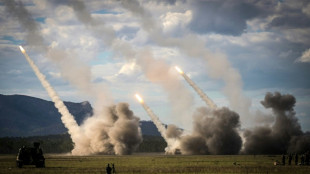 Defence chiefs back boosting US military presence in Australia

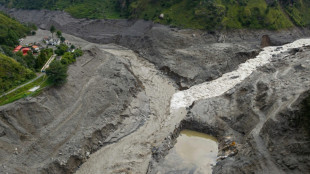 Nepal seeks climate justice after Himalayan disaster

 Stocks rise, yields ease as oil slips on Trump hint at short bombing campaign

 Brussels Diamond League finals Day 1 - five events to watch

 Thailand's 'Jurassic Park' shines light on dinosaur evolution
 'Role model' Stokes set to open for Adelaide Strikers

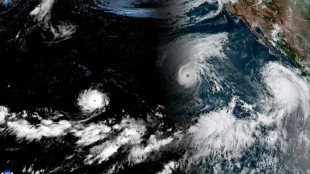
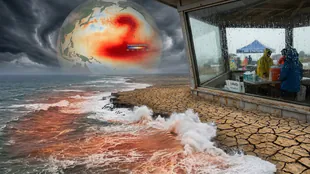
The World Meteorological Organization says the 2026 El Niño is firmly established, likely to strengthen further and has a nearly 100 percent chance of persisting through February 2027.
The World Meteorological Organization has issued an unusually confident forecast for the current El Niño, saying there is a nearly 100 percent likelihood that the event will continue through February 2027. The United Nations weather and climate agency said the level of agreement across its global forecasting network is unprecedented for one of its El Niño/La Niña updates.
El Niño develops when sea-surface temperatures become warmer than normal across the central and eastern tropical Pacific. Those ocean conditions alter atmospheric circulation and can shift rainfall and temperature patterns far beyond the Pacific. The WMO says exceptionally warm tropical Pacific waters are supporting further intensification and expects the event to reach very strong levels before peaking toward the end of 2026.
A very strong El Niño can raise the risk of drought, flooding and extreme heat in different parts of the world. It can also lift the global average temperature by releasing additional ocean heat into the atmosphere. Scientists typically attribute an extra increase of roughly 0.1 to 0.2 degrees Celsius to El Niño conditions, although the effect varies from one event to another.
The current episode is arriving on top of long-term human-caused global warming, increasing concern about temperature records. 2026 is expected to be among the hottest years observed, while some forecasts indicate that 2027 could be warmer as the full atmospheric effect of the Pacific heat develops.
Some impacts are already visible. The United States has experienced its hottest summer on record, with El Niño likely contributing to the background heat. Dry conditions have added to water and food-security concerns in Sudan, where low Nile levels are worsening an existing hunger crisis. Puerto Rico has introduced water rationing amid drought and infrastructure problems. In the eastern Pacific, unusually warm water has disrupted fisheries.
Climate scientists caution that the exceptional strength of the event makes precise regional forecasting difficult. Daniel Swain of the University of California Agriculture and Natural Resources has said the scale could produce consequences that are not fully understood, making it risky to assume that previous El Niño events provide a complete template for what will happen.
The WMO and national weather agencies are increasing preparedness and early-warning efforts as the event strengthens. The central concern is that a powerful natural climate cycle is interacting with a warmer baseline climate, increasing the potential for extreme conditions even in regions where the exact rainfall or temperature outcome remains uncertain.
P.L.Madureira--PC