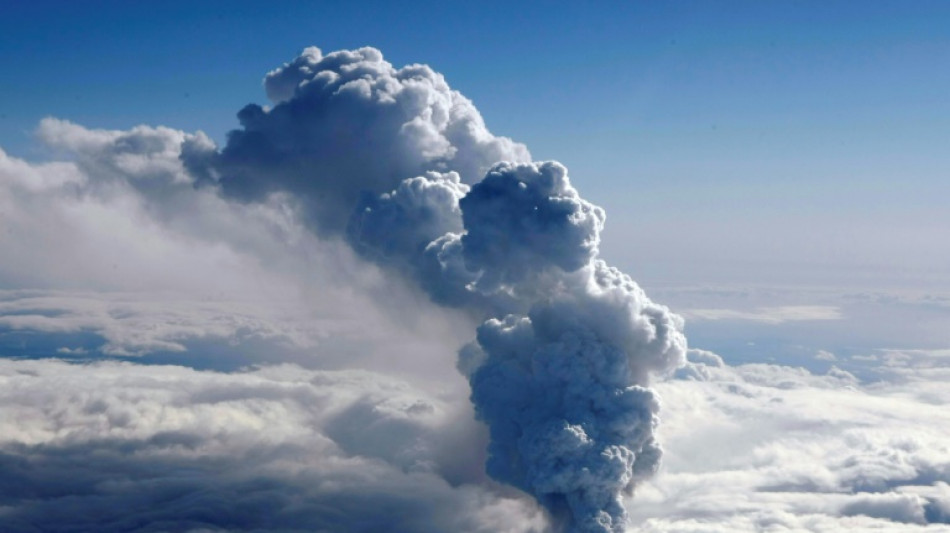
Volcanic eruption in southwest Iceland ends: met office / Photo: ARNI SAEBERG - AFP

 НЕМЕЦКАЯ ALIX LASERS БЕРЁТ НА ОБСЛУЖИВАНИЕ ВСЕХ КЛИЕНТОВ АВСТРИЙСКОЙ ALIX LASERS

 British Couple Spends £3,500 on Gender-Selective IVF in Egypt to Ensure Daughter

 Games Inbox: Reader Debates GTA 6 PC Release, Graphics, and Monster Hunter Choices

 Karbon-X (OTCQB: KARX) Joins IATA CORSIA EEU Supply Alliance as 2027 Aviation Compliance Demand Accelerates

 US Lawmaker and Colombian Ministry Urge X to Suspend Gustavo Petro’s Account
Iceland's meteorological office on Wednesday declared that the volcanic eruption near the country's capital Reykjavik was officially over as no activity had been observed for 10 days.
"Ten days have passed since activity was last measured in the Litli-Hrutur crater. There is no longer any deformation observed in the area and seismic activity has decreased considerably," the Icelandic Meteorological Office (IMO) said in a statement.
"As a result, we can say that another chapter in the resurgence of volcanism on the Reykjanes peninsula has come to an end," it added.
Thousands of visitors have been flocking to the site to take in the hypnotic spectacle of red-hot lava spurting out of the ground.
The Reykjanes peninsula had been dormant for eight centuries but has experienced a resurgence of volcanic activity in recent years.
There have been two other recent eruptions -- one in the Geldingadalir valley in March 2021, which lasted six months, and one in the Meradalir valley in August 2022, which lasted three weeks.
All of them belong to the Fagradalsfjall volcanic system.
Last week the IMO noted that this third consecutive eruption in as many years marked "a turning point in the volcanism of the Reykjanes Peninsula."
Unlike explosive eruptions that spew out thousands of tonnes of ash -- such as the famous Eyjafjallajokull eruption that paralysed air traffic in Europe in 2010 -- the three recent ones have been so-called "effusive" eruptions and have had little impact, apart from lava flows and locally toxic gas spikes.
Iceland has 33 volcanic systems currently considered active, the highest number in Europe. It has an eruption every five years on average.
The North Atlantic island straddles the Mid-Atlantic Ridge, a crack in the ocean floor separating the Eurasian and North American tectonic plates.
X.Brito--PC