Director Russell Goldman on 'Sender': The Dreary Psychology of Online Shopping

 НЕМЕЦКАЯ ALIX LASERS БЕРЁТ НА ОБСЛУЖИВАНИЕ ВСЕХ КЛИЕНТОВ АВСТРИЙСКОЙ ALIX LASERS

 British Couple Spends £3,500 on Gender-Selective IVF in Egypt to Ensure Daughter

 Games Inbox: Reader Debates GTA 6 PC Release, Graphics, and Monster Hunter Choices

 Karbon-X (OTCQB: KARX) Joins IATA CORSIA EEU Supply Alliance as 2027 Aviation Compliance Demand Accelerates

 US Lawmaker and Colombian Ministry Urge X to Suspend Gustavo Petro’s Account
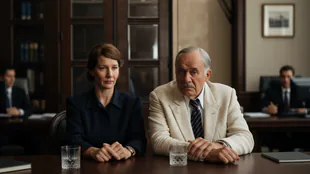
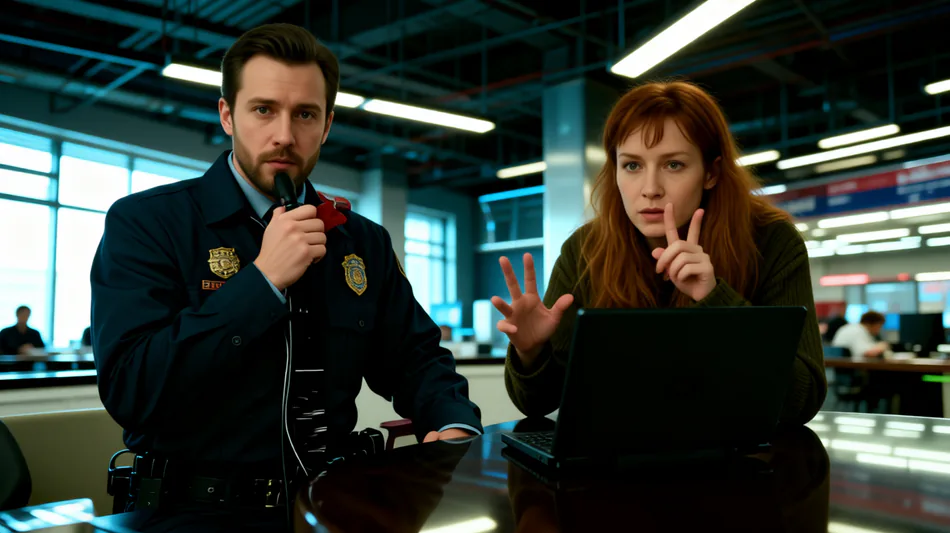
In his feature debut "Sender," director Russell Goldman transforms the mundane mechanics of online shopping into a harrowing psychological study. Starring Britt Lower as a woman besieged by mysterious packages, the film examines the isolation and compulsive behaviors inherent in digital consumerism. Goldman recently discussed the project’s origins, its collaboration with Jamie Lee Curtis, and the eerie reality of algorithmic culture.
The vast machinery of global e-commerce often operates invisibly, yet its psychological impact is increasingly visible on screen. In "Sender," a new feature film currently screening at the Buenos Aires Rojo Sangre genre film festival in Argentina, director Russell Goldman explores this invisible infrastructure not as a backdrop, but as the central antagonist. The film stars Britt Lower, known for her role in the Apple TV+ series "Severance," as Julia, a woman in recovery who becomes the target of relentless, anonymous deliveries.
"Sender" does not rely on traditional horror tropes such as jump scares or supernatural threats. Instead, it cultivates dread through the mundane reality of compulsive consumption and the isolation of digital interaction. The narrative follows Julia as she receives package after package of items she did not purchase. The film utilizes a memory-driven editing pace and unsettling sound design to mirror her deteriorating mental state, creating a tension that feels both personal and universally recognizable.
Goldman, making his feature directorial debut with "Sender," which expands from an earlier 18-minute short film, describes the project as a character study deeply rooted in psychological intensity. He notes that the film is less about external danger and more about the internal landscape of a mind under pressure. "This was a unique project," Goldman said. "I knew this version was going to become a character piece. And I knew it was going to be deeply psychological, harrowing and intense. But I also knew that it was going to be a refraction of a mind."
The film taps into contemporary anxieties regarding the toxic aspects of shopping applications and the negative effects of algorithm culture on mental health. Goldman explained that his inspiration stemmed from a personal grappling with these issues, particularly the "hyperfunctional" nature of e-commerce. He described the industry as dreary in its efficiency, offering a paradoxical combination of total access and profound isolation.
"There’s something about the e-commerce world that I find so hyperfunctional to the point of drearyness," Goldman said. "It’s trying at the same time to allow us to be alone while having everything all the time." He noted that for individuals like Julia, who are shying away from broader personal issues, the ease of spending money one does not have and filling one’s space with unnecessary items is dangerously compelling. The convenience allows consumers to avoid engaging with the physical world and local communities.
Goldman acknowledged his own complicity in the system he critiques. "I don’t think that you can make a movie about these services that does not acknowledge the artist’s broader relationship with them or complicity in it," he admitted. He described himself as someone who gravitates toward the convenience of Amazon Prime, particularly for practical items like dish soap or medical supplies. However, he also recognized the loss incurred by bypassing local businesses where relationships can be built.
The film’s aesthetic choices are designed to reflect Julia’s internal experience. Goldman worked closely with his collaborators to clarify a visual style that perpetually moves the story forward, mirroring the character’s obsessive state. He emphasized that the film is a service to the perspective of the protagonist, who is neither a passive bystander nor a simple victim, but an active participant in her own unraveling.
Britt Lower’s performance is central to this vision. Goldman, who comes from a theater background, valued strong-willed decisions and open conversations with his cast. He noted that Lower approaches her roles by thinking of them as specific instruments. For "Sender," she conceptualized Julia as a drum, an idea that inspired the incorporation of drum elements into the film’s narrative and sound design.
"Movies grow and evolve and change," Goldman said. "You’re discovering so much more texture as you go through the story and as you hear it aloud." He praised Lower and co-star Rhea for their intelligence and collaboration, noting that while they may not have had the same autonomy on major series like "Severance" or "Pluribus," their input was vital to the indie film’s development. The dynamic between the actresses shifted over time, with improvisation increasing as their characters spent more time together on screen.
The production of "Sender" was significantly aided by Jamie Lee Curtis, who is credited as both a star and a producer. Goldman revealed that his relationship with Curtis began years earlier when he worked for her in an assistant capacity. He recalled pushing her to take the role in "Everything Everywhere All at Once," a script that required a leap of faith in the filmmakers Daniels.
When Goldman realized "Sender" should be his first feature, Curtis repaid that faith by attaching her name to the project. She then facilitated introductions to financiers, urging them to trust Goldman just as she had trusted the Daniels. "It’s a leap of faith, but Russell had this faith on ‘Everything Everywhere’ and I implore you to have this faith in ‘Sender,’" Curtis reportedly told investors.
Curtis also provided crucial guidance regarding the film’s casting. She warned Goldman that her name alone would not attract an actress willing to appear in almost every frame of the movie. "This is your thing, you’re going to have to convince somebody to play Julia," she told him. "No one will be in every scene of the movie just because my name is on the movie. And they’re going to be working with you. This is your show."
Goldman described the filmmaking process as "shockingly egoless" once production began, requiring him to listen to his collaborators and reconstruct the project dynamically. He noted that every actor on "Sender" worked differently, yet all were respectful and deeply engaged with the material. The result is a film that reflects Goldman’s own eccentricities and obsessions, filtered through the perspective of a character who is surfing the chaos rather than drowning in it.
As "Sender" screens at genre festivals, it offers a stark look at the intersection of technology, anxiety, and loneliness. Goldman’s direction avoids moralizing, instead presenting the drearyness of online shopping as a complex human condition. The film stands as a testament to collaborative indie filmmaking, driven by the vision of a first-time director supported by experienced mentors and a committed cast.
S.Caetano--PC